DbcultAccessing Vault...
5.4/10
Senior Film Conservator
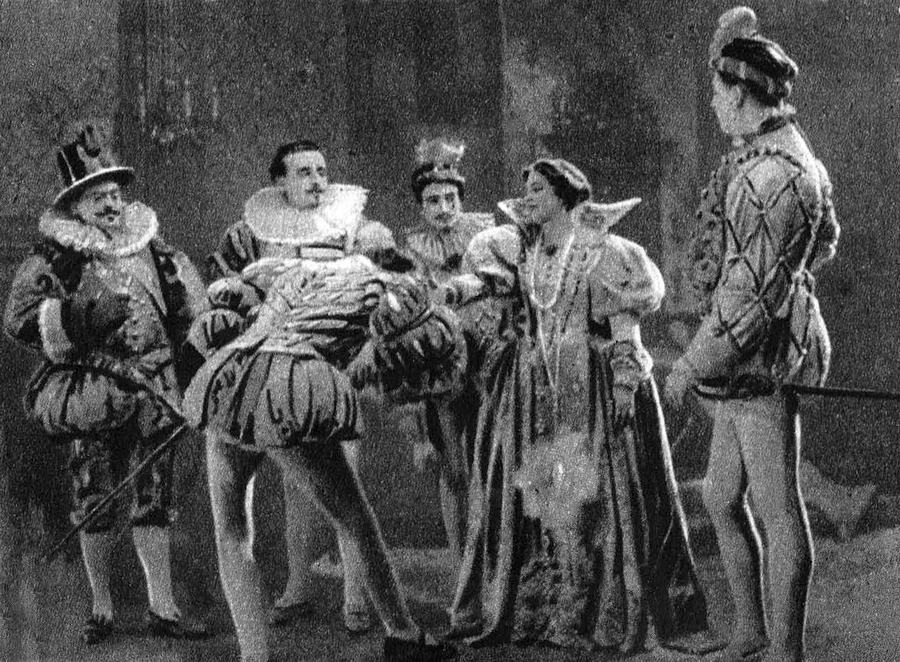
A definitive 5.4/10 rating for a film that redefined the boundaries of cult cinema. La dame de Monsoreau remains a cornerstone of transgressive art.
To witness René Le Somptier’s 1923 opus, La Dame de Monsoreau, is to step into a meticulously reconstructed past where the flickering frames of silent cinema achieve a painterly depth rarely seen in the modern digital age. This is not merely a film; it is a sprawling historical fresco that breathes life into the ink of Alexandre Dumas. While many contemporary audiences might find the pacing of early French epics deliberate, there is a gravitational pull to the way Le Somptier frames the Valois court—a space defined by shadow, silk, and the constant, shimmering threat of cold steel.
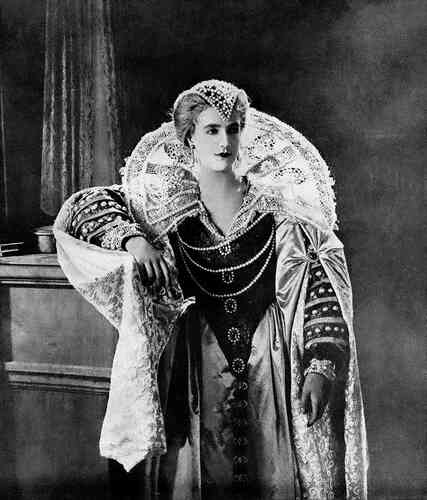
The visual language of the film relies heavily on the 'tableaux' style, where every composition feels curated by a master of the Louvre. The use of light and shadow creates a chiaroscuro effect that rivals the gothic intensity of Nosferatu, though here the monsters are not spectral vampires but men in velvet doublets. The architecture of the sets—vast, echoing halls and claustrophobic secret passages—serves as a physical manifestation of the characters' psychological states. When Gina Manès, portraying the ethereal Diane, moves through the frame, the camera treats her with a reverence that borders on the hagiographic, capturing a spectral vulnerability that defines the romantic core of the story.
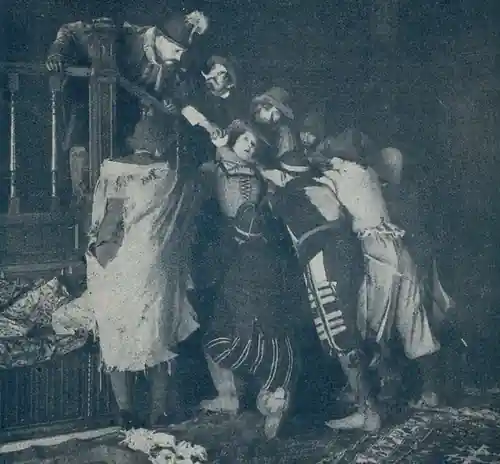
The lexical diversity of the visual storytelling is staggering. One does not need intertitles to understand the simmering resentment between Henri III and the Duc d'Anjou. The subtle shifts in posture, the narrowing of eyes, and the deliberate placement of characters within the frame convey a density of plot that would take hours to explain in prose. In many ways, the film shares a thematic kinship with Pillars of Society, focusing on the rot that exists beneath the surface of established institutions, whether they be bourgeois or royal.
Gina Manès delivers a performance that transcends the often-hyperbolic gestures of the silent era. Her Diane is not a passive damsel but a woman of profound interiority, caught in a socio-political vice. Her interactions with Rolla Norman’s Bussy d'Amboise are charged with an eroticism that is all the more potent for its restraint. Unlike the more frantic energy found in The Road Demon, the chemistry here is slow-burning, built on stolen glances and the heavy atmosphere of impending doom.
Rolla Norman embodies the archetypal cavalier with a ruggedness that prevents the character from drifting into mere caricature. His Bussy is a man of action, yet his eyes betray a weariness—a realization that he is a relic of chivalry in a world increasingly governed by Machiavellian pragmatism. The supporting cast, including Jean d'Yd and Henri Bosc, populate the court with a vividness that ensures the political subplots never feel like mere padding. Each character feels like a cog in a grand, tragic machine, much like the doomed souls in Labyrinth of Horror.
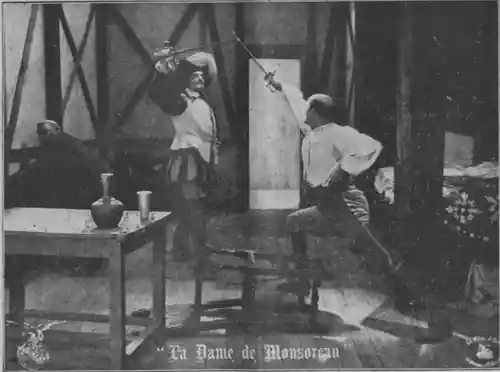
What sets La Dame de Monsoreau apart from other Dumas adaptations is its commitment to the visceral reality of the era. The costume design is not merely decorative; it is heavy, restrictive, and indicative of rank. The swordplay, particularly in the final act, is choreographed with a brutal elegance. It lacks the sanitized flair of later Hollywood swashbucklers, opting instead for a sense of desperate, grinding combat. The stakes are palpable, and the physical toll on the performers is evident in every frame.
The film’s exploration of honor is complex. It isn't just about winning a fight; it's about the maintenance of one's soul in a corrupt environment. This psychological depth mirrors the internal struggles seen in Raskolnikov, where the protagonist is haunted by the consequences of his own morality. Le Somptier understands that the greatest battles are not fought with rapiers in the street, but with whispers in the royal bedchambers. The tension is sustained not through jump scares or cheap thrills, but through a masterful layering of suspense that rivals the mystery elements of The Blue Mountains Mystery.
Technically, the film is a marvel of its period. The tinting—sepia for interiors, deep blues for night scenes, and occasional flares of red—adds a sensory layer that compensates for the lack of sound. The editing rhythm is surprisingly modern, utilizing cross-cutting to build tension between the various factions of the court. We see the King’s revelry juxtaposed with the conspirators’ hushed meetings, creating a sense of a world on the brink of collapse. This structural complexity is reminiscent of the layered storytelling in The Street, where the environment itself becomes a character in the drama.
Furthermore, the film avoids the pitfalls of being a mere 'filmed play.' Le Somptier utilizes the mobility of the camera to explore the space of the Château de Monsoreau, making the audience feel like an invisible witness to history. The depth of field in the outdoor sequences provides a sense of scale that makes the personal tragedies feel cosmically significant. It is this balance between the intimate and the epic that gives the film its enduring power. Even when compared to exoticist works like Die Kwannon von Okadera, La Dame de Monsoreau stands out for its grounded, European realism.
The central metaphor of the film—the 'millstones of history'—is executed with heartbreaking precision. Bussy and Diane are not just lovers; they are symbols of a grace that the world is no longer willing to accommodate. Their love is a rebellion against a social order that views people as assets or obstacles. The tragedy is not that they are caught, but that their demise is so utterly predictable within the logic of the court. The Comte de Monsoreau is not a mustache-twirling villain but a man of his time, using the tools of the patriarchy and the state to claim what he believes is his. This nuance makes the conflict far more compelling than a standard melodrama.
In the final sequences, the film reaches a crescendo of emotional intensity. The lighting becomes harsher, the cuts faster, and the sense of inevitability becomes suffocating. As Bussy faces his end, the film reflects the same existential dread found in Il volto di Medusa, where the gaze of fate turns the hero to stone. It is a haunting conclusion that lingers long after the final iris-out, leaving the viewer with a profound sense of loss for a beauty that was never meant to survive the dawn of the 17th century.
Ultimately, La Dame de Monsoreau is a testament to the sophistication of the French film industry in the early 1920s. It manages to honor the source material while carving out its own identity as a visual masterpiece. It doesn't rely on the sensationalism of After the Ball or the pulp sensibilities of The Master Key. Instead, it aims for the heart and the intellect simultaneously. It is a film that demands attention, rewarding the viewer with a rich, multisensory experience that proves the power of silent cinema to communicate the most complex of human emotions.
For those who appreciate the intersection of history and art, this film is an essential watch. It stands alongside other great historical epics of the era, offering a window into a time when cinema was still discovering its own potential to reshape our understanding of the past. Like the intricate patterns of a Renaissance tapestry, the film reveals more of itself with every viewing, cementing its status as a cornerstone of European film history. Whether you are a fan of Dumas or simply a lover of exquisite cinematography, the journey to the court of Henri III is one you will not soon forget.
IMDb —
1918
Community
Log in to comment.