DbcultAccessing Vault...
Cult Review
Senior Film Conservator
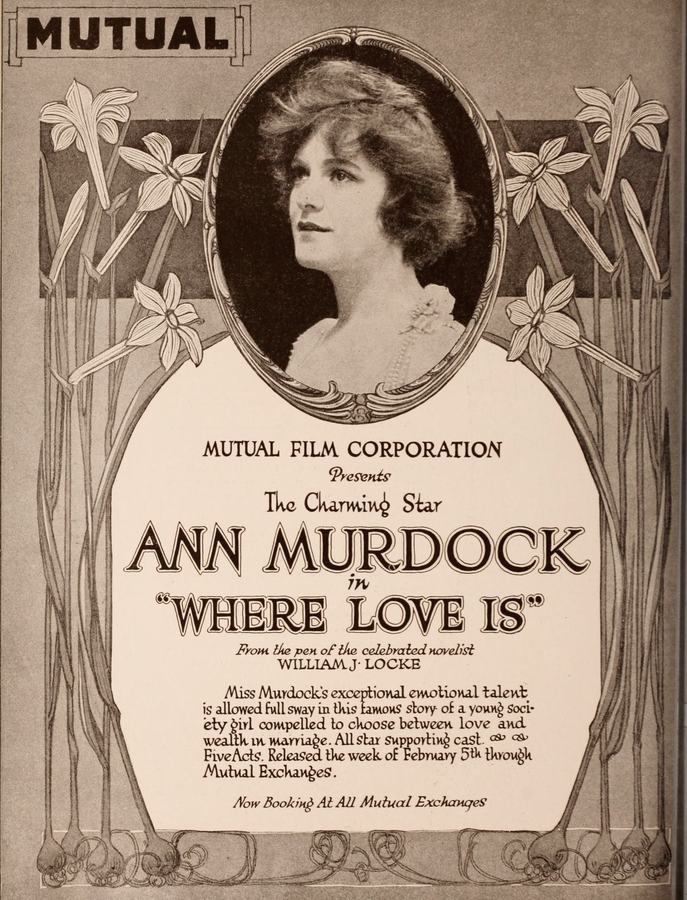
Stepping back into the flickering glow of the early 20th century cinematic landscape, one encounters films that, despite their age, possess an astonishing capacity to resonate with the timeless dilemmas of the human heart. Among these luminaries, 'Where Love Is,' a compelling work from 1917, stands as a testament to the enduring power of silent storytelling. Penned by the insightful William J. Locke, whose literary prowess often delved into the intricacies of moral choice and romantic yearning, this picture, though decades removed from our modern sensibilities, offers a profound exploration of love's often arduous path, juxtaposed against the rigid strictures of societal expectation. It is a narrative tapestry woven with threads of passion, sacrifice, and the relentless pursuit of authentic connection, challenging its characters—and by extension, its audience—to ponder the true cost of fidelity, both to oneself and to others.
The film introduces us to Elara Vance, brought to vibrant life by the remarkable Shirley Mason, whose expressive performance transcends the limitations of the silent medium. Mason, with a subtlety that belies her youth, embodies Elara as a sculptor of humble origins but immense talent, whose hands, perpetually dusted with clay, fashion not just figures but emotions into tangible form. Her world is one of honest labor and creative fervor, a stark contrast to the gilded cages inhabited by the city’s elite. Mason's ability to convey Elara's inner turmoil, her artistic passion, and her burgeoning affection through nuanced gestures and soulful glances is nothing short of masterful. She crafts a character who is both vulnerable and resilient, an ideal conduit for the film's central themes. One might draw parallels to the quiet dignity found in characters portrayed in films like Balletdanserinden, where the protagonist's artistic life similarly collides with external pressures, though Elara's struggle feels more grounded in the tangible world of societal class and aspiration.
Into Elara's world, almost by accident, steps Julian Thorne, portrayed with a compelling blend of aristocratic polish and inner conflict by Henry Stanford. Stanford's Julian is not merely a caricature of wealth; he is a man burdened by the weight of dynastic duty, a scion whose life has been meticulously mapped out by his family's formidable influence. His initial encounter with Elara, perhaps at a charity art exhibition where her raw, unvarnished talent shines brightest, serves as an awakening. He is captivated not by her social standing, which is nonexistent, but by the profound authenticity of her spirit and the genuine passion she pours into her craft. This immediate, almost magnetic attraction sets the stage for the central conflict, as Julian is already betrothed to Vivian Holloway, a woman whose very name, as embodied by the elegant but chilling Anna Murdock, evokes a sense of calculated ambition and icy composure.
Anna Murdock's portrayal of Vivian is a study in controlled power. She is not a villain in the simplistic sense, but rather a product of her environment, a woman who perceives love and marriage not as emotional bonds but as strategic consolidations of power and status. Her beauty is impeccable, her demeanor flawless, yet beneath the surface lies a pragmatism that leaves little room for the messy complexities of genuine affection. The silent film medium, paradoxically, often amplifies these subtle characterizations, allowing the audience to project their understanding onto the nuanced expressions and body language. Murdock masterfully uses this to create a character who, while outwardly composed, hints at a formidable will that threatens to crush anything standing in the way of her preordained future. Her presence casts a long, foreboding shadow over the burgeoning romance between Elara and Julian, making every stolen glance and every whispered (or rather, title-carded) word of affection feel perilously daring.
The dynamic between Mason, Stanford, and Murdock forms the emotional bedrock of 'Where Love Is.' Shirley Mason's Elara is the heart, radiating warmth and artistic integrity. Henry Stanford's Julian is the conflicted soul, torn between duty and desire, his internal struggle often manifesting in subtle shifts of posture or the pained intensity of his gaze. Anna Murdock's Vivian is the formidable intellect, the embodiment of a rigid social order, her every movement precise and purposeful. The interplay of these three performances, often without spoken dialogue, is a testament to the sophisticated artistry of early cinema. The narrative threads them together with increasing tension, building towards an inevitable confrontation of ideals and affections. This intricate triangulation of characters, each representing a distinct facet of human experience—passion, duty, ambition—elevates the film beyond a simple love story into a deeper meditation on choice and consequence. It brings to mind the dramatic tension found in The Battle of the Sexes, though 'Where Love Is' focuses more acutely on internal moral struggle rather than overt gender conflict.
Mabel Trunnelle, though perhaps in a supporting role, adds another layer of gravitas to the ensemble. Her presence, often as a figure of authority or a moral compass, provides a crucial counterpoint to the romantic entanglements. Whether she portrays a stern matriarch, a worldly confidante, or a voice of societal propriety, Trunnelle's performances consistently ground the more melodramatic elements of the plot in a believable reality. In 'Where Love Is,' she might embody Julian's mother, Mrs. Thorne, a staunch defender of family tradition and a fierce opponent of any match that threatens the family's carefully constructed image. Her disapproval of Elara would be palpable, a silent but potent force adding to Julian's internal torment. Trunnelle's ability to convey disapproval, concern, or wisdom through subtle facial expressions and dignified bearing is invaluable in a silent film, allowing her to shape the narrative's emotional landscape without a single line of dialogue. Her performance, much like those in Hazel Kirke, often provides the necessary anchor to the more tempestuous romantic currents.
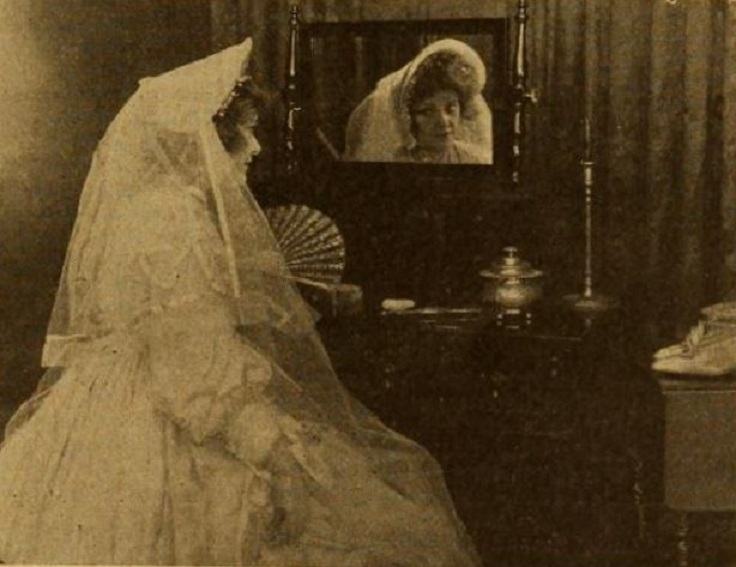
William J. Locke's literary fingerprint is evident throughout 'Where Love Is.' Known for his character-driven narratives and his exploration of moral dilemmas, Locke's screenplay transcends mere plot mechanics to delve into the psychological complexities of his characters. He understands that true drama often arises from internal conflict, from the choices individuals are forced to make when their desires clash with their duties. The title itself, 'Where Love Is,' is more than just a romantic declaration; it's an inquiry, a philosophical question posed to the audience. Is love found in societal approval, in material comfort, or in the profound, often uncomfortable, connection between two souls? Locke's writing, even translated into the visual language of silent film, retains its depth and intellectual curiosity. It challenges the audience to look beyond the surface, to question the arbitrary boundaries society erects around human emotion. This thematic richness is a hallmark of Locke's work, distinguishing it from more straightforward romances of the era and placing it closer to the thoughtful introspection found in a film like The Light That Failed, which also grapples with the sacrifices inherent in artistic and personal pursuits.
The cinematography, while adhering to the conventions of its time, skillfully employs visual metaphors to enhance Locke's narrative. The contrast between Elara's humble, art-filled studio and the opulent, yet often sterile, interiors of the Thorne estate is striking. Shadows and light are used to great effect, emphasizing Julian's internal turmoil or highlighting the clandestine nature of his and Elara's meetings. A close-up on Shirley Mason's hands, molding clay, speaks volumes about her character's dedication and the tangible nature of her passion, while a wide shot of Julian traversing the grand, empty halls of his home conveys his isolation amidst plenty. These visual choices, though perhaps rudimentary by today's standards, were revolutionary in their ability to communicate complex ideas without words, relying instead on the universal language of imagery and emotion. The film’s visual storytelling might evoke memories of the dramatic staging in In the Hour of Temptation, where visual cues were paramount to conveying moral quandaries.
As the narrative progresses, the tension between Julian's duty and his heart becomes unbearable. The film masterfully builds towards a dramatic climax where all characters are forced to confront the consequences of their choices. Vivian, ever the astute strategist, is likely to discover the affair, setting in motion a series of events designed to expose Elara and reclaim Julian. This could involve social ostracization, attempts to discredit Elara's art, or even direct confrontation, all rendered with the heightened drama typical of silent cinema. The brilliance of 'Where Love Is' lies in its refusal to offer easy answers. The resolution, while ultimately leaning towards a form of redemption and the triumph of genuine affection, is not without its sacrifices. Julian's decision to break off his engagement to Vivian, to forsake the path laid out for him, would be met with severe social repercussions. His family, particularly his mother, Mrs. Thorne (Mabel Trunnelle), would likely disown him, casting him out of the very world he was born to inherit. This choice underscores the film's central message: true love often demands the abandonment of comfort, status, and even family approval.
Elara, too, would face her own trials. The public scandal of being associated with a broken engagement from a prominent family would undoubtedly damage her reputation, perhaps even affecting her ability to sell her art. Yet, her unwavering belief in the purity of her love for Julian, and her artistic integrity, would see her through. The film suggests that 'where love is' is often found not in the grand pronouncements or societal blessings, but in the quiet strength of conviction and the courage to choose one's own path, regardless of the cost. The final scenes, whether depicting Julian and Elara building a new life together, perhaps in a more modest setting, or simply a lingering shot of them facing an uncertain but shared future, would convey a sense of hard-won peace and profound understanding. It's a resolution that values emotional wealth over material riches, a theme that resonates powerfully even today. This echoes the thematic depth of The Inner Struggle, where characters must grapple with profound personal choices that redefine their existence.
'Where Love Is' is more than just a historical artifact; it is a vibrant piece of cinematic art that continues to speak to the human condition. Its exploration of class distinctions, the tension between personal desire and societal obligation, and the transformative power of love remains remarkably relevant. The performances by Shirley Mason, Henry Stanford, Anna Murdock, and Mabel Trunnelle are exquisite examples of silent acting, conveying a spectrum of emotions with a grace and subtlety that can still captivate modern audiences. William J. Locke's thoughtful narrative ensures that the film is not merely a melodramatic romance but a profound commentary on the choices that define us. The film's enduring appeal lies in its universal themes, its intricate character development, and its unwavering belief in the power of genuine connection to triumph over adversity. It is a reminder that the search for 'where love is' is a journey fraught with challenges, but ultimately, one of the most rewarding pursuits of the human spirit. Much like Ghosts, which tackled societal hypocrisy, 'Where Love Is' subtly critiques the superficiality of its era, albeit through a romantic lens.
In a world often preoccupied with instant gratification and superficial connections, 'Where Love Is' offers a refreshing counter-narrative, one that celebrates the arduous, often painful, path to true companionship. It prompts viewers to consider what they would sacrifice for love, and where they truly believe love resides. The film's elegant simplicity, combined with its profound emotional depth, ensures its place as a minor classic of the silent era, deserving of renewed attention and appreciation. Its legacy is not just in its pioneering techniques or its period charm, but in its ability to touch the hearts of successive generations, proving that some stories, like some loves, are truly timeless. It stands as a powerful predecessor to later dramas that would explore similar themes of class and affection, such as The Children Pay, demonstrating how early cinema laid the groundwork for complex storytelling. For those seeking to understand the foundational elements of cinematic romance and the nuanced art of silent performance, 'Where Love Is' offers an invaluable and deeply moving experience. The film, in its quiet grandeur, reminds us that the greatest narratives are often those that explore the most intimate corners of the human heart, revealing its capacity for both immense vulnerability and astonishing strength. It's a journey well worth taking, a cinematic pilgrimage to a time when expressions, gestures, and the very composition of a shot carried the weight of a thousand words, making 'Where Love Is' a compelling testament to the power of pure visual storytelling.
IMDb —
1932
Community
Log in to comment.