DbcultAccessing Vault...
Cult Review
Senior Film Conservator
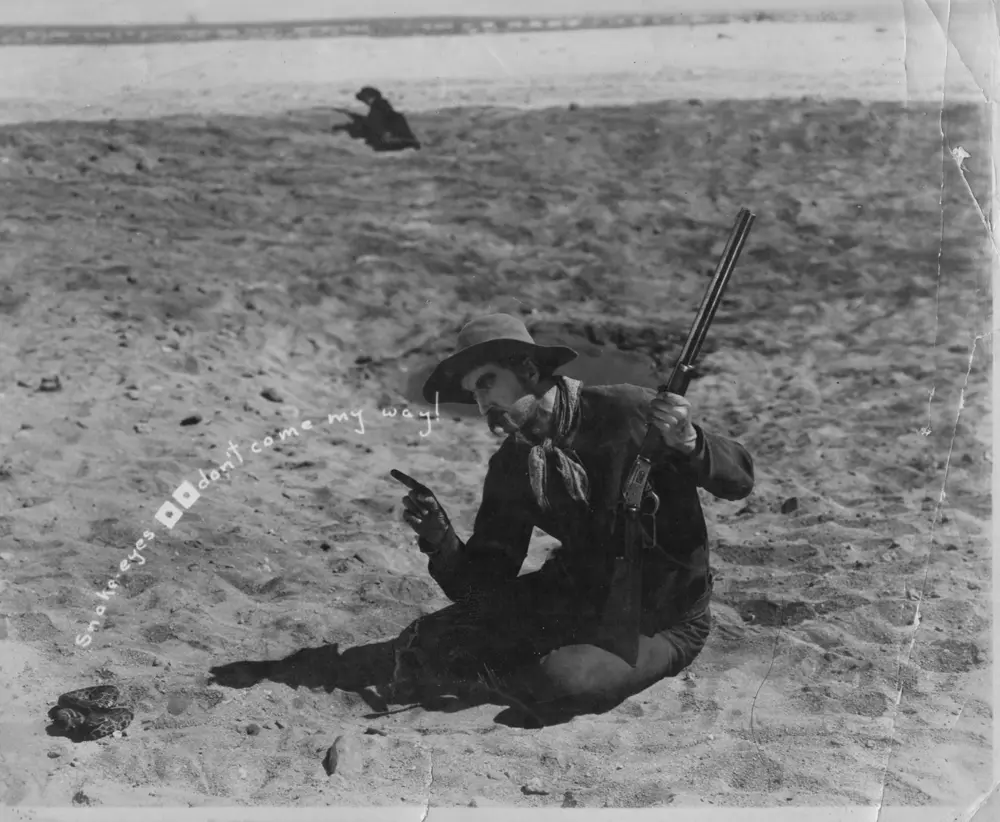
The Fight for the Water Hole is a film that demands you bring your own canteen. It is a dry, physically taxing piece of silent cinema that discards the usual gallantry of the genre in favor of a blunt, repetitive struggle for a hole in the ground. If you are looking for the sweeping vistas of later Westerns, look elsewhere. This is a claustrophobic film shot in a wide-open space.
Only Western completionists and those interested in the early career of Priscilla Bonner will find much to chew on here. It is not a lost classic, nor is it a hidden gem. It is a functional, somewhat primitive survival story that works better as a physical document of desert filming than as a dramatic narrative. Most modern viewers will find the pacing glacial and the stakes too narrow to sustain its runtime.
This film works because: The high-contrast cinematography captures the oppressive heat of the desert with a harshness that feels authentic. There is no studio-lit comfort here; you can practically feel the grit in the actors' teeth.
This film fails because: The character motivations are paper-thin, and the central conflict—while theoretically life-or-death—is stretched across too many static scenes of people staring at horizons.
You should watch it if: You have an interest in how early 1920s productions handled extreme locations or if you want to see Mark Hamilton playing a role that relies more on physical presence than dialogue-heavy intertitles.
The film centers on a singular obsession: water. In an era where many Westerns were becoming increasingly theatrical, this production opts for a more grounded approach. The plot doesn't meander into subplots about long-lost gold or convoluted family vendettas. It stays locked on the water hole. While this focus is admirable, it leads to a certain dramatic stasis. There are only so many ways to film men crouching behind rocks, and the director seems intent on finding every single one of them.
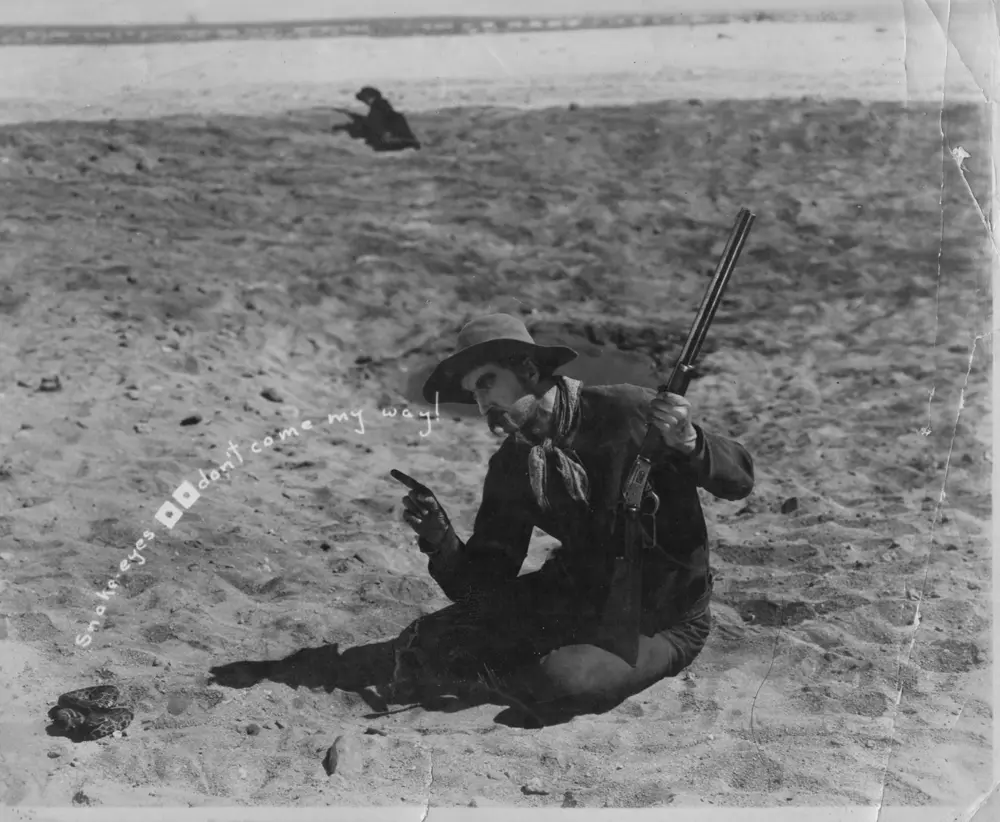
Compared to more polished works like The French Doll, which relies on social artifice and interior sets, The Fight for the Water Hole is an exercise in exterior endurance. The camera doesn't move much, but it doesn't need to. The stillness of the frame emphasizes the isolation. However, the editing frequently stutters. Transitions between the homesteaders and the outlaws feel abrupt, lacking the rhythmic flow found in the better-funded studio pictures of 1924.
Priscilla Bonner is the primary reason to watch this. Often cast as the fragile, wide-eyed ingenue, she shows a different kind of steel here. She is required to do a lot of heavy lifting with her eyes, conveying a sense of mounting dread as the water supply dwindles. It is a performance of restraint. Mark Hamilton, by contrast, is a bit of a blunt instrument. He fits the frame well, but his acting is rooted in the broad gestures of a previous decade. He looks the part of a frontiersman, but he lacks the nuance that Bonner brings to her scenes.
The villainy in the film is remarkably standard. The antagonists are not men with complex grievances; they are simply obstacles. This lack of depth makes the eventual climax feel more like an inevitability than a shocking resolution. It lacks the punch of something like The Vengeance Trail, where the personal stakes feel more urgent. Here, the primary enemy is the sun, and the outlaws are just an extension of the environment's hostility.
Technically, the film is a mixed bag. The use of natural light is effective, but there are moments where the exposure is so high that details are lost in a white blur. This might have been an intentional choice to simulate the blinding desert glare, but more likely, it was a limitation of the equipment and the harsh shooting conditions. The sets—what few there are—look appropriately weathered. Nothing feels like it was built on a backlot.
The pacing is the biggest hurdle. The film circles its central conflict for far too long. We see the same strategic positions taken and retaken. We see the same desperate glances at the water. By the time the final shootout occurs, the tension has leaked out of the film like water from a cracked jar. It’s a common issue with mid-tier silents from this period: the concept is enough for a twenty-minute short, but it’s been stretched to fit a longer format.
If you compare this to Moran of the Mounted, you see a similar reliance on rugged locations, but Moran has a sense of adventure that this film lacks. The Fight for the Water Hole is too dour to be fun and too simple to be profound. It exists in a middle ground of workmanlike genre exercise.
The Fight for the Water Hole is an honest piece of filmmaking, but honesty doesn't always translate to entertainment. It is a grueling watch, not because of its emotional weight, but because of its repetitive structure. It captures the boredom of a siege better than the excitement of a battle. Watch it for Bonner’s performance and the harsh, unvarnished look at the desert, but don't expect a lost masterpiece. It is a minor footnote in the Western genre that proves even in 1924, a good location couldn't entirely save a thin script.

IMDb 6.3
1934
Community
Log in to comment.