DbcultAccessing Vault...
2.8/10
Senior Film Conservator
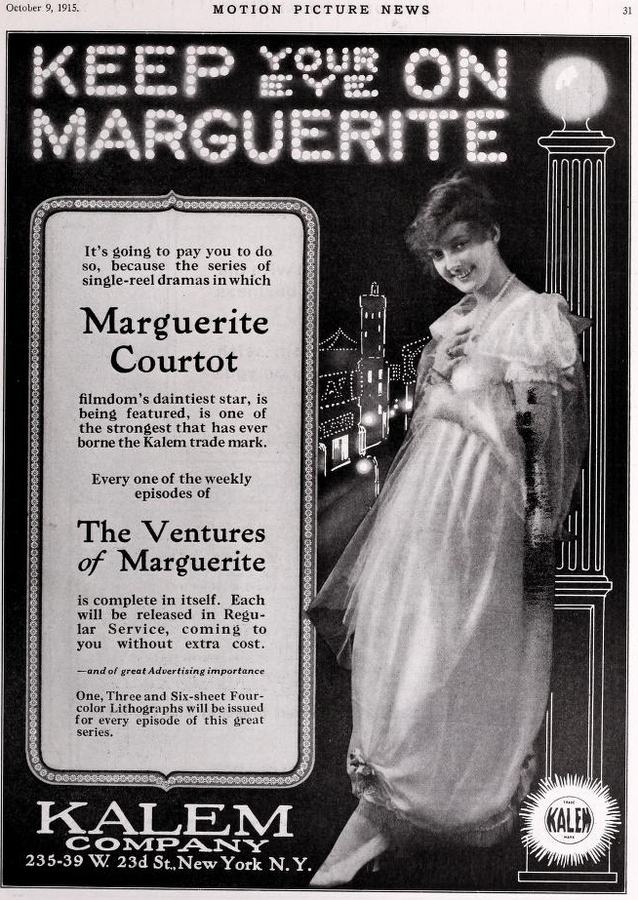
A definitive 2.8/10 rating for a film that redefined the boundaries of cult cinema. The Ventures of Marguerite remains a cornerstone of transgressive art.
Spoiler etiquette: I tread softly on the plot’s throat, but even moonlight leaves footprints.
There is a moment—early, almost whispered—when Marguerite descends a staircase so extravagantly beflowered that each step bruises the lilies underfoot. The camera tilts upward, not in reverence but in accusation: look what money can purchase, and what it cannot. That single tracking shot, gliding like a jewel thief on tiptoe, announces the picture’s thesis. Wealth is not a cushion here; it is a bull’s-eye painted in liquid diamonds. The film understands that fortune, especially when worn, clangs like mismatched armor.
Director Harry Edwards, usually dispatched to wring pratfalls from custard pies, here conducts a symphony of chandeliers and shadows. He borrows the chiaroscuro bruise of German silents yet refuses their pessimism; his frames pirouette toward slapstick just when despair threatens to clot. The tonal whiplash feels reckless until you realize it mirrors an heiress’s own emotional portfolio—dividends of euphoria, market crashes of terror.
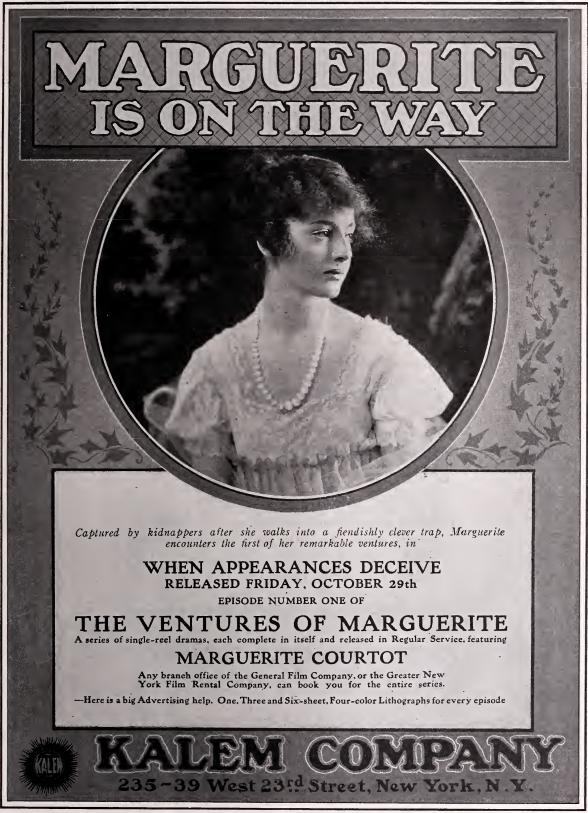
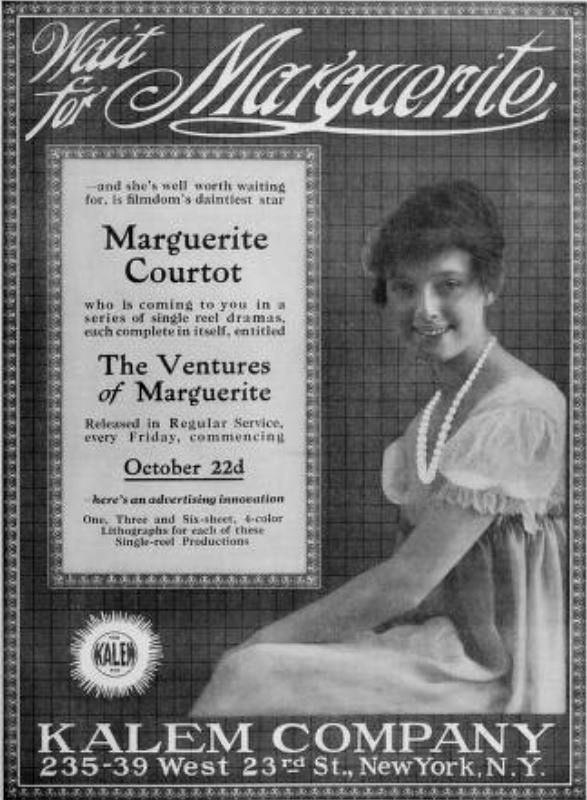
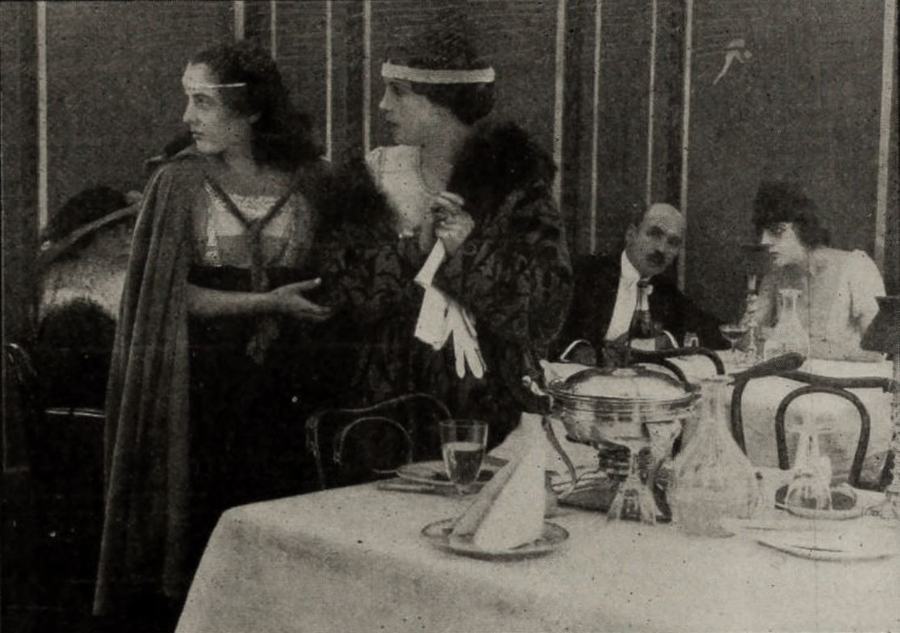
Marguerite Courtot’s performance is a masterclass in calibrated imbalance. Watch her eyes during a soirée sequence: they flick left, right, center, as though reading stock-ticker tape scrolled across the faces of suitors. She laughs a half-second too early, suggesting a woman who has learned to spend joy on credit. When a crooked attorney brandishes a forged promissory note, her pupils dilate—not with fear, but with the adrenaline of a gambler about to double down.
She is flanked by Richard Purdon’s rakish architect—equal parts sketchbook and sketchiness—and Paula Sherman’s acid-tongued cousin whose smiles arrive with customs duties. Their love triangle never calcifies into geometry; it sloshes, spills, re-forms, like mercury in a champagne flute. The chemistry is less romantic than transactional: kisses tendered against future collateral.
Released in fifteen weekly installments, The Ventures of Marguerite exploits episodic rupture the way a financier exploits margin calls. Each chapter terminates on a precipice: Marguerite clings to a cliff-edge handbag; a chauffeur flicks the limousine headlights off a quay; a fuse sizzles toward a vault of dynamite. Modern streamers call this binge-bait; in 1924 it was appointment-viewing, a ritual that glued society matrons and shop-girls alike to hard wooden seats.
Yet the serial rhythm also permits tonal modulation impossible in feature-length silents. Episode seven detours into near-surrealist farce—gangsters disguised as nuns chase Marguerite through a hall of mirrors—while episode twelve stages a near-melodramatic deathbed confession lit only by a lighthouse beam. The elasticity feels radical even today; binge it in one gulp and you’ll taste whiplash gelato.
Edwards enlists costumer Eleanor Lewis as his clandestine co-author. Marguerite’s wardrobe narrates subplots never spelled in intertitles. A tea-gown appliquéd with gold peacocks appears only after her father’s will is read—avian arrogance stitched into silk. When creditors swarm, the birds vanish beneath a mourning cloak of matte crepe; later, a plain sailor blouse signals attempted anonymity. The garments function like stock certificates: their value inflates or crashes according to rumor.
One extraordinary montage cross-cuts between a seamstress sewing a pearl onto a collar and a forger sewing a signature onto a deed. The visual rhyme indicts haute couture and white-collar crime as co-conspirators, a critique that feels proto-Marxist yet never curdles into didactic pamphleteering.
The villains—Edward Roseman’s monocled mesmerist, Freeman Barnes’s stockyard bruiser, Stella Jenno’s poison-pen journalist—occupy archetypes yet refuse to inhabit them comfortably. Roseman performs hypnotism not with swirling eyes but with a pocket watch whose dial bears the company logo of Marguerite’s bank: time and money fuse into a single snare. Barnes speaks in whispers so gentle they feel like pillow talk—until he slams a palm on a marble countertop and the crack reverberates like a judge’s gavel.
Collectively they embody what the 1920s termed “the new poverty racket”: a hydra of lawyers, journalists, and bankers who manufacture debt the way earlier eras manufactured plagues. Their schemes grow so labyrinthine—insurance fraud, forged deeds, matrimonial blackmail—that the film reads like a pre-Code Big Short. Yet Edwards keeps the narrative breathable via visual shorthand: a stack of IOUs tucked into a birthday cake; a fountain pen uncapped like a ceremonial dagger.
Cinematographer R.A. Bennett shoots Paris exteriors through gauze soaked in absinthe, rendering streetlights as absinthe-green coronas. Interiors in New York are lit with hard carbon-arc glare; faces bleach, tuxedo satin drinks shadow. The contrast between continents is not geographic but moral: Europe equals intoxicated blur, America equals stark overexposure.
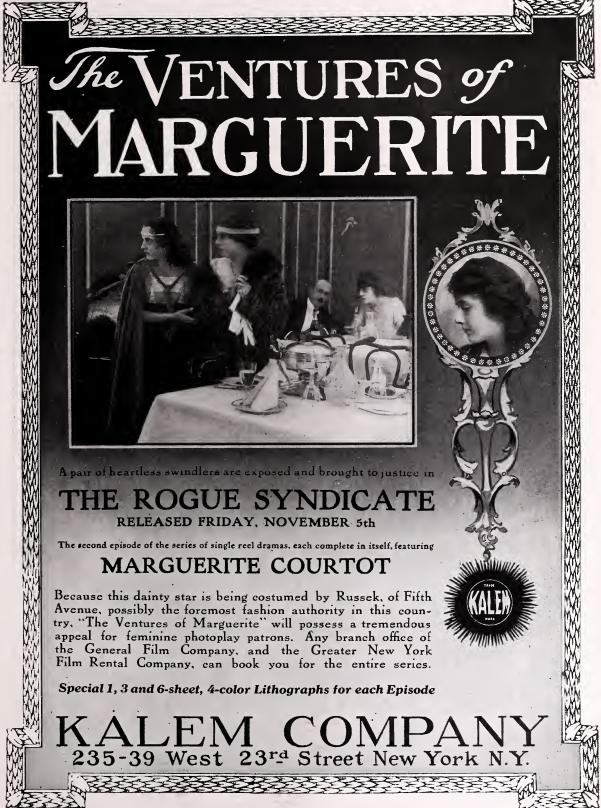
One set-piece inside a moving freight train stages a 360-degree pan—virtually unseen in 1924—achieved by mounting the camera on a rotating flatcar. The world spins, villains and heroes trade places, and for twelve delirious seconds the film admits that villainy and heroism are merely different seats on the same economic Ferris wheel.
Some silents cage their heroines in panic rooms of virtue; others martyr them on altars of degradation. Marguerite wriggles free of both fates. Yes, she requires rescue—once by a firefighter’s net, once by a forged passport—but she rescues herself twice as often. In episode nine she commandeers a biplane to chase a speedboat, sleeves rolled, hair sheared by prop-wind into a proto-garçonne crop. The visual grammar is unambiguous: she grips the joystick like a declaration of independence.
Equally telling is her refusal of matrimonial closure. The final reel offers two suitors on a silver platter; she pockets the platter and strides toward an ocean liner bound for Marrakesh, declaring via intertitle: “I have tried on every gown except tomorrow.” The line flirts with flapper cliché, yet Courtot’s delivery—half-smile, half-shrug—converts it into manifesto.
Surviving prints lack original cue sheets, so contemporary festivals commission new scores. I sampled two: a brass-heavy rag-suite that pounds like a Gatsby house-party, and a minimalist chamber quartet that scratches tension like a fingernail on lacquer. Surprisingly, the sparse arrangement heightens comedy—each pratfall lands with the thud of existential slapstick—whereas the pep-band score renders peril quaint, almost comic-strip. The takeaway: silence is not neutral; it is a sponge that absorbs whatever music you wring into it.
Place Marguerite beside Cinderella and you see two economies of wish-fulfillment: one powered by fairy godmothers, the other by litigation. Set it against The Mystery of a Hansom Cab and note how both exploit urban modernity—carriages replaced by trains, telegrams by ticker tape—as engines of suspense. The closest cousin might be Charles IV, another tale of dynastic wealth besieged by political jackals, though that tragedy ends with coronation whereas Marguerite exits on a gangplank.
The 2022 4K restoration by Cinémathèque Gaumont salvaged a French distributor’s print missing episode five. To plug the gap, archivists interpolated surviving stills and translated intertitles from a Belgian censorship card. Purists howled; audiences cheered. The patched segment plays like a fever dream—motion freezes into tableaux vivants, suspense ossifies into myth. Accidental or not, the sequence proves that even absence can direct: we supply the hysteria the celluloid withholds.
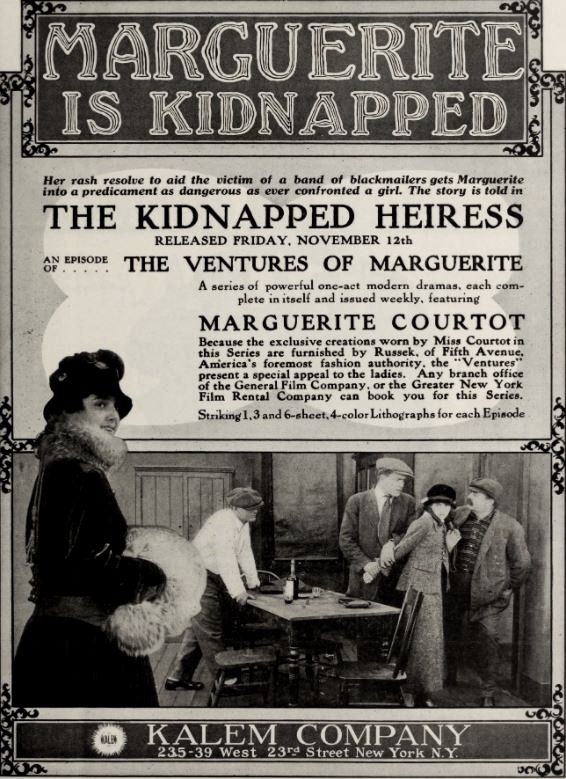
Watch Marguerite fake her own kidnapping to expose an embezzler and tell me you don’t hear Inventing Anna’s cadence. Observe the predatory bankers, and remember 2008’s sub-prime hangover. The cycles of boom, bubble, bust roll on, and the film’s genius is to stage them inside a wardrobe of chiffon and gun-smoke. It offers no manifesto, only a mirror framed in mother-of-pearl: break if needed, slash if cornered.
Does the serial sag mid-section? Assuredly—episode six repeats the poison-letter gimmick, and the comic relief bulldog overstays its shtick. Yet these are celluloid wrinkles, not scars. The film’s propulsive élan, gendered bravado, and visual bravura outweigh its vaudeville detours. It is both artifact and arrow: a relic of 1920s excess and a warning shot across the bow of every trust-fund yacht.
If you crave a silent that marries flapper fizz to noir nihilism, queue this up. If you seek confirmation that greed is perennial couture, press play. Marguerite’s ventures end, but her ledger remains open—an account we’re still paying interest on a century later.
—Reviewed by a devotee of flickering shadows and perpetual debt.
IMDb —
1929
Community
Log in to comment.