DbcultAccessing Vault...
Cult Review
Senior Film Conservator
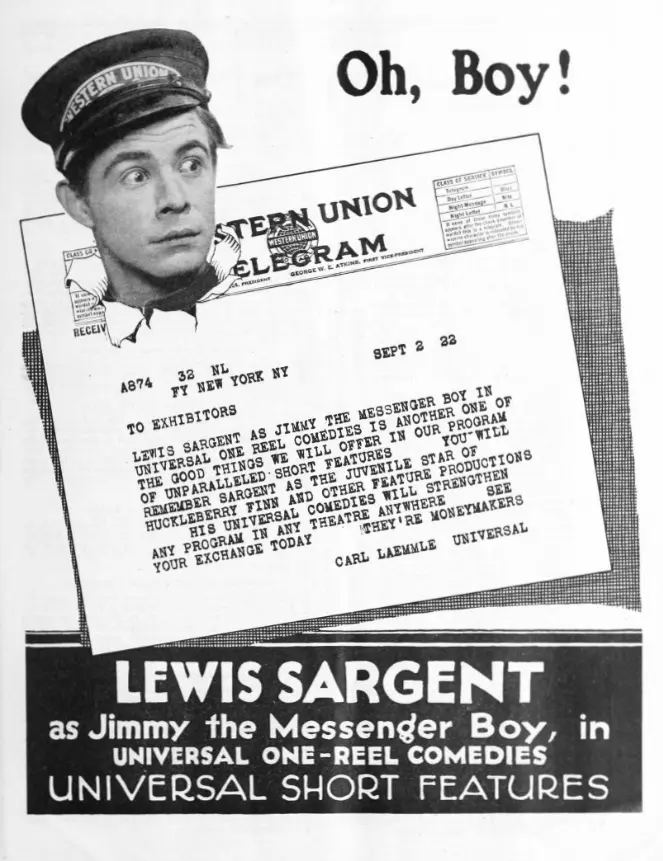
The annals of silent cinema are replete with tales of love, longing, and the often-absurd lengths to which individuals will go in pursuit of affection. Among these curious cinematic artifacts, Scott Darling’s 'Whiskers,' a 1920 offering, stands out with its delightfully outlandish premise, a testament to the era’s penchant for physical comedy and the farcical unraveling of human desires. This is not merely a film about a man and his beard; it is a profound, albeit comedic, meditation on identity, obsession, and the unforeseen consequences of tampering with nature, or indeed, with one’s own romantic fate. Lewis Sargent, in the role of Jimmy, delivers a performance that oscillates between hopeful suitor and bewildered victim, his expressive face a canvas for the escalating comedic tragedy.
The narrative commences with a deceptively simple, universally relatable premise: Jimmy, an unassuming gentleman, finds himself utterly captivated by the charms of a manicurist, portrayed with a captivating grace by Fay Tincher, within the bustling confines of his local barber shop. This locale, often a bastion of masculine camaraderie and ritualistic grooming, here transforms into the unexpected crucible of a burgeoning infatuation. The initial scenes subtly establish the magnetic pull Tincher’s character exerts, her delicate ministrations on his hands becoming a conduit for Jimmy’s burgeoning romantic aspirations. The silent film’s visual language, relying heavily on exaggerated gestures and lingering glances, effectively conveys the depth of Jimmy’s immediate, almost overwhelming, attraction.
The central dilemma of 'Whiskers' emerges from Jimmy’s pragmatic, yet ultimately catastrophic, assessment of his romantic opportunities. Regular haircuts, he shrewdly observes, offer only fleeting moments in the object of his desire’s presence. To truly cultivate this nascent connection, he requires a more permanent, or at least more frequent, excuse for proximity. This pivotal decision point, a seemingly innocuous pivot in his romantic strategy, sets the stage for the film’s escalating absurdity. His solution? A visit to a hair restorer, an elixir promising luxuriant growth, intended to provide a continuous, legitimate pretext for returning to the barber shop. This act of deliberate self-sabotage, undertaken with the purest of intentions, mirrors the tragicomic miscalculations seen in other silent era narratives, where a simple choice can unleash a torrent of unforeseen complexities, perhaps even akin to the escalating predicaments found in films like The Great Mistake, where a single error in judgment spirals into a larger, more confounding entanglement.
What unfolds next is a masterclass in visual comedy and escalating farce. The hair restorer, far from merely providing a convenient excuse for return visits, proves to be a concoction of unprecedented potency. Jimmy’s beard, once an unremarkable feature, embarks on a growth spurt of epic, almost mythical, proportions. The film cleverly employs various visual gags and rapid cuts to emphasize the relentless, unstoppable proliferation of his facial hair. It becomes a character in itself: an unruly, demanding entity that consumes Jimmy’s very existence. This sudden, grotesque transformation of the protagonist's outward appearance, dictated by an internal desire, brings to mind the thematic undercurrents of identity crisis and societal perception that can also be glimpsed in films such as The Path Forbidden, where characters grapple with the consequences of their choices on their standing and self-image.
The comedic climax of this follicular nightmare arrives when Jimmy’s beard grows with such astonishing speed that he is practically forced to take up residence in the barber shop. What began as a romantic gambit culminates in a form of comedic incarceration. The shop, initially a place of hopeful rendezvous, transforms into a literal prison, albeit one adorned with shining razors and the scent of pomade. He becomes a permanent fixture, an object of curiosity and perhaps pity, his life dictated by the incessant demands of his runaway beard. This confinement, both physical and existential, underlines the film’s satirical edge, highlighting the absurdity of human endeavors when taken to illogical extremes. The visual humor of Jimmy constantly being shaved, trimmed, or attempting to manage his ever-expanding facial hair, provides a continuous stream of gags, each more preposterous than the last.
Lewis Sargent’s performance here is particularly noteworthy. Without dialogue, he must convey the frustration, the embarrassment, the sheer physical discomfort, and the lingering flicker of hope that his predicament might somehow still win the manicurist’s affection. His expressions, ranging from wide-eyed panic to resigned exasperation, anchor the fantastic premise in a relatable human experience. Fay Tincher, too, plays her role with a nuanced understanding of the situation, her initial charm perhaps giving way to a mixture of amusement and bewildered concern for her hirsute admirer. Her reactions are crucial in validating the absurdity of Jimmy’s plight, providing a grounding force against the surrealism of his condition. This dynamic between the object of affection and the increasingly bizarre suitor is a common thread in romantic comedies, but 'Whiskers' elevates it to a truly unique, hair-raising level.
'Whiskers' is a quintessential product of its time, embodying the silent era’s particular brand of humor, which often relied on exaggerated situations, physical comedy, and visual storytelling. The absence of spoken dialogue necessitated a heightened reliance on pantomime, facial expressions, and intertitles to convey plot and emotion. Scott Darling’s screenplay, despite its simplicity, demonstrates an astute understanding of these conventions, crafting a narrative that maximizes visual impact. The film’s pacing, a crucial element in silent comedies, is expertly managed, building from gentle romantic yearning to full-blown comedic chaos. The rapid escalation of Jimmy’s beard growth, for instance, is presented with a kinetic energy that keeps the audience engaged and amused.
The film’s aesthetic choices, typical of early 20th-century cinema, contribute significantly to its charm. The sets are functional yet evocative, the barber shop feeling both mundane and, eventually, a stage for Jimmy’s escalating predicament. The use of lighting and camera angles, while perhaps rudimentary by modern standards, effectively highlights key moments and expressions. The comedic timing, often achieved through clever editing and the actors’ precise movements, ensures that each gag lands effectively. In its embrace of the ridiculous, 'Whiskers' shares a comedic spirit with other inventive silent films that explored the boundaries of slapstick and situational irony, perhaps echoing the playful spirit, if not the exact narrative, of a film like Officer 666, which also uses an unusual premise to generate its humor.
While primarily a comedy, 'Whiskers' inadvertently touches upon deeper themes. Jimmy’s loss of control over his own body, his transformation into a living spectacle, speaks to anxieties about personal autonomy and the unpredictable nature of consequences. His identity, initially defined by his desire for the manicurist, becomes subsumed by his beard. He is no longer just Jimmy; he is 'the man with the uncontrollable beard.' This shift in self-perception and public identity, brought about by an external, uncontrollable force, is a subtle yet potent undercurrent to the laugh-out-loud gags. It raises questions about how much our physical appearance dictates who we are and how others perceive us, a notion that resonates even today. The film’s resolution, or lack thereof, regarding Jimmy’s hairy plight, likely leaves the audience pondering the fate of a man whose romantic aspirations led him down such an absurd, follicularly-challenged path.
The film's exploration of obsession is also quite pronounced. Jimmy's initial infatuation transmutes into a desperate, almost pathological need to maintain a presence near the object of his desire, escalating into a situation where his entire existence is defined by this singular pursuit. This kind of single-minded focus, even when leading to utterly bizarre outcomes, is a classic comedic trope, but 'Whiskers' gives it a uniquely physical manifestation. The beard isn't just a prop; it's the physical embodiment of his increasingly desperate and ultimately self-defeating romantic strategy. This level of desperate yearning, bordering on the absurd, can be seen in other narratives of the period, where characters are driven by powerful, often misguided, emotional currents, much like the intense, if different, emotional landscapes explored in films such as Under Kærlighedens Aag, where the 'yoke of love' itself becomes a defining, and sometimes burdensome, force.
'Whiskers' may not be as widely known as some of the grander epics or more celebrated comedies of the silent era, but its charm lies in its concise, imaginative premise and its commitment to seeing that premise through to its most ludicrous conclusion. It serves as a delightful example of how early filmmakers, with limited technological means, could craft engaging, humorous, and even subtly thought-provoking narratives. The performances of Lewis Sargent and Fay Tincher, though constrained by the stylistic demands of the period, are effective in bringing this peculiar tale to life, imbuing it with a blend of earnestness and comedic timing.
For modern audiences, 'Whiskers' offers a fascinating glimpse into the comedic sensibilities of a bygone era. It reminds us that the fundamental humor in human folly, in the pursuit of love, and in the unpredictable nature of life, transcends time and technological advancements. The film’s simple yet brilliant concept ensures its enduring appeal, making it a worthy discovery for anyone interested in the rich tapestry of silent cinema. It’s a testament to the fact that sometimes, the most memorable stories are those that dare to be the most wonderfully absurd. The film’s ability to extract such extended humor from a single, escalating physical predicament is quite remarkable, demonstrating a narrative resourcefulness that can be admired alongside other creatively structured narratives of the time, even those with different tones, such as The Arrival of Perpetua, which also builds its plot around a central, transformative event, albeit with a different set of consequences. The sheer inventiveness of Scott Darling's premise for 'Whiskers' ensures its place as a unique, if perhaps minor, gem in the vast landscape of silent film comedy.
In conclusion, 'Whiskers' is more than just a historical curiosity; it is a vibrant, funny, and surprisingly resonant film that speaks to the timeless human experience of yearning, miscalculation, and the sometimes-hairy consequences of our most fervent desires. It invites us to laugh at Jimmy’s predicament, but perhaps also to reflect on our own, equally peculiar, pursuits of happiness and affection. The film, in its quiet, unassuming way, continues to offer a wonderfully absurd spectacle, a reminder of cinema's power to entertain and subtly provoke, even a century after its initial release. Its narrative arc, while focused on the comedic, also subtly echoes the themes of unexpected turns and personal transformation that can be found in films like Turn to the Right, where a character's life takes an unforeseen and defining path. The consistent, relentless unfolding of Jimmy's hirsute fate in 'Whiskers' makes it a memorable, if not entirely comfortable, viewing experience, a true testament to the creative ingenuity that characterized the golden age of silent film.
IMDb 5.5
1933
Community
Log in to comment.