DbcultAccessing Vault...
Cult Review
Senior Film Conservator
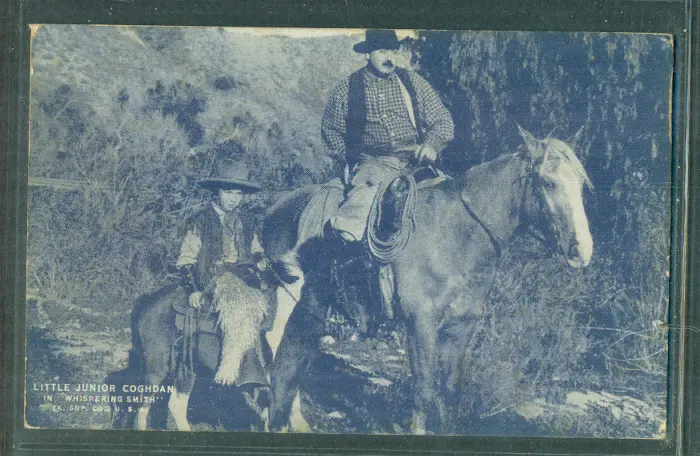
Short answer: Yes, but it's a film that demands a certain patience and appreciation for the silent era. 'Whispering Smith' is a robust, character-driven Western that holds up surprisingly well, even for modern audiences. It's a film for those who enjoy the intricacies of human nature, the machinations of revenge, and the quiet dignity of the cowboy.
Not for: Those looking for fast-paced, action-packed entertainment. 'Whispering Smith' is a slow-burn, character-focused narrative that might be too slow for some viewers.
'Whispering Smith' works because of its nuanced portrayal of its characters. Helen Holmes as Marion and John Bowers as Murray Sinclair are particularly strong, bringing depth and complexity to their roles. The film's pacing, while deliberate, serves to build tension and evoke a sense of the vast, open landscapes it depicts.
'Whispering Smith' fails because of its reliance on dated tropes and its somewhat predictable narrative arc. While the performances are solid, the script occasionally feels clichéd, and the ending, while satisfying, is not entirely surprising.
You should watch it if you have an interest in silent Westerns, classic cinema, or stories that explore the complexities of human relationships and revenge. This film is particularly well-suited for those who appreciate the slower, more deliberate storytelling of earlier film eras.
The performances in 'Whispering Smith' are a standout. Helen Holmes as Marion is both vulnerable and strong, her character's journey from separation to love and protection being particularly poignant. John Bowers as Murray Sinclair captures the complexity of a man torn between duty and personal relationships. The chemistry between Holmes and Bowers is palpable, adding depth to their on-screen romance.
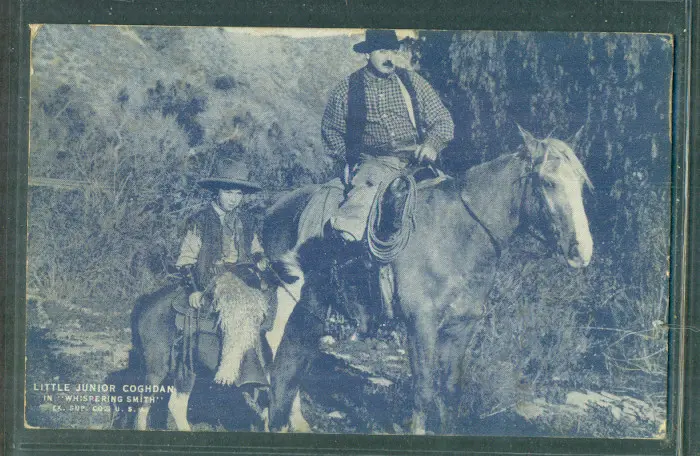
Richard Neill as 'Whispering Smith' is reserved but compelling, his character's moral ambiguity and the slow reveal of his backstory add layers to the narrative. Other performances, such as those by H.B. Warner and Eugene Pallette, are solid but less memorable.
Director William A. Seiter's work on 'Whispering Smith' is solid, but not groundbreaking. The cinematography, by Arthur Edeson, is striking, capturing the vast, open landscapes of the American West with a sense of grandeur and foreboding. The pacing is deliberate, which can be both a strength and a weakness. While it allows for a rich exploration of character and setting, it can also be slow for viewers accustomed to more rapid narratives.
The story is a straightforward revenge tale, with a few twists and turns. The reveal of 'Whispering Smith' as Bill Dancing is a clever and satisfying moment, but the overall plot is predictable. The narrative's reliance on classic Western tropes, such as the clash between desertion and loyalty, adds to its authenticity but can also feel familiar to modern audiences.
For a silent film, the soundtrack and sound effects are surprisingly effective. The music, composed by David M. Silverman, captures the mood of the film, adding to its atmosphere. The sound effects, while basic by modern standards, are well-timed and contribute to the film's sense of realism and tension.
The film's production design is one of its strongest elements. The vast, open landscapes of the American West are depicted with a sense of grandeur and desolation. The sets, while not elaborate, are well-crafted and contribute to the film's atmospheric quality. The use of natural lighting is particularly effective, with scenes set at dawn or dusk adding to the film's sense of time and place.
While 'Whispering Smith' may not be the most innovative or groundbreaking film of its era, it is a well-crafted and engaging piece of cinema that stands the test of time. Its strong performances, atmospheric setting, and slow-burn narrative make it a worthwhile watch for those interested in silent Westerns and classic cinema.
It works. But it's flawed. 'Whispering Smith' is a film that demands a certain appreciation for the silent era and its storytelling techniques. For those willing to slow down and engage with the narrative, it is a rewarding and thought-provoking experience. It may not be a groundbreaking masterpiece, but it is a well-crafted and engaging film that holds up well to modern scrutiny.
IMDb —
1929
Community
Log in to comment.