DbcultAccessing Vault...
5.8/10
Senior Film Conservator
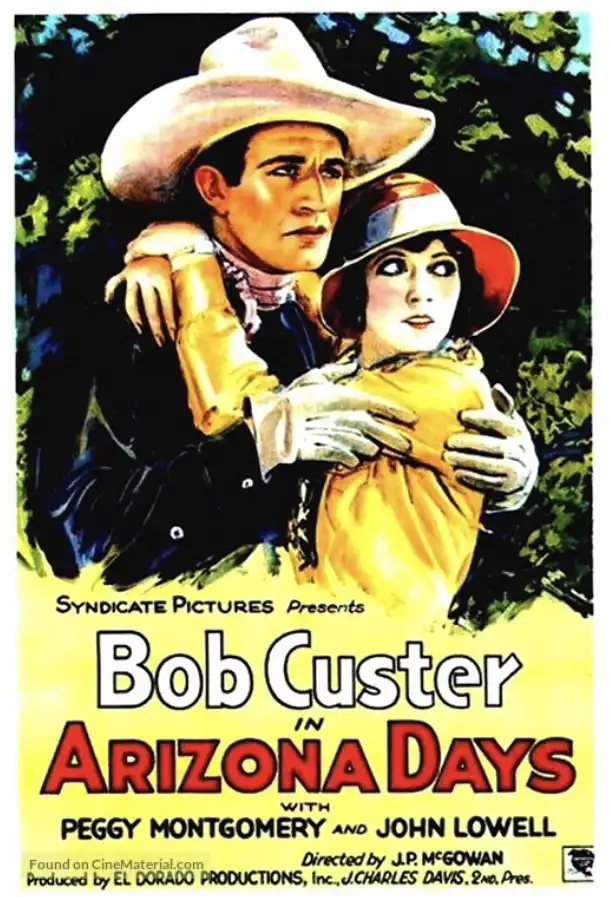
A definitive 5.8/10 rating for a film that redefined the boundaries of cult cinema. Arizona Days remains a cornerstone of transgressive art.
Okay, so "Arizona Days." If you’re here looking for some forgotten classic or a cinematic masterpiece, you can probably just keep scrolling. But if you’ve got a soft spot for really old, no-frills Westerns, the kind from the 30s where the plot’s pretty straightforward and everyone wears a hat, then this might be a decent way to spend an hour. General audiences will find it slow, maybe even a bit silly. 🤠 Definitely not for everyone.
The gist is simple enough: rancher Martin is having his cattle rustled. He calls in the Cattlemen’s Association, who send out two agents, Drexel and Van Wiley. Drexel is the serious one. Van Wiley goes undercover as a dude, which, of course, means he’s supposed to be bad at cowboy stuff. Real bad.
This "dude" disguise is where some of the film's charm, or lack thereof, really shines. Van Wiley, played by Jack Ponder, tries to act all foppish. It’s not exactly convincing, but it’s charming in its earnestness. He looks a little too comfortable on a horse for a city slicker, honestly.
The plan is to set a trap for the gang led by Hicks. J.P. McGowan as Hicks is… well, he’s a baddie. He does a lot of squinting. You know, proper villain stuff for the era. His henchmen are pretty much interchangeable, which is fine, you don't need a deep dive into every henchman's backstory here.
One scene that stuck with me involves Van Wiley trying to fix something on a wagon wheel. He fumbles around, looking quite helpless. Then a real cowboy just steps in and does it in two seconds. It felt a bit on the nose, trying to really sell that "dude" image. But hey, it got the point across, I guess.
The pacing is very much of its time. Things don’t rush. There are long stretches of riding horses across dusty landscapes. The scenery itself is nice enough, lots of wide open spaces that make you think, "Yep, that's Arizona." It gives the film a certain authentic feel, even if everything else is pretty staged.
The plot twist, or rather, the moment their cover gets blown, feels a little… clunky. Van Wiley, being the dude, accidentally lets slip too much. It’s not some grand reveal, more like a casual slip-up suddenly puts everyone in danger. The stakes feel higher, but only because the music swells a bit. And that’s about it.
Peggy Montgomery, as the leading lady, doesn't get a huge amount to do. She mostly reacts to things and looks concerned. Which, again, totally standard for this type of film. But she does have a moment where she stands up to one of Hicks' men, and for a split second, you get a glimpse of something a bit more feisty there. I liked that. 👏
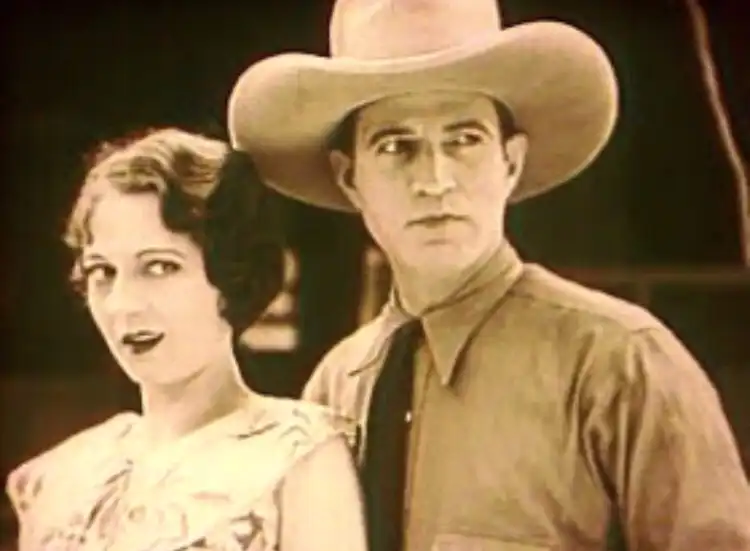
The action sequences are… gentle. A few punches are thrown, some guys fall off horses. The shootouts are more about the sound effects than any real visual impact. You see a puff of smoke, and then someone dramatically clutches their chest. It’s all very polite violence.
There's a chase scene towards the end that feels like it goes on forever. Horses galloping, dust flying. It’s visually repetitive, but you can tell the stunt riders were putting in the work. You gotta appreciate the effort in those pre-CGI days. That's real sweat and dirt.
Something I found interesting was the dialogue. It's often very direct, no wasted words. But then there are these little phrases that just sound so old, almost poetic in their simplicity. Like when someone says, "He's got a mean streak wide as a canyon." You don't hear that much anymore.
The ending wraps things up pretty neatly. The bad guys get caught, the cattle are safe, and the good guys ride off into the… well, probably back to wherever the Cattlemen’s Association office is. There’s no big emotional punch, just a satisfying conclusion to a simple story.
This isn't a film you'd seek out for its deep characters or groundbreaking cinematography. You watch Arizona Days because you want to see how they made Westerns back in the day, how the stories were told. It’s a little piece of history, bumps and all.
You can almost feel the dust on the lens sometimes. It's got that raw, early film vibe. The editing is pretty basic; cuts are functional, not artistic. But it gets the job done.
Random observations from my notebook:
IMDb 6.4
1929
Community
Log in to comment.