DbcultAccessing Vault...
Cult Review
Senior Film Conservator
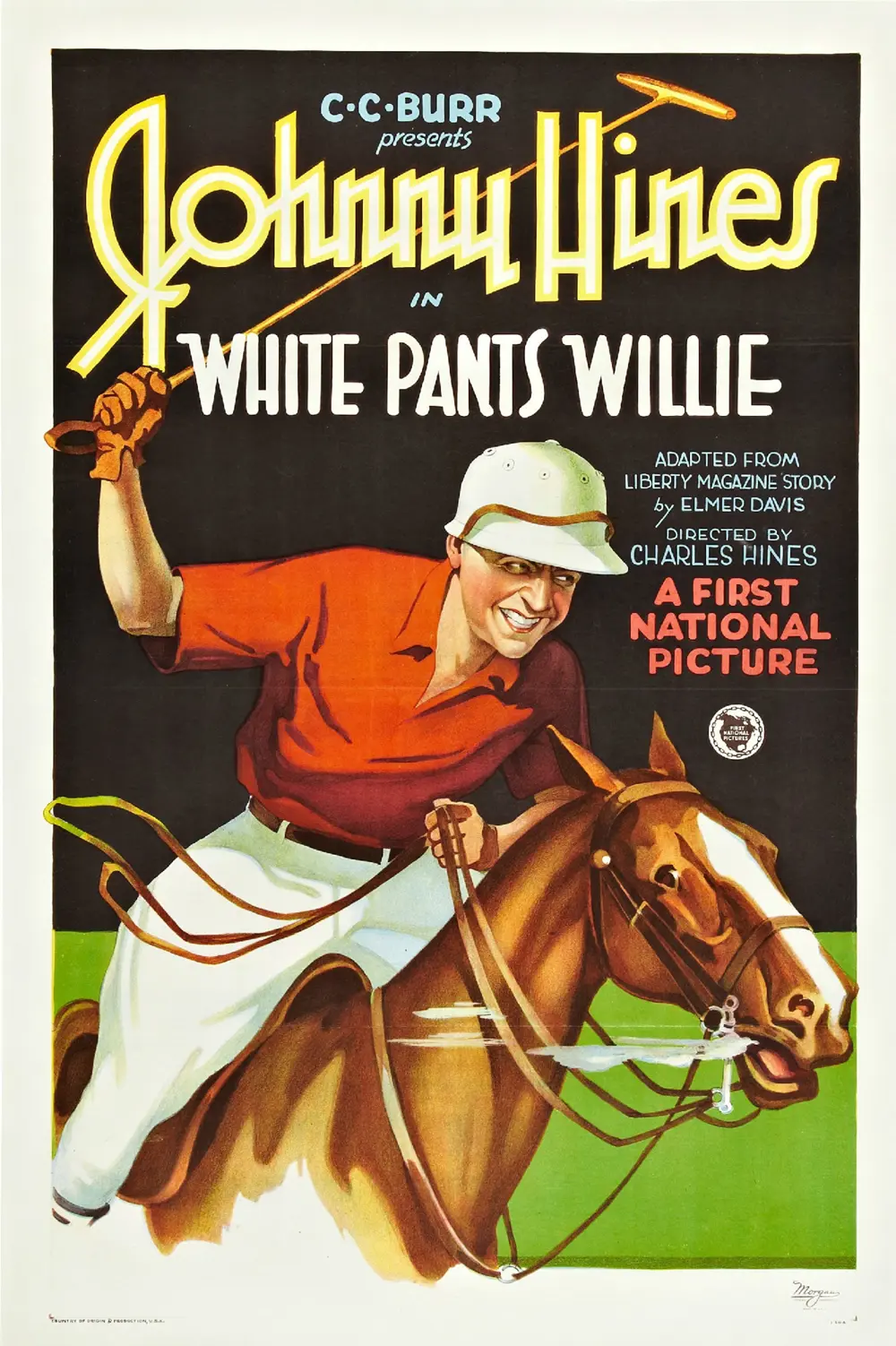
Is 'White Pants Willie' a forgotten gem worth unearthing from the silent era's vast archives? The short answer is a qualified yes, particularly for those with an appreciation for the era's unique comedic rhythms and a tolerance for its structural quirks. This film is a delightful curio for silent film enthusiasts, cinephiles interested in early American comedy, and fans of physical humor, but it will likely test the patience of viewers accustomed to modern narrative pacing and sharp, sophisticated wit.
At its heart, 'White Pants Willie' is a charming, if uncomplicated, tale of aspiration and mistaken identity, carried almost entirely on the shoulders of its star, Johnny Hines. It’s a snapshot of a bygone cinematic age, offering both genuine laughs and uncomfortable reminders of historical prejudices. For those willing to engage with it on its own terms, it offers a surprisingly rich viewing experience.
This film works because: It leverages Johnny Hines' undeniable charisma and physical comedy prowess, presenting a simple, heartwarming narrative about an underdog's attempt to navigate high society.
This film fails because: Its narrative is thin, relying heavily on a single comedic premise, and its portrayal of certain characters, particularly Wong Lee, is steeped in regrettable ethnic stereotypes of the period.
You should watch it if: You have a deep affection for silent-era slapstick, appreciate the historical context of early Hollywood, and are interested in the careers of lesser-known comedic talents like Johnny Hines.
Released in 1927, 'White Pants Willie' arrives late in the silent era, just on the cusp of the sound revolution that would forever change Hollywood. Directed by Paul Perez, the film serves as a vehicle for Johnny Hines, a comedic actor who, while not achieving the legendary status of a Chaplin or Keaton, cultivated a loyal following through his energetic performances and everyman appeal. This particular feature encapsulates much of what made Hines a draw: his earnest charm, his knack for physical gags, and his ability to play a sympathetic underdog thrust into absurd circumstances.
The film’s premise, centered on social climbing and mistaken identity, was a well-worn trope even in the 1920s, but 'White Pants Willie' injects it with a particular brand of Americana, focusing on the aspirational dreams of a working-class mechanic. It’s a story that, despite its age, still resonates with themes of wanting to belong, to impress, and to overcome one's perceived limitations, even if the methods are comically ill-advised.
Johnny Hines, as Willie Bascom, is undeniably the linchpin of this entire production. His performance is a masterclass in silent-era physical comedy, characterized by a kinetic energy that never feels forced. Hines possesses a natural affability that makes Willie instantly likable, even when he’s at his most naive or bumbling. He’s not the poetic tramp of Chaplin, nor the stoic acrobat of Keaton; Hines offers something distinct—a relatable, slightly goofy optimism that powers through every predicament.
Consider the scene where Willie first imagines himself at Cold Springs. His expressions shift from hopeful longing to confident swagger, a silent monologue delivered through exaggerated facial movements and jaunty postures. Later, his attempts to feign polo expertise are pure comedic gold. He doesn't just fall off a horse; he orchestrates a spectacular, multi-part collapse that highlights his utter incompetence while simultaneously drawing sympathy. This blend of earnestness and slapstick elevates what could have been a series of tired gags into genuinely amusing moments.
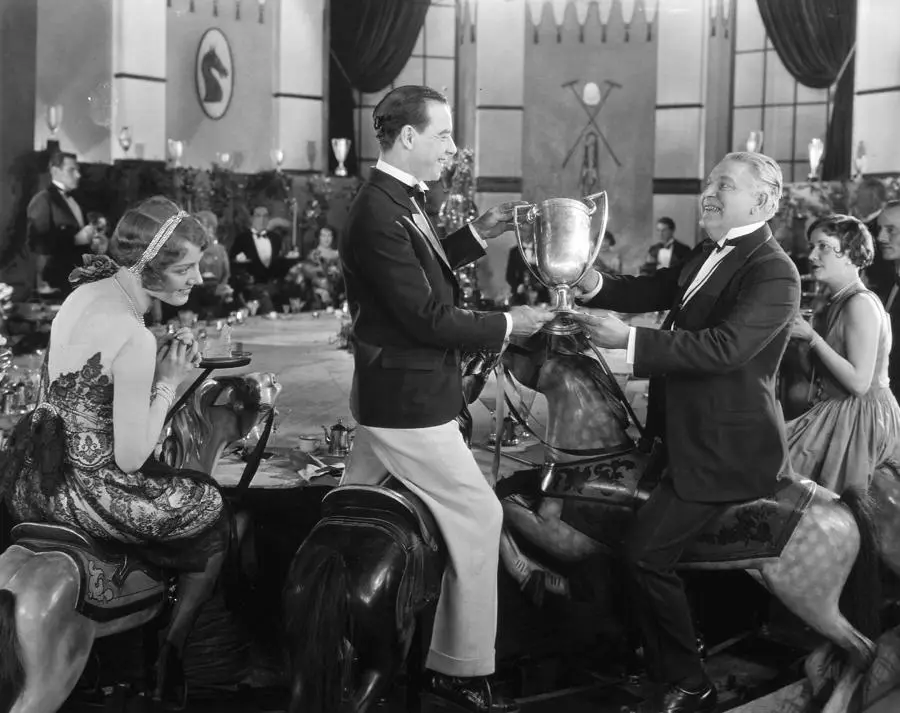
Hines understands the nuances of playing a character who is out of his depth. His wide-eyed wonder upon arriving at the opulent resort contrasts sharply with his frantic efforts to maintain the illusion of being a seasoned polo player. It's a performance that doesn't rely on cynicism or complex emotional arcs, but rather on the sheer force of personality and perfectly timed physical humor. His ability to convey so much with just a glance or a stumble is a testament to his skill in a medium that demanded visual storytelling above all else.
The plot of 'White Pants Willie' is straightforward, almost to a fault. It establishes Willie's humble origins, introduces the object of his affection, Helen, and then swiftly transitions into the core conceit of mistaken identity at the resort. The script, penned by Elmer Davis, Howard J. Green, and Paul Perez, prioritizes comedic situations over intricate storytelling. This isn't a film designed to surprise with twists or deep character development; it's a vehicle for gags.
For modern audiences, the pacing might feel a little leisurely in its setup. The initial scenes establishing Willie's shop and his encounter with the Charters family, while charming, take their time. Once Willie arrives at Cold Springs, however, the film finds its rhythm, accelerating into a series of comedic misunderstandings that culminate in the climactic polo match. The build-up to the polo game, where Willie desperately tries to learn the sport, is particularly well-handled, creating anticipation for the inevitable chaos.
The narrative's simplicity can be seen as both a strength and a weakness. It allows for clear, accessible humor, but it also means there's not much beneath the surface. Unlike, say, the intricate plotting of a Buster Keaton film like The General, 'White Pants Willie' keeps things uncomplicated, focusing on the immediate comedic payoff of each scene. This approach ensures the film remains light and digestible, but it might leave some viewers yearning for more depth.
Beyond Hines, the supporting cast plays their roles with the broad strokes typical of silent comedies. Leila Hyams, as Helen, is charming and beautiful, serving primarily as the romantic interest and the catalyst for Willie's social aspirations. She embodies the ideal of feminine grace and high society, providing a clear goal for Willie's antics. Henry A. Barrows, as her industrialist father Philip Charters, provides a stern but ultimately benevolent figure of authority, whose initial interest in Willie’s invention subtly grounds the fantastic elements of the plot in a touch of reality.
The most complex, and unfortunately most problematic, performance comes from George Kuwa as Wong Lee, Willie's Chinese laundryman-turned-chauffeur. Kuwa, a Japanese-American actor, was frequently cast in stereotypical East Asian roles during this period, and his character here is no exception. Wong Lee is depicted with all the common, exaggerated tropes: broken English (conveyed through intertitles), subservience, and a certain inscrutable wisdom. While his role is crucial to Willie's masquerade, and he often displays a surprising wit and agency, the character remains firmly rooted in the regrettable racial caricatures prevalent in early Hollywood. It's a performance that demands historical context from the viewer, acknowledging its place in time without excusing its inherent biases.
Walter Long, often cast as villains or heavyweights, appears briefly as a rival polo player, providing a suitable antagonist for Willie's comedic struggles on the field. The ensemble works well to create the world around Willie, reacting to his antics with varying degrees of confusion, amusement, and disdain, all serving to heighten the comedic tension.
Paul Perez's direction is competent and functional, prioritizing clarity for the comedic beats. The cinematography, while not groundbreaking, effectively captures the contrasting environments of Willie's humble garage and the opulent Cold Springs resort. The visual language is straightforward, relying on clear shot compositions to convey the action and reactions necessary for silent comedy.
One of the film's visual highlights is the depiction of the polo match. Perez orchestrates the chaos effectively, using wide shots to show the scope of the game and tighter shots to focus on Willie’s individual struggles. The gags involving Willie and his horse are well-staged, demonstrating a good understanding of physical comedy mechanics. The opulent set design of Cold Springs, with its grand architecture and well-dressed patrons, effectively establishes the aspirational world Willie is trying to infiltrate, making his white pants feel both appropriate and utterly out of place simultaneously.
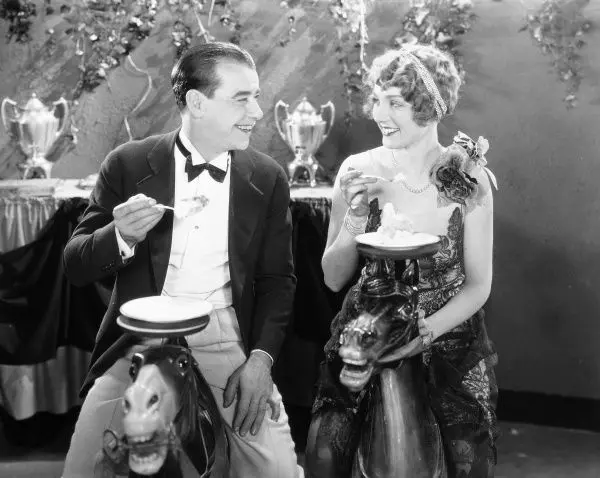
There's a pleasant simplicity to the visual storytelling. No fancy camera tricks or experimental angles; just honest, clear filmmaking designed to make you laugh. This unpretentious approach allows Hines' performance to shine without distraction, proving that sometimes, less is indeed more in visual comedy. The film’s aesthetic is a charming window into the visual conventions of late silent cinema, before the advent of sound pushed filmmakers towards more static, dialogue-heavy compositions.
'White Pants Willie' is more than just a series of gags; it offers, perhaps unintentionally, a fascinating look into the social fabric and prejudices of its time. The central premise of Willie's desire to wear white pants at a high-society resort is a subtle yet potent symbol of class aspiration. The white pants aren't just an article of clothing; they represent an ideal, a sartorial key to acceptance in a world that would otherwise dismiss a grease-stained mechanic. This performative aspect of class identity, the idea that one can dress the part to belong, is surprisingly prescient.
However, the film’s handling of George Kuwa’s character, Wong Lee, cannot be overlooked. While Wong Lee is arguably given more intelligence and active participation in the plot than many similar characters of the era, his portrayal is undeniably rooted in then-common, deeply problematic stereotypes of East Asians. He speaks in broken English intertitles, is subservient yet cunning, and his very presence as a 'chauffeur' for Willie's grand scheme hinges on a racialized understanding of service roles. It’s a thorny aspect that complicates a modern viewing experience.
One could argue that within the limited and often offensive representational landscape of 1920s cinema, Wong Lee's character, despite its flaws, manages to possess a degree of agency that elevates him beyond a mere backdrop. He is an active participant in the deception, often offering practical solutions and displaying a quick wit that challenges the simplistic portrayal. This is a debatable point, certainly, as the problematic nature of the stereotype remains, but it's an observation that hints at the complexities of analyzing historical media. It works. But it’s flawed.
The film, therefore, serves as a dual artifact: a testament to the comedic talent of Johnny Hines and a stark reminder of the social biases embedded in early Hollywood. Engaging with 'White Pants Willie' requires a critical lens, acknowledging its charms while confronting its less savory elements. It’s a film that sparks conversation about how far we've come, and how much further we still need to go in terms of representation.
For enthusiasts of silent cinema, particularly those drawn to the era’s unique brand of physical comedy and social satire, "White Pants Willie" offers a charming, if somewhat dated, experience.
Its value lies in its historical context, providing a window into the comedic sensibilities and class anxieties of the 1920s.
However, its narrative simplicity and reliance on ethnic stereotypes may prove challenging for contemporary viewers.
It's a film best approached with an understanding of its historical period and a willingness to overlook certain elements.
'White Pants Willie' is a charming, if imperfect, relic of the silent era. It stands as a testament to Johnny Hines' comedic talent and offers genuine laughs through its well-executed physical gags and endearing underdog story. While its dated humor and particularly its use of racial stereotypes present a hurdle for contemporary audiences, it remains a valuable piece of cinematic history. It’s a film that requires an open mind and an appreciation for its context, but for those willing to engage, it delivers a surprisingly enjoyable, if sometimes uncomfortable, experience. A worthwhile watch for the curious, a skip for the easily offended. It’s a film of its time, for better and for worse. The white pants might fit, but they come with a few stains.
IMDb —
1925
Community
Log in to comment.