DbcultAccessing Vault...
Cult Review
Senior Film Conservator
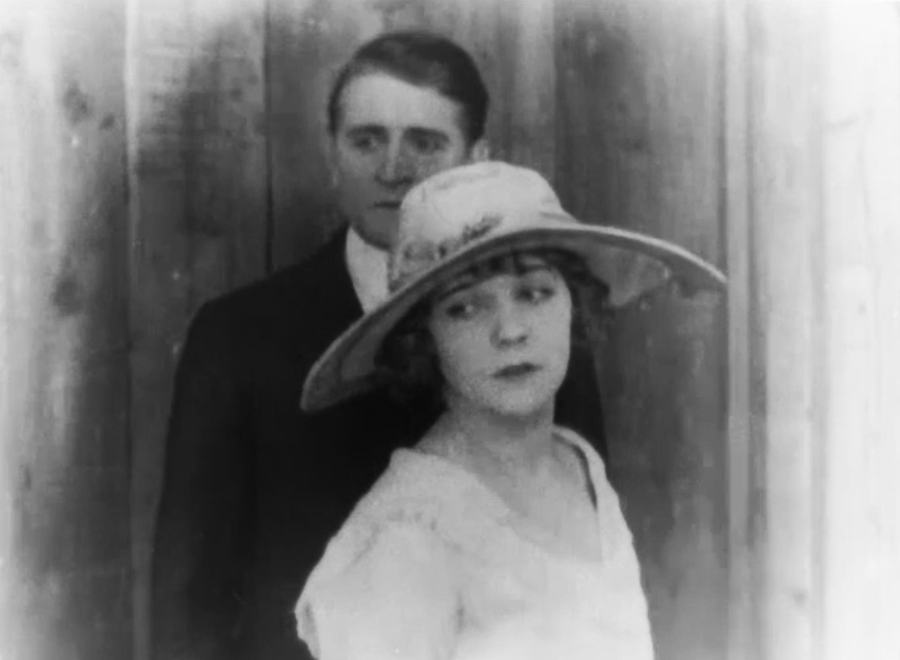
In the pantheon of silent cinema, few works manage to distill the essence of O. Henry’s prose with the same atmospheric gravity as The Church with an Overshot Wheel. Released in 1920, a year that saw the industry oscillating between the avant-garde experiments of Europe and the burgeoning star system of Hollywood, this film stands as a testament to the power of the intimate narrative. It eschews the grandiosity of epics like The White Terror to focus on a singular, crushing human experience: the loss of a child and the subsequent search for divine intervention through labor.
The story follows a grain miller, played with a haunting, stoic intensity by William H. Turner. Turner’s performance is a masterclass in the 'restrained' style of the era, avoiding the histrionics often associated with silent melodrama. When his young daughter vanishes—a sequence filmed with a lingering, ghostly quality—the miller’s world does not merely shatter; it recalibrates. The mill, which for generations provided the physical bread of life for his community, is stripped of its gears and pulleys to become a church. This is not the clean, sanitized religion of The Way of the World; it is a religion of wood, water, and sweat.
Central to the film’s visual language is the overshot wheel itself. In early 20th-century cinema, machinery often represented progress or destruction, as seen in the social commentary of The Slacker. However, here, the wheel is a temporal loop. It represents the cyclical nature of the miller’s mourning. The water falls, the wheel turns, and the grief remains constant. The cinematography captures the wheel with a religious reverence, casting long shadows that mimic the Gothic arches of a cathedral. It is a stunning bit of set design that bridges the gap between the industrial and the ethereal.
Unlike the high-stakes political maneuvering found in The Battle of Ballots, the conflict in The Church with an Overshot Wheel is internal and metaphysical. The miller’s decision to turn the mill into a church is viewed by the townspeople with a mixture of pity and suspicion. This social friction provides a necessary counterpoint to the miller’s isolation, grounding the film in a recognizable reality. The supporting cast, including Rita Murphy and Ethel Fleming, provide the necessary human textures that prevent the film from becoming a purely symbolic exercise.
When comparing this work to contemporary features like Live Sparks, the tonal disparity is striking. Where Live Sparks leans into the kinetic energy of the jazz age, The Church with an Overshot Wheel feels like a relic of a more contemplative century. It shares more DNA with the atmospheric dread of Madame de Thebes, though it swaps occult mysticism for a grounded, Protestant sense of duty and suffering.
The pacing of the film is deliberate, perhaps too slow for those accustomed to the frantic editing of modern cinema, but for the patient viewer, it mirrors the slow passage of years the miller endures. The writers, O. Henry and Robert A. Sanborn, understood that the 'twist'—a hallmark of O. Henry’s bibliography—requires a solid foundation of emotional investment. Without the painstaking depiction of the miller’s daily rituals, the eventual resolution would feel like a cheap narrative trick. Instead, it feels like a hard-won revelation, much like the moral arcs found in The Straight Way.
The direction (often attributed to the collective efforts of the Vitagraph or early studio systems of the time) utilizes deep focus to emphasize the emptiness of the miller’s home. The absence of the child is a physical presence in every frame. This technical choice is far more effective than the overt sentimentality seen in Finishing Mary. Here, the camera doesn't just record the actors; it interrogates the space they inhabit. The mill-church becomes a labyrinth of memory, each beam and stone imbued with the weight of what was lost.
Furthermore, the film’s treatment of class and labor is worth noting. The miller is a craftsman, and his 'conversion' is a redirection of his craft. This elevates the film above simple moralizing. It suggests that the act of creation—whether it be flour or faith—is the only antidote to the entropy of despair. This theme is explored with less subtlety in The Quitter, but in The Church with an Overshot Wheel, it is handled with a poetic nuance that remains rare even in the sound era.
As we approach the climax, the film masterfully builds a sense of inevitable convergence. The 'overshot wheel' is no longer just a piece of machinery; it is the mechanism of fate. While some might find the resolution too convenient, it aligns perfectly with the era’s fascination with serendipity and divine justice, themes also prevalent in A Sporting Chance and The Thoroughbred. However, unlike the often predictable endings of John Needham's Double, there is a profound sense of catharsis here that transcends the plot mechanics.
The visual contrast between the rugged exterior of the mill and the serene, makeshift interior of the church serves as a metaphor for the miller himself. On the outside, he remains the weathered, hard-working laborer, but internally, he has been hollowed out and filled with a new, singular purpose. This duality is captured beautifully in a scene where the miller stands by the wheel at sunset, the golden hour light (rendered in beautiful sepia tones in restored prints) washing over the wood. It is a moment of pure cinematic bliss, rivaling the scenic beauty of The Great White Trail.
Why does a film like this matter a century later? In an age of digital noise and rapid-fire consumption, The Church with an Overshot Wheel asks us to sit with silence. It asks us to consider the physical spaces we occupy and how we imbue them with meaning. It doesn't rely on the slapstick humor of Oh, Baby! or the voyeuristic curiosity of A Neighbor's Keyhole. Instead, it offers a sincere, unflinching look at the human soul in transition.
The performances of William Corbett and the rest of the ensemble provide a sturdy framework for Turner’s central role. The chemistry between the characters feels authentic to the period—stiff yet deeply felt. The writing by Sanborn and O. Henry ensures that every scene serves the overarching theme of redemption through transformation. It is a film that rewards multiple viewings, as the subtle visual cues and recurring motifs (the flow of water, the grinding of stones) take on new layers of meaning once the ending is known.
In conclusion, The Church with an Overshot Wheel is a masterwork of early American cinema. It navigates the treacherous waters of sentimentality without ever capsizing, held steady by its strong central performance and its innovative use of symbolic architecture. It is a poignant reminder that even when the wheels of our lives are broken by tragedy, the power to repurpose those fragments into something sacred remains within our grasp. It is a essential viewing for any serious student of film history or anyone who has ever looked for God in the middle of a mundane workday.
IMDb 5
1923
Community
Log in to comment.