DbcultAccessing Vault...
Cult Review
Senior Film Conservator
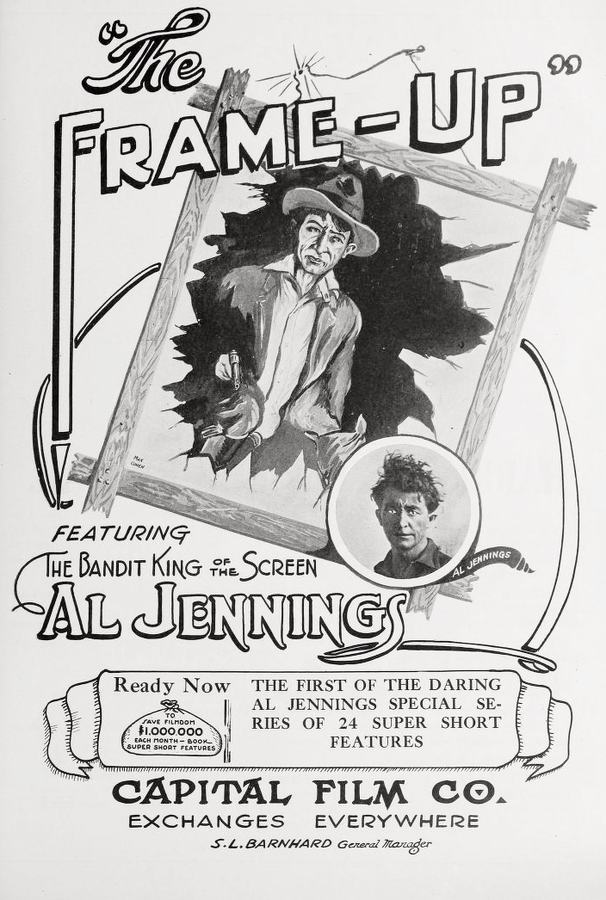
Ah, the year 1919. A time when the world was still reeling from the Great War, yet cinema, ever the resilient storyteller, was blossoming into an art form of immense power and reach. It was an era of grand gestures, stark morality, and the nascent language of the moving image finding its voice. And in this vibrant landscape, we find a compelling artifact: The Frame-Up, a picture that, even a century later, still resonates with a raw, primal energy. Starring the enigmatic Al J. Jennings and the luminous Vivian Gane, this film plunges us into a narrative that, while ostensibly a crime drama, delves much deeper into the human psyche, exploring themes of redemption, societal prejudice, and the relentless pursuit of truth.
The very title, The Frame-Up, immediately conjures images of deceit and injustice, setting a somber tone that the film expertly maintains. At its heart lies Silas 'The Shadow' Blackwood, a character imbued with a fascinating duality. Jennings, with his real-life history as a former outlaw, brings an undeniable authenticity to Silas, lending a gravitas that few actors of the era could muster. He's a man battling not just external adversaries, but the ghosts of his own past, desperately trying to forge an honest existence in the nascent town of Redemption. This isn't just a physical journey; it's a profound spiritual odyssey, a testament to the enduring human desire for a second chance. His transformation from a notorious figure to a diligent blacksmith is portrayed with a quiet dignity, a subtle performance that relies heavily on Jennings's expressive eyes and world-weary demeanor.
Opposite Jennings, Vivian Gane's Eleanor Vance is a revelation. Far from being a mere damsel in distress, Eleanor is a woman of formidable intellect and unwavering moral compass. Her initial skepticism towards Silas slowly gives way to a profound belief in his innocence, driven not by naive romanticism, but by a keen observation of character and an astute ability to dissect the flimsy evidence arrayed against him. Gane imbues Eleanor with a fiery independence, a characteristic that would have resonated deeply with audiences of the time, who were witnessing significant shifts in societal roles for women. Her performance is a masterclass in silent film acting, conveying a complex emotional landscape through subtle gestures, intense gazes, and an undeniable screen presence. She is the moral anchor of the film, the beacon of hope in a narrative steeped in suspicion.
The antagonist, Percival Thorne, is a deliciously despicable figure, a meticulous schemer whose villainy is born not of passion, but of cold, calculating ambition. The film's writers, though uncredited in historical records, crafted a villain whose motives are chillingly plausible – a thirst for power and wealth that blinds him to any sense of ethics. Thorne's orchestration of the bank robbery and the subsequent framing of Silas is a testament to the insidious nature of systemic injustice, a theme that, regrettably, remains perennially relevant. The narrative tension is expertly ratcheted up as Thorne's web of lies tightens around Silas, creating a palpable sense of dread and urgency. The director, whose vision undoubtedly shaped this compelling tale, understood the power of visual storytelling, relying on dramatic close-ups, sweeping wide shots of the frontier, and carefully constructed intertitles to convey the intricate plot.
One of the film's most striking achievements is its exploration of societal prejudice. Silas's past, while genuinely reformed, serves as a convenient weapon for Thorne and a barrier to justice. The film subtly critiques the readiness of a community to condemn based on reputation rather than present character, a powerful message for any era. Eleanor's journey of discovery is also a journey of challenging these preconceived notions, forcing the audience to question their own biases. This thematic depth elevates The Frame-Up beyond a simple crime thriller, positioning it as a thoughtful commentary on the complexities of human nature and community judgment.
Visually, the film is a fascinating window into early cinematic techniques. The cinematography, though perhaps rudimentary by today's standards, is remarkably effective in establishing mood and atmosphere. The stark contrasts of light and shadow are utilized to great effect, mirroring the moral ambiguities of the characters. The dusty landscapes of Redemption feel authentic, a character in themselves, reflecting the rugged individualism and unforgiving nature of the frontier. The action sequences, particularly the climactic pursuit, are staged with a dynamic energy that keeps the audience on the edge of their seats, a testament to the burgeoning understanding of cinematic rhythm and pacing. One might draw parallels to the early westerns and action films of the era, such as The Ranger of Pikes Peak, in their shared appreciation for dramatic landscapes and physical prowess, though The Frame-Up injects a deeper psychological layer.
The use of intertitles is particularly noteworthy. Far from being mere plot exposition, they often serve as an extension of the characters' inner thoughts, or as poignant narrative punctuation. They are carefully crafted, adding to the film's literary quality and ensuring that even without spoken dialogue, the emotional nuances and plot complexities are fully conveyed. This delicate balance between visual storytelling and textual guidance is a hallmark of superior silent cinema, distinguishing it from lesser efforts that relied too heavily on one or the other.
The film's denouement, where Silas cleverly employs his old skills for justice rather than crime, is a wonderfully satisfying twist. It underscores the idea that past experiences, even unsavory ones, can be repurposed for good, a powerful message of hope and transformation. This moment of righteous ingenuity not only clears Silas's name but also solidifies his redemption in the eyes of the community and, crucially, in Eleanor's heart. The blossoming romance between Silas and Eleanor feels earned, built on mutual respect, shared adversity, and a profound understanding of each other's true character. It’s a love story that transcends the typical melodramatic tropes of the time, grounded in strength and conviction.
Comparing The Frame-Up to other films of its time reveals its unique position. While it shares the dramatic intensity of crime films like The Beloved Blackmailer or the moral ambiguities of The Millionaire Pirate, The Frame-Up distinguishes itself through its nuanced portrayal of a protagonist striving for genuine rehabilitation. It avoids the simplistic good-versus-evil dichotomy, instead presenting a world where reputation can be as damning as actual guilt. The film's psychological depth is more akin to the character-driven dramas of the period, perhaps even hinting at the more complex narratives that would emerge in later decades.
The performances of Gane and Jennings are particularly compelling when viewed through the lens of early acting styles. Silent film acting required a heightened sense of theatricality, yet both actors manage to convey genuine emotion without descending into mere caricature. Jennings's brooding intensity and Gane's spirited determination create a dynamic onscreen chemistry that is both believable and engaging. Their interactions, often communicated through longing glances and urgent gestures, are the emotional core of the film, providing a human anchor amidst the swirling plot of crime and conspiracy. This emotional resonance is what truly elevates the film, making the audience invest deeply in the fate of its protagonists.
The film also serves as a fascinating historical document, offering glimpses into the social fabric and technological limitations of 1919. The sets, the costumes, the modes of transportation – all contribute to an immersive experience of a bygone era. It's a reminder of how far cinema has come, yet also how certain narrative archetypes and human struggles remain timeless. The ingenuity of early filmmakers to tell complex stories with nascent technology is truly inspiring, and The Frame-Up stands as a testament to that creative spirit. It reminds us that even with rudimentary tools, a compelling story and passionate performances can create lasting art.
In conclusion, The Frame-Up is more than just a historical curiosity; it is a powerful and surprisingly sophisticated piece of silent cinema. Its narrative, while rooted in the conventions of the era, transcends them through its rich characterizations, potent thematic explorations, and masterful storytelling. The performances by Al J. Jennings and Vivian Gane are captivating, bringing a depth and authenticity to their roles that resonate long after the final fade-out. It's a film that deserves to be rediscovered, not just for its historical significance, but for its enduring artistic merit. It’s a compelling argument for the timeless appeal of a well-told story, especially one that champions justice and redemption against seemingly insurmountable odds. For those who appreciate the foundational artistry of early cinema, The Frame-Up offers a rich and rewarding experience, a true gem from the silent era that continues to speak volumes about the human condition. It stands proudly alongside other compelling dramas of its time, such as Unexpected Places or A Bid for Fortune, in its ability to captivate and provoke thought, proving that the silent screen was anything but silent in its impact.
The careful construction of its plot, the nuanced character arcs, and the palpable tension created by the unjust accusations against Silas Blackwood all contribute to a narrative that feels remarkably modern in its psychological underpinnings. The film doesn't shy away from the darker aspects of human nature, yet it ultimately champions hope and the triumph of truth. Eleanor Vance's unwavering belief in Silas, despite the overwhelming evidence, serves as a powerful reminder of the importance of individual conviction in the face of collective doubt. This dynamic interplay between skepticism and belief, between reputation and reality, forms the very backbone of the film’s enduring appeal. It's a testament to the filmmakers' understanding of human drama, crafting a story that could easily translate to contemporary settings while retaining its period charm and resonance.
Moreover, the film’s portrayal of the frontier town of Redemption is particularly evocative. It’s not merely a backdrop for the action, but a living, breathing entity, with its own social hierarchies, prejudices, and moral codes. The community’s initial eagerness to condemn Silas, fueled by fear and past notoriety, highlights the fragility of justice when mob mentality takes hold. This aspect of the narrative adds another layer of social commentary, making The Frame-Up a more complex and thought-provoking work than many of its contemporaries. It’s a film that invites introspection, urging viewers to consider the mechanisms of justice and the power of individual agency. This socio-cultural texture distinguishes it from more straightforward action-adventure films, aligning it more closely with the dramatic depth seen in productions like Les Misérables, Part 2: Fantine, in its exploration of societal injustices.
The influence of The Frame-Up, while perhaps not as widely documented as some blockbusters of the era, can be seen in the burgeoning genre of crime dramas that would follow. Its focus on a falsely accused protagonist, battling against a corrupt system, became a foundational trope. The careful building of suspense, the dramatic reveals, and the ultimate triumph of good over evil provided a template for countless films. It showcased the potential of cinema to not only entertain but also to explore profound moral questions, engaging audiences on both an emotional and intellectual level. This legacy, though subtle, is an important part of cinema history, marking The Frame-Up as a significant, albeit often overlooked, contributor to the evolution of narrative film. It's a silent film that speaks volumes about its time and about the timeless human struggle for justice.
IMDb 7.1
1931
Community
Log in to comment.