DbcultAccessing Vault...
6.2/10
Senior Film Conservator
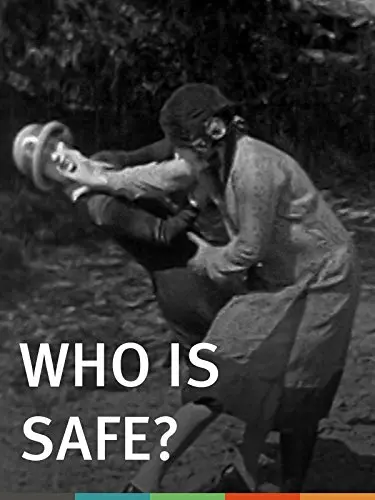
A definitive 6.2/10 rating for a film that redefined the boundaries of cult cinema. Who Is Safe? remains a cornerstone of transgressive art.
Is 'Who Is Safe?' worth watching today? Short answer: yes, but with significant caveats that pivot on your viewing intent. This instructional film, likely a relic from an earlier era, offers a fascinating glimpse into historical approaches to women's self-defense, but it functions more as an archival curiosity than a definitive modern guide.
It's a film for historians, sociologists, and those interested in the evolution of personal safety education. It is emphatically NOT for anyone seeking contemporary, comprehensive self-defense training or a deeply engaging narrative experience.
"Who Is Safe?" is, at its heart, a utilitarian piece of cinema. It strips away narrative pretense, eschewing character arcs and emotional development in favor of direct, no-nonsense instruction. The film’s singular purpose is to equip women with a basic repertoire of physical techniques to fend off an attacker. In an age where personal safety was perhaps less openly discussed or formally taught, such a film would have served a critical, if somewhat rudimentary, educational function.
The effectiveness of this approach, however, is deeply rooted in its context. When viewed through a modern lens, its methods might appear simplistic, its scenarios staged, and its underlying assumptions about threat perception quite dated. Yet, to dismiss it entirely would be to overlook its historical significance as a pioneering effort in a crucial area of public education.
"This film works because it is unflinchingly direct in its ambition to empower. It fails because its methods and presentation are undeniably a product of its time, lacking the nuance and depth required for modern efficacy. You should watch it if you appreciate historical documents, wish to understand societal anxieties surrounding women's safety in a bygone era, or are a student of early instructional filmmaking."
The directorial choices in "Who Is Safe?" are entirely subservient to its instructional goals. There is no grand artistic vision at play here, no sweeping camera movements or intricate lighting setups designed to evoke mood or atmosphere. Instead, the cinematography is starkly functional, prioritizing clarity and visibility above all else. The camera often adopts a wide, static shot, ensuring that the full body movements of the instructor and the 'attacker' are always within the frame.
Close-ups are used sparingly, typically to highlight a crucial grip or a specific pressure point, such as a detailed shot of an elbow strike or a wrist lock. This pragmatic approach ensures that viewers can clearly discern each step of the technique. However, it also contributes to a somewhat sterile viewing experience, devoid of the dynamism one might expect even from a modern educational video. The framing, while clear, often feels a little too detached, failing to truly immerse the viewer in the urgency of the situations being depicted.
One particular sequence, demonstrating how to escape a grab from behind, uses an overhead shot that, while conceptually sound for showing leverage, ends up flattening the action, making it harder to appreciate the three-dimensional struggle. It’s a choice that speaks to the technical limitations or perhaps the prevailing instructional film conventions of its era, valuing diagrammatic clarity over visceral impact.
The pacing of "Who Is Safe?" is deliberate, almost methodical. Each self-defense technique is introduced, demonstrated slowly, often repeated, and then shown in a simulated 'real-time' scenario. This structured rhythm is essential for an instructional film, allowing viewers ample opportunity to absorb and potentially practice the movements. There's no rush, no frantic editing; the cuts are precise and serve only to transition between steps or different angles of the same technique. This measured pace, while effective for learning, does mean the film can feel somewhat slow for a modern audience accustomed to quicker cuts and more energetic presentations.
The tone throughout is sober and serious. There's an underlying sense of gravity, an acknowledgment of the potentially life-threatening situations the film aims to address. The instructor, likely the central figure, maintains a calm, authoritative demeanor, eschewing any theatrics. This professional detachment is both a strength and a weakness. It lends credibility to the instruction, ensuring the focus remains on the techniques themselves. However, it also means the film lacks any emotional hook or motivational rhetoric that might inspire greater engagement. It’s purely informative, almost clinical in its delivery, which some might find off-putting or even a little dull. Compare this to the dramatic tension inherent in a narrative film like The Hidden Truth, where danger is explored through character, not just technique.
To speak of 'acting' in "Who Is Safe?" is perhaps a misnomer. The individuals involved are less performers and more demonstrators. The instructor, presumably a trained expert, exhibits a clear, precise execution of each technique. Their movements are fluid and confident, conveying competence and authority. The 'attackers' in the simulated scenarios play their roles with a necessary degree of realism, enough to convey the threat without descending into caricature. They are convincing enough to provide a visual context for the defense, but their performances are strictly functional, designed to highlight the effectiveness of the counter-moves.
There's no pretense of emotional depth or character development. The 'actors' are essentially props in a pedagogical exercise, their interactions strictly choreographed to illustrate a point. This is perfectly acceptable, even desirable, for an instructional film. However, it means the film relies entirely on the inherent interest in the subject matter rather than the charisma of its cast to hold attention. It’s a stark contrast to the dramatic portrayals of conflict seen in films like The Folly of Desire, where the human element is paramount.
For contemporary audiences seeking practical self-defense knowledge, "Who Is Safe?" is largely obsolete. Modern self-defense methodologies have evolved significantly, incorporating a deeper understanding of psychology, de-escalation, and a wider range of physical techniques that are often more adaptable to real-world scenarios. The film's techniques, while perhaps effective in a specific context, might not translate well to the diverse and unpredictable nature of modern threats.
However, its value as a historical artifact is undeniable. It provides a window into past societal concerns about women's safety and the methods employed to address them. Watching it offers insights into how media was used for public education decades ago. It's also an interesting study in early instructional filmmaking, showcasing a particular style and approach that has since been refined and diversified. For academic purposes, or simply out of historical curiosity, it absolutely holds merit. But do not expect it to be your primary source for learning how to defend yourself in the 21st century.
One surprising observation is the film's almost clinical detachment from the emotional trauma of assault. While this might be a deliberate choice to maintain focus on technique, it inadvertently presents self-defense as a purely physical transaction, overlooking the immense psychological toll. This feels like a significant omission, even for an instructional piece.
Furthermore, I would argue that while the film aims to empower, its very existence and presentation could, paradoxically, instill a degree of fear. By focusing solely on potential dangers without broader context or emphasis on prevention beyond physical confrontation, it risks painting the world as a relentlessly hostile place. Modern approaches often balance self-defense with awareness and confidence-building, which this film, by its nature, cannot fully achieve. It works. But it’s flawed.
Is it possible that films like "Who Is Safe?" inadvertently contributed to a perception of women as inherently vulnerable, even as they sought to arm them? It's a debatable point, but one worth considering when viewing such historical media. The emphasis on physical counter-measures, while necessary, might overshadow the broader conversation about societal responsibility and preventative measures beyond individual action.
"Who Is Safe?" is more a historical artifact than a contemporary guide. Its primary value lies in its ability to transport us to a different era, offering a glimpse into the concerns and solutions of its time regarding women's safety. As a piece of filmmaking, it’s a straightforward, no-frills instructional reel, designed for utility over artistry. It certainly isn't going to win any awards for dramatic impact or innovative storytelling, unlike a character-driven piece such as Bits of Life.
For those with a keen interest in social history, gender studies, or the evolution of educational media, it’s an intriguing watch. It serves as a reminder of how far discussions around personal safety and empowerment have come, and how much has changed in our understanding of effective self-defense. However, if you're looking for practical, current advice on how to protect yourself, you'd be much better served by modern resources. Approach it with an open mind and an appreciation for its historical context, and you might find it surprisingly thought-provoking. Otherwise, it’s a film that has largely been superseded by time and progress.
IMDb 7.2
1928
Community
Log in to comment.