DbcultAccessing Vault...
Cult Review
Senior Film Conservator
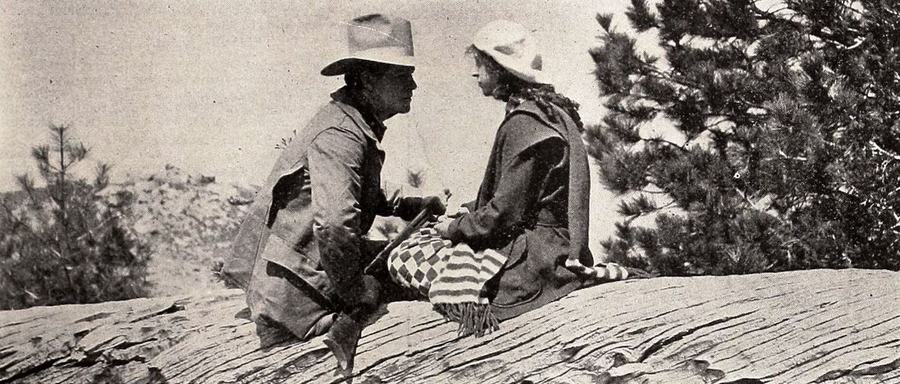
The scenario is deceptively simple: a man writes poems, a woman inspires them, a villain wants both silenced. Yet beneath that pine-scented logline lurks a hall-of-mirrors meditation on authorship—who gets to sign the work, who gets to sign the marriage register, who gets to brandish capital like a cudgel. Hungerford and Smith lace every reel with doubleness: Donald’s biceps versus his iambs; Mabel’s gingham frock versus her eventual assertion of sexual autonomy; Randall’s tuxedo civility versus his campfire barbarism. Even the landscape is schizoid—idyllic enough to nurse Condon’s tubercular lungs, yet feral enough to swallow two lovers overnight without a breadcrumb of civilization.
Jack Prescott’s Donald is a marvel of contradictory physical eloquence; watch the way he hesitates before touching his own verses, as though the paper might burn his calloused fingers. Marguerite Nichols gifts Mabel a flickering intelligence—she reads the manuscripts aloud before knowing their source, and her cadence betrays a dawning recognition that the words are already tattooed on her bloodstream. George Ahearn’s Randall waltzes through the camp with the louche confidence of someone who has never once feared solvency; note the micro-twitch when Mabel praises the anonymous poet—his smile calcifies, the mask slipping faster than a canoe down rapids.
Cinematographer (uncredited, as was custom) turns the North Woods into a tenebrous cathedral. Daylight scenes bask in yellow-dappled high key, but twilight plunges us into burnt-umber shadows where faces emerge like half-remembered couplets. When Donald and Mabel circle the false trail markers, the frame narrows to vertical slits of birch trunks—an arboreal jail. The 1916 stock was notoriously prone to cyan fade; surviving prints bear a ghostly aquamarine patina that accidentally intensifies the film’s obsession with authenticity versus façade.
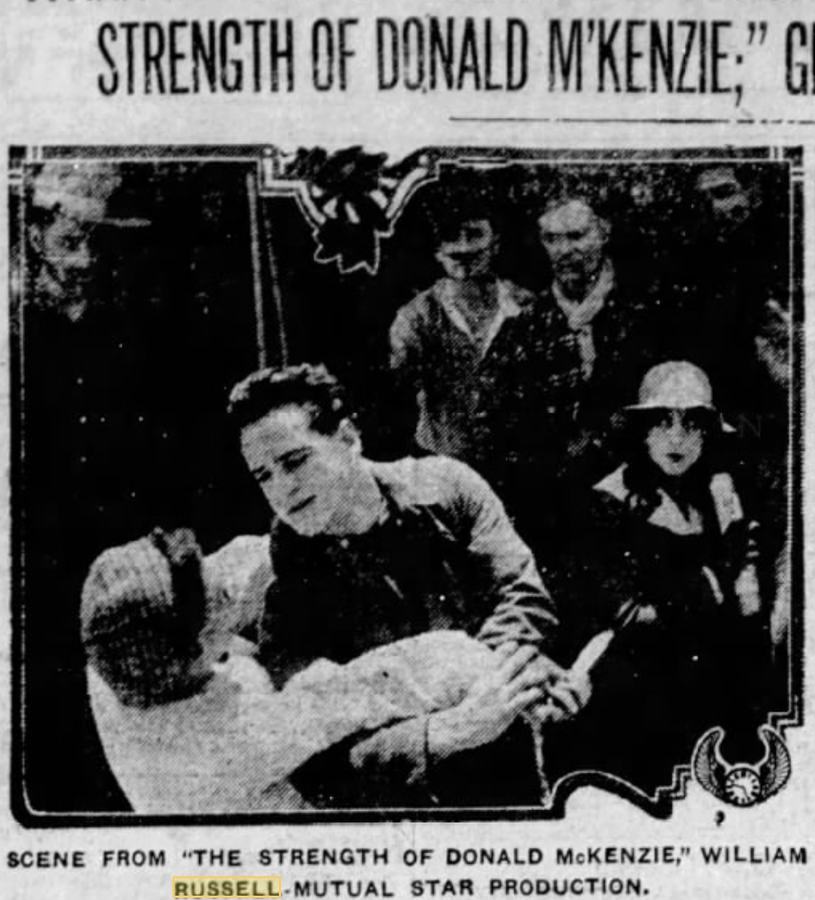
Original exhibitors were advised to accompany the screening with “an arrangement of Schumann’s ‘Forest Scenes’ overlaid with a distant drum simulating heart-throb.” Modern restorations favor a minimalist guitar, strings dampened with leather to mimic wind through spruce. Either choice underscores the meta-joke: a movie about a poet who hides his name arrives in theaters anonymously, its own authorship disputed between Hungerford and Smith in the trades.
Randall’s ultimatum—marry me or I bankrupt your father—renders courtship a hostile takeover. Donald counters not with cash but with cultural capital: the poems that will become the press’s lifeblood. In 1916, when pulp factories dotted Maine and paper literally grew on trees, the metaphor is delicious; the lumberjack commodifies lyricism itself, turning sap into syllables into solvency. Mabel’s final choice is less romantic than editorial: she selects the supplier who guarantees a sustainable pipeline of art.
Marie, the camp-store clerk played by Charlotte Burton, functions as the patriarchal release valve: the woman Randall can harass without risking social restitution. Yet the film refuses to sacrifice her on the altar of plot convenience; her furious slap, witnessed by Pierre, seeds the villain’s eventual confession. The gesture is brief but electric—a jolt of sororal solidarity that prefigures second-wave feminism decades avant la lettre.
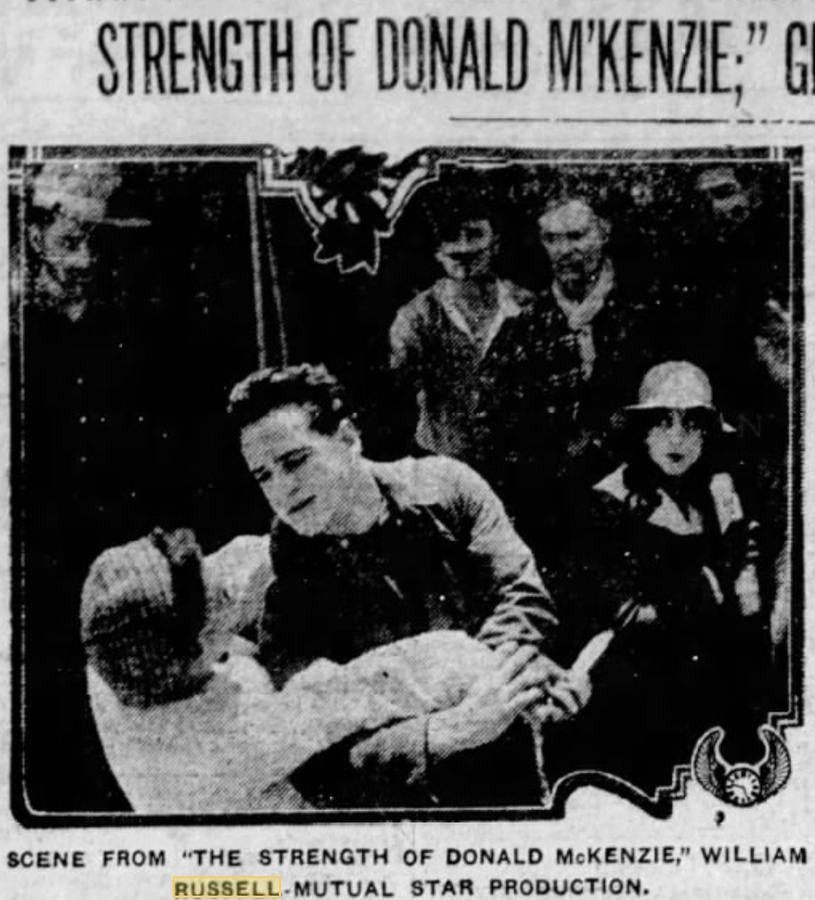
Stack The Strength of Donald McKenzie beside The Love Mask and you see two opposing philosophies of revelation: where Love Mask flaunts its disguises in commedia style, McKenzie opts for slow-burn unmasking, trusting landscape and labor to erode deceit. Against Shannon of the Sixth, another tale of masculine virtue tested, McKenzie’s hero is no schoolboy but a self-built bard, his literacy earned by lantern light after a day of hauling cedar. The contrast sharpens the film’s egalitarian spine: intellect is neither class-bound nor gender-stamped.
For decades the only remnant was a 9.5mm Pathescope condensation housed in a Belgian convent school. Then a 35mm nitrate positive surfaced in a Kalamazoo barn, fused with The Purple Mask reels. UCLA’s restoration team employed ultrasonic separation and 4K scanning, revealing marginalia—Donald’s handwritten stanza on a canoe paddle previously illegible. The restored tinting alternates between amber for daylight and cyanotype for dusk, a nod to the era’s love of chemically poetic palettes.
1916 critics praised Prescott’s “earnest virility,” though Variety sniffed that the narrative “lingers longer than a loon on a moonlit lake.” Modern cine-essayists reclaim the film as proto-eco-cinema: man’s harmony with wilderness predicated on humility before both flora and feeling. Bloggers compare Donald’s masked authorship to Banksy or Elena Ferrante, while queer readings decode the intense homosocial rivalry—Randall’s obsession with the poet is less about Mabel than about unspoken desire for the wordsmith he claims to despise.
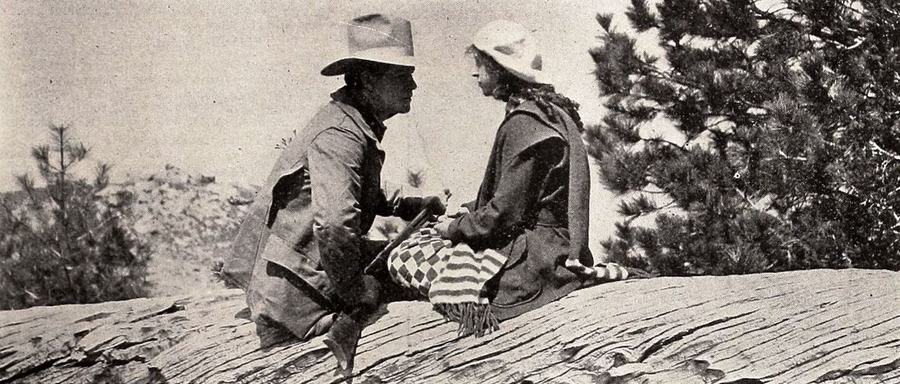
1. Let the landscape duel the dialogue. Every time characters grow verbose, Hungerford cuts to a cedar swaying like a metronome—nature as the ultimate script doctor.
2. Make the MacGuffin manuscripts, not money. The pages everyone chases are worthless until read, an elegant indictment of speculation economies.
3. Empower confession over conquest. Pierre’s eleventh-hour repentance feels earned because the narrative has shown villainy corroding its own host.
Project it on a wall while a fan ruffles paper strips to mimic boreal breeze; the synesthetic trick deepens immersion. Pair with a flight of pine-smoked whiskey—aroma as montage. Keep a pocket notebook: you’ll want to scribble couplets during the campfire silhouette sequence, when Donald’s silhouette merges with the manuscript he cradles like newborn fauna.
In an algorithmic era where authorship is flattened into handles and content is “generated,” a century-old parable about fighting for the right to sign your own soul feels downright insurgent. The Strength of Donald McKenzie argues that strength is not the capacity to fell a rival but to stand unmasked before the person who holds your future—pen, heart, and all—and say, “These words are mine, this love is ours, the forest remembers.” Stream it, scream your reaction into the digital void, then take the long way home through whatever scrap of wilderness you can find. The loons are still drafting verses out there, waiting for someone strong enough to listen.
IMDb 5.5
1937
Community
Log in to comment.