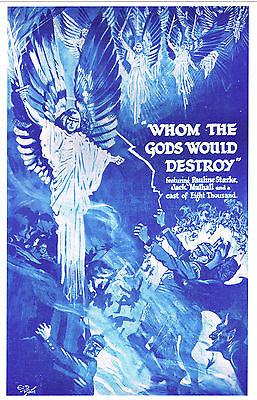
After a young inventor discovers a powerful new explosive, agents from a German chemical firm induce him to study at a German university. While there, he is repelled by certain aspects of the people, and he leaves for Belgium.

Cyrus Townsend Brady, Nan Blair, Charles R. Macauley
United States
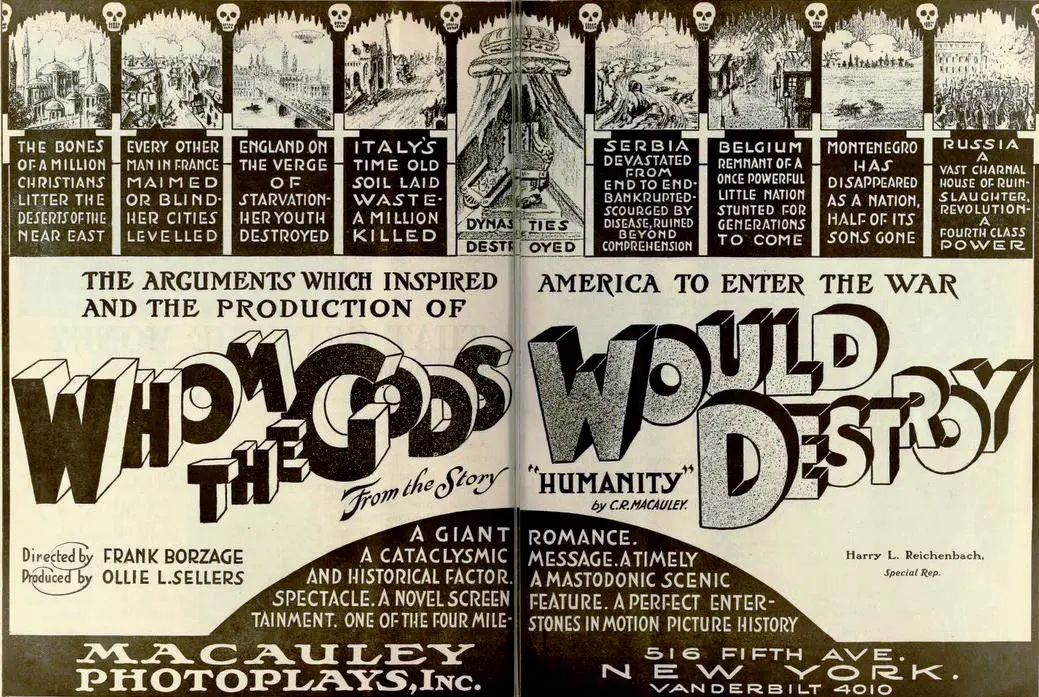
Echoes of Armageddon: Unpacking 'Whom the Gods Would Destroy' Stepping back into the cinematic landscape of 1919, one encounters a film like Whom the Gods Would Destroy, a work that, even a century later, resonates with an almost uncomfortable prescience. Directed by Frank Borzage and written with a keen sens...
production_art
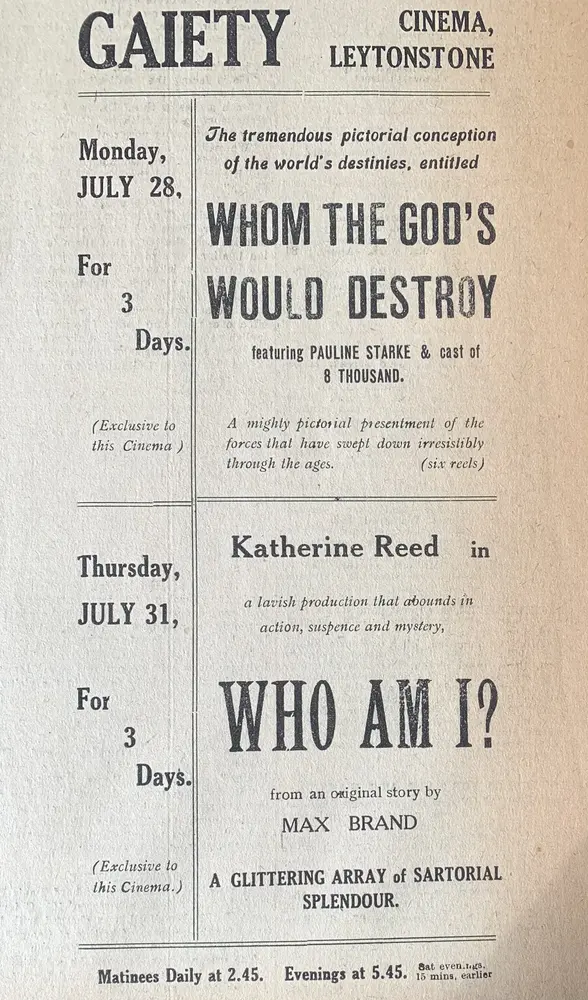
publicity
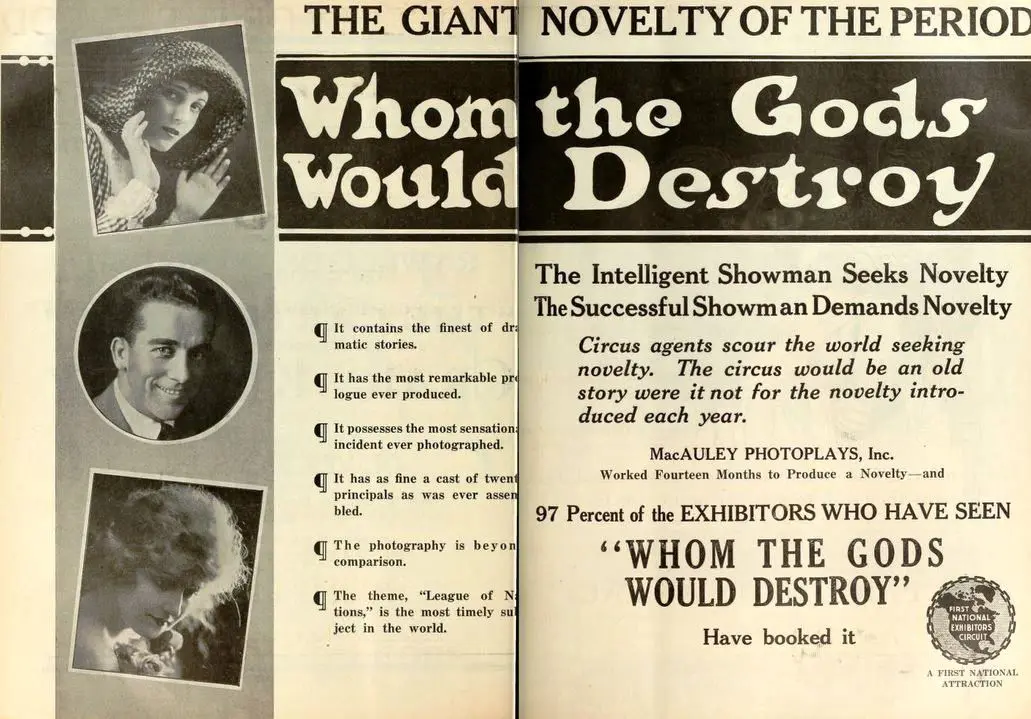
production_art
Comparing the cinematic DNA and archive impact of two defining moments in cult history.
Frank Borzage
Frank Borzage
Community
Log in to comment.
" Echoes of Armageddon: Unpacking 'Whom the Gods Would Destroy' Stepping back into the cinematic landscape of 1919, one encounters a film like Whom the Gods Would Destroy, a work that, even a century later, resonates with an almost uncomfortable prescience. Directed by Frank Borzage and written with a keen sense of the era's anxieties by Cyrus Townsend Brady, Nan Blair, and Charles R. Macauley, this silent epic doesn't just narrate a story; it encapsulates a global psyche reeling from un..."
Deep dive into the cult classic
Discover similar cinematic experiences
A Directorial Spotlight on Frank Borzage