DbcultAccessing Vault...
Cult Review
Senior Film Conservator
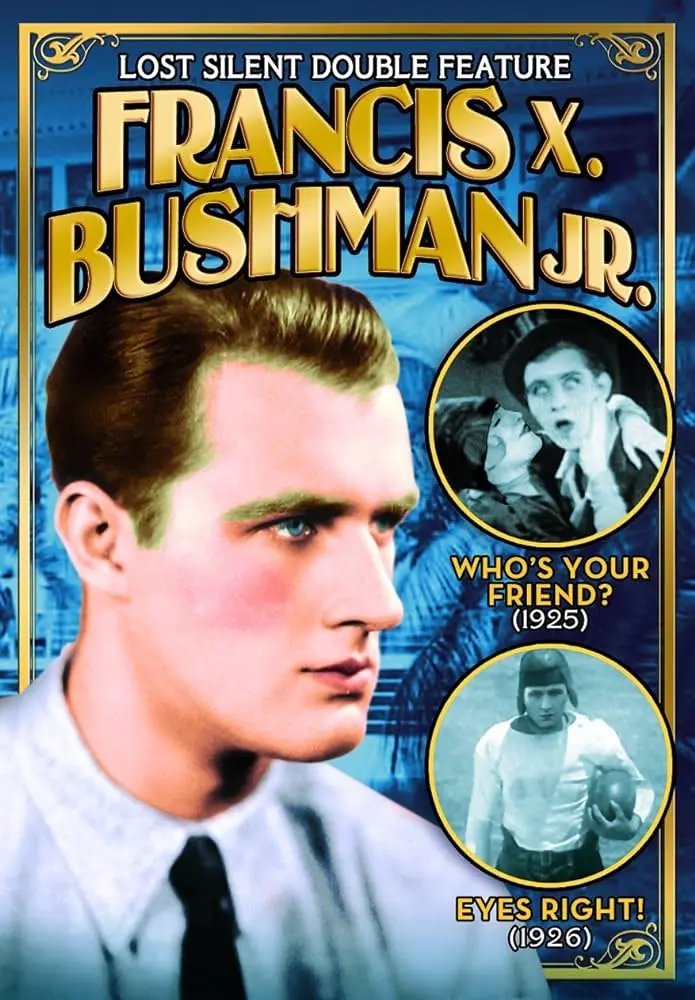
Is Who's Your Friend, the 1924 silent romantic drama, worth your precious viewing time today? Short answer: yes, but with significant caveats. This film is a delightful, if sometimes creaky, window into the narrative conventions and comedic sensibilities of a bygone era, making it an essential watch for silent film enthusiasts and those curious about the roots of cinematic storytelling. However, it will likely test the patience of viewers accustomed to modern pacing and intricate character development.
This picture is tailor-made for film historians, students of early cinema, and anyone with a deep appreciation for the art of silent acting and visual storytelling. It is emphatically not for those who demand rapid-fire dialogue, complex psychological depth, or contemporary narrative urgency. If you struggle with intertitles or find extended sequences without sound to be a chore, you will find this film a significant challenge.
Silent films, often dismissed as relics, possess a unique power. They force an engagement with pure visual narrative, where every gesture, every facial expression, and every carefully composed shot carries immense weight. Who's Your Friend, despite its relatively simple premise, leverages this power to tell a story that, at its core, remains surprisingly relatable.
The film’s central conflict – parental disapproval of a suitor, leading to an elaborate test of fidelity – is a trope that has echoed through cinema for a century. What makes this particular iteration fascinating is seeing it played out with the dramatic flourishes and comedic timing characteristic of the 1920s.
This film works because it offers a charming, unpretentious glimpse into the romantic comedies of the silent era, carried by earnest performances and a clear, if predictable, narrative drive. It fails because its pacing can feel glacial to modern eyes, and its character motivations often lean into caricature rather than complex psychology. You should watch it if you appreciate cinematic history, enjoy classic romantic farces, and are prepared to immerse yourself in the unique rhythm of silent storytelling.
The narrative revolves around Alice Stanton, a woman of considerable means, and her fiancé, Ken Lansing, whose profession as a professional gambler raises eyebrows – and hackles – within Alice's socially conscious family. Her parents, embodying the anxieties of the upper crust regarding financial stability and social standing, are less than thrilled with the prospect of their daughter marrying a man whose livelihood is so precarious and, in their eyes, morally suspect.
Their solution is less about open communication and more about theatrical manipulation. They hire Yvette, a woman whose beauty is her primary weapon, to ensnare Ken. The goal is simple: prove Ken is a philanderer, break the engagement, and save Alice from what they perceive as a misguided match. This setup is classic silent-era melodrama mixed with farcical elements, relying heavily on mistaken identities and visual gags.
The genius, or perhaps the folly, of the parents' plan is its complete reliance on deceit. It’s a bold move, and it sets the stage for Ken's rather befuddled journey through Yvette’s advances. The plot hinges on his ability to remain loyal despite the overwhelming temptation, a test that, even a century later, still holds a certain dramatic weight, albeit framed through a different cultural lens.
In silent cinema, acting is a physical art form, a dance of expression and gesture. The cast of Who's Your Friend, led by William F. Moran as Ken Lansing and Laura La Varnie as Alice Stanton, navigates this demand with varying degrees of success. Moran, as the beleaguered fiancé, often relies on wide-eyed innocence and exaggerated reactions to convey his confusion and loyalty. There's a particular scene where Yvette (played with seductive glee by Patricia Palmer) attempts to lure him into a compromising position, and Moran's flustered attempts to escape, expressed through frantic hand gestures and panicked glances, are genuinely amusing.
Directed by Tay Garnett, a prolific writer who would later direct classics like The Rescue and The Tigress, Who's Your Friend showcases a competent, if not groundbreaking, directorial hand. The cinematography, while not pushing boundaries, serves the story effectively. The camera work is largely static, typical of the period, emphasizing the theatrical blocking of scenes rather than dynamic movement. This approach allows the audience to fully absorb the actors' expressions and body language, which are crucial for conveying narrative in a silent film.
There are moments, however, where Garnett’s visual storytelling shines. The use of close-ups to highlight a character's emotional reaction, particularly Alice's distraught face or Ken's panicked eyes, is effective. The sets, while not extravagant, adequately convey the wealth of the Stanton family and the slightly seedier world of Ken's gambling. We see grand drawing rooms and dimly lit backrooms, visually delineating the two worlds Alice and Ken inhabit.
One particularly interesting aspect is the way the film uses visual cues to establish character and mood. Yvette's costumes, for instance, are designed to be overtly glamorous and revealing for the time, immediately signaling her role as the 'other woman' and a source of temptation. In contrast, Alice's attire is more demure, reflecting her innocence and social standing. These visual shorthand techniques were vital in an era without dialogue, and Garnett employs them judiciously.
The film's visual aesthetic is a direct reflection of its time. It’s a snapshot of 1920s America, from the fashion to the interior design, offering a fascinating historical document alongside its narrative. While it doesn't boast the innovative camera work of a Murnau or a Griffith, it tells its story clearly and competently, which for a film of this vintage, is a significant achievement.
The pacing of Who's Your Friend is undeniably slow by modern standards. This isn't a flaw unique to this film but a characteristic of much silent cinema. Scenes often play out in extended takes, allowing the audience to fully process the visual information and the actors' expressions. For contemporary viewers, this can be a hurdle. The film takes its time to establish the premise, develop the parental conspiracy, and then slowly unfold Ken's struggle against Yvette's advances.
However, within the context of silent film, this deliberate pacing allows for a different kind of immersion. It encourages a more contemplative viewing experience, where one must actively engage with the visuals and the intertitles. The tone is a blend of light romantic comedy and mild melodrama. There are moments of genuine humor, largely derived from Ken's awkward predicaments and the parents' misguided schemes.
The melodramatic elements come into play when Alice believes Ken has betrayed her, leading to moments of emotional anguish. The film manages to balance these two tones reasonably well, never veering too far into heavy drama or pure slapstick. It maintains a consistent, slightly farcical atmosphere throughout, which is crucial for its overall charm. It's a testament to the writers Forrest Sheldon, Garrett Graham, and Tay Garnett that they could weave together these disparate threads into a cohesive, albeit simple, narrative.
Yes, for a specific audience. If you are a silent film enthusiast, a student of film history, or simply curious about the evolution of romantic comedies, then Who's Your Friend offers genuine value. It provides a clear example of early narrative structure and acting conventions. It's not a lost masterpiece, nor is it a film that will convert skeptics of silent cinema. But it's an enjoyable, historically significant piece that deserves its place in the discourse around early Hollywood.
Who's Your Friend is a charming, if somewhat unspectacular, entry into the vast catalog of silent cinema. It doesn't break new ground, nor does it possess the iconic status of its more famous contemporaries like Tillie's Punctured Romance or The Pretty Sister of Jose. However, it offers a perfectly competent example of early Hollywood's ability to craft engaging, character-driven narratives without the benefit of spoken words. It works. But it’s flawed. Its historical value is undeniable, providing a window into the social anxieties and entertainment preferences of the 1920s. For those willing to adjust their expectations and embrace the unique rhythm of silent storytelling, there's genuine enjoyment to be found in Ken's befuddled attempts to win back Alice's trust. It's a film that reminds us that while technology evolves, the core human dramas of love, loyalty, and deception remain eternally compelling.
IMDb 5.7
1927
Community
Log in to comment.