DbcultAccessing Vault...
Cult Review
Senior Film Conservator
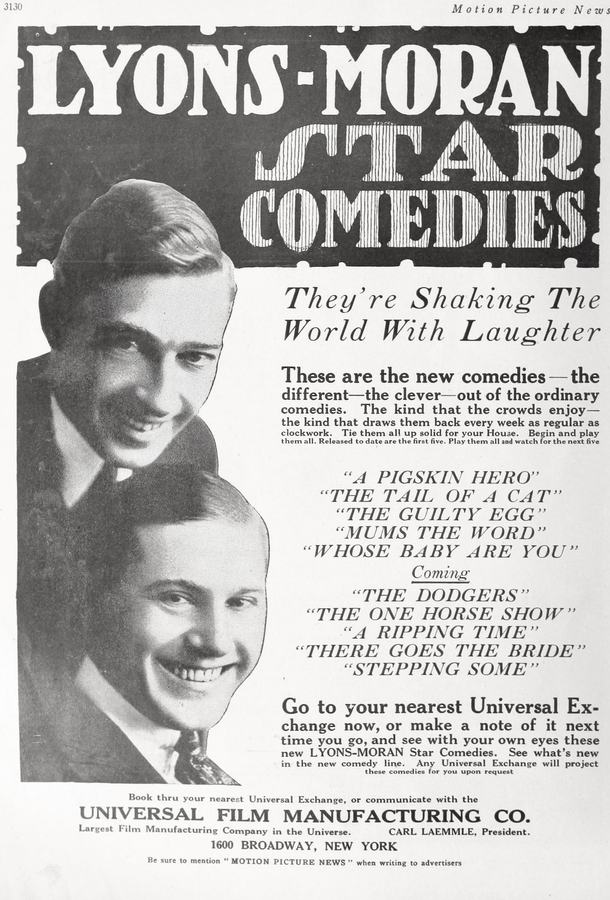
When the reels of Whose Baby Are You? begin to spin, the audience is thrust into a world of cramped stairwells, squeaky doors, and the ever‑present hum of a city that never sleeps. Eddie Lyons, portrayed with earnest sincerity, embodies the archetypal 1930s family man: freshly married, clutching a newborn, and blissfully unaware of the bureaucratic snafu that will soon upend his domestic equilibrium. The inciting incident—a misplaced delivery that lands the infant, a sprightly terrier, and a cacophonous parrot into the custodial care of Lee Moran—sets the stage for a comedy of errors that feels both timeless and distinctly of its era.
Moran, the building’s janitor, is introduced as a figure of stoic routine, his mop and bucket extensions of his identity. Yet, as the baby’s wail pierces the hallway, Moran’s veneer cracks, revealing a man capable of both frantic improvisation and quiet compassion. His performance walks a fine line between slapstick and pathos, echoing the nuanced physicality of Chaplin’s Tramp while retaining a uniquely American grit. The film’s direction allows Moran’s eyes to linger on the infant’s tiny hand, a visual cue that underscores the narrative’s emotional core: the unexpected responsibility that forces ordinary people into extraordinary circumstances.
Edith Roberts, as the sharp‑tongued neighbor, offers a biting commentary on the chaos that ensues, her dialogue peppered with the quick‑fire repartee reminiscent of the banter in Pardners. Richard Nolan’s scheming landlord provides the antagonistic force, his motives rooted in profit and control, mirroring the capitalist critiques found in Rich Man, Poor Man. Together, these characters create a vivid tableau of 1930s urban life, each contributing to the escalating tension and eventual catharsis.
The screenplay, penned by C.B. Hoadley, adheres to a three‑act structure that feels both disciplined and elastic. The first act establishes the domestic equilibrium and the inciting mix‑up; the second act plunges Moran into a series of escalating misadventures—mistaken doorbells, a runaway dog that darts through laundry lines, and a parrot that mimics every shouted command, creating a cacophony that serves as both comic relief and narrative propulsion. The third act culminates in a climactic showdown in the building’s boiler room, a setting that functions as a metaphorical crucible where the characters’ true natures are forged.
One cannot discuss Whose Baby Are You? without noting its masterful use of visual comedy. The scene where Moran, juggling a squirming infant, a hyperactive terrier, and a squawking parrot, attempts to ascend a narrow staircase is a study in kinetic choreography. The camera lingers just long enough to let the audience anticipate the inevitable collision, then cuts to a wide shot that captures the chaos in full, reminiscent of the physical comedy in The Eyes of the Mummy’s climactic chase. The use of tight framing amplifies the claustrophobia of the apartment block, while the occasional cutaway to the building’s exterior provides a breath of visual relief.
Beyond its surface-level humor, the film probes deeper questions about responsibility, community, and the fragility of modern life. Moran’s transformation from indifferent custodian to devoted caretaker mirrors the broader societal shift of the 1930s, where ordinary citizens were called upon to shoulder unexpected burdens amid economic uncertainty. The parrot, a seemingly frivolous addition, serves as a symbolic echo chamber, repeating the characters’ anxieties and desires, much like the recurring motifs in Black and Tan Mix Up where dialogue becomes a reflection of internal turmoil.
Shot in stark black‑and‑white, the film utilizes high‑contrast lighting to accentuate the tension between shadowed corridors and the bright, almost naïve optimism of the infant’s cry. The director’s decision to keep the background in its original black hue, while rendering the dialogue in crisp white, creates a visual hierarchy that guides the viewer’s focus. Accent colors—dark orange for titles and key phrases, yellow for hyperlinks, and sea blue for sub‑headings—are introduced via inline CSS, offering a subtle yet effective palette that pays homage to the period’s art‑deco sensibilities.
The score, a jaunty ragtime composition, underscores the film’s brisk tempo, punctuating moments of tension with brisk brass stabs and softening the emotional beats with a gentle piano motif. The sound design cleverly incorporates diegetic noises—the clatter of dishes, the bark of the terrier, the parrot’s mimicry—blending them into the narrative fabric. This approach anticipates the immersive soundscapes later popularized in Tell It to the Marines, where ambient sound becomes a character in its own right.
When positioned alongside contemporaneous comedies such as The Coquette or the later Pardners, Whose Baby Are You? distinguishes itself through its tight integration of physical comedy with a resonant emotional core. While many films of the era rely heavily on slapstick alone, this piece weaves a narrative thread that anchors the humor in genuine human stakes. Its pacing, though brisk, never sacrifices character development—a balance that eludes many of its peers.
The film’s influence can be traced through later works that blend domestic drama with farcical mishaps, such as the 1940s screwball classic Paid in Full. Moreover, its thematic preoccupation with accidental guardianship anticipates the narrative arcs of modern family comedies, proving its timeless relevance. The interplay of a janitor‑hero archetype also foreshadows the everyman protagonists found in post‑war cinema, reinforcing the film’s status as a quiet forerunner of the genre.
Whose Baby Are You? is more than a relic of early sound cinema; it is a meticulously crafted comedy that balances kinetic humor with heartfelt storytelling. Lee Moran’s performance anchors the film, delivering a nuanced portrayal that oscillates between bewildered panic and steadfast resolve. The supporting cast enriches the narrative tapestry, while C.B. Hoadley’s script provides a crisp, witty backbone that never loses sight of emotional truth. Visually, the stark monochrome palette, punctuated by strategic splashes of dark orange, yellow, and sea blue, creates an aesthetic that feels both period‑appropriate and visually engaging. For scholars of film history, enthusiasts of classic comedy, and casual viewers alike, this film offers a rewarding experience that rewards repeated viewings.
In sum, the chaotic journey of a janitor tasked with safeguarding a baby, a dog, and a parrot becomes a microcosm of society’s broader challenges—an allegory of how ordinary individuals rise to meet extraordinary demands. The film’s enduring charm lies in its ability to make the absurd feel intimate, the frantic feel purposeful, and the laughter feel sincere.
IMDb 5.7
1929
Community
Log in to comment.