DbcultAccessing Vault...
6.7/10
Senior Film Conservator
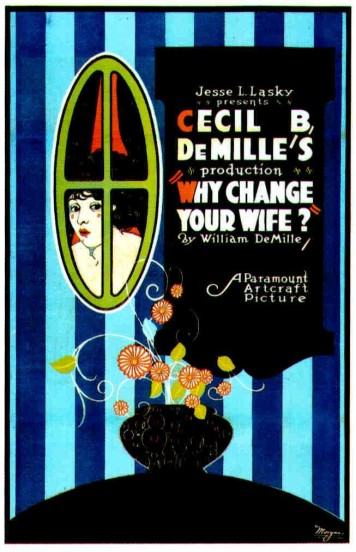
A definitive 6.7/10 rating for a film that redefined the boundaries of cult cinema. Why Change Your Wife? remains a cornerstone of transgressive art.
Ah, the Roaring Twenties! A decade of seismic shifts, not just in hemlines and jazz rhythms, but in the very fabric of societal expectations, particularly concerning marriage and the burgeoning autonomy of women. It was a time ripe for cinematic exploration, and who better to dissect these evolving dynamics than the maestro of melodrama and lavish spectacle, Cecil B. DeMille? His 1920 offering, Why Change Your Wife?, isn't just a film; it's a vibrant, often audacious, snapshot of a bygone era grappling with strikingly modern quandaries. And what a ride it is, a delightful, visually sumptuous journey into the complexities of human relationships, anchored by the magnetic presence of Gloria Swanson.
DeMille, a director known for his grand pronouncements and opulent set pieces, here turns his discerning eye to the domestic sphere. The film posits a seemingly simple question, yet its implications ripple through the entire narrative: what happens when a marriage, once built on affection, slowly calcifies into a routine of mutual neglect? We are introduced to Beth and Robert Gordon, a couple whose initial spark has long since been doused by the mundane. Robert, portrayed with a certain boyish petulance by William Boyd, is a man of artistic temperament – a musician, a dreamer, perhaps, but one whose dreams don't quite align with his wife's quiet domesticity. Beth, in the masterful hands of Gloria Swanson, is initially presented as the quintessential wife of the era: devoted, perhaps a little too demure, her life revolving around her husband’s comfort and the sanctity of their home. Yet, beneath that placid exterior lies a woman capable of immense transformation, a journey that forms the very heart of this cinematic endeavor.
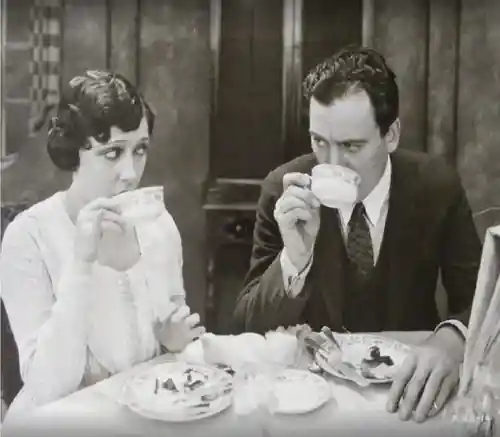
The film's initial scenes paint a picture of quiet desperation. Robert, seeking an escape from what he perceives as Beth’s suffocating propriety and lack of verve, finds himself drawn to the intoxicating allure of the cabaret. It’s here that he encounters Sally, a vivacious, modern woman played with delightful abandon by Bebe Daniels. Sally embodies everything Beth is not: she's flashy, she's exciting, she's a whirlwind of flapper-era charm. Their immediate connection is less about profound love and more about the thrill of novelty, the intoxicating pull of the forbidden. This isn't a nuanced exploration of infidelity as much as it is a commentary on the fleeting nature of superficial attraction and the human tendency to seek excitement outside the familiar, even if that excitement proves ultimately hollow. The divorce that follows is swift, almost clinical, leaving Beth heartbroken but, crucially, not broken.
And this, my dear readers, is where the narrative truly blossoms. DeMille, along with his astute writers Olga Printzlau, Sada Cowan, and William C. de Mille, doesn't simply leave Beth to languish in her sorrow. Instead, they empower her. Her initial grief gives way to a fierce determination to reclaim her identity, to transform not just her outward appearance, but her very essence. It’s a powerful narrative arc, one that resonates even today. Beth's metamorphosis is meticulously crafted, showcasing Swanson’s incredible range. We see her shed the frumpy frocks for daring, fashionable attire, her timid demeanor for a confident, alluring poise. This isn't merely about superficial beautification; it's about a woman discovering her own agency, her own desires, and her own captivating power. One might even draw parallels to the journey of self-discovery seen in films like Broken Barriers, where societal constraints are similarly challenged by an individual's will to redefine themselves.
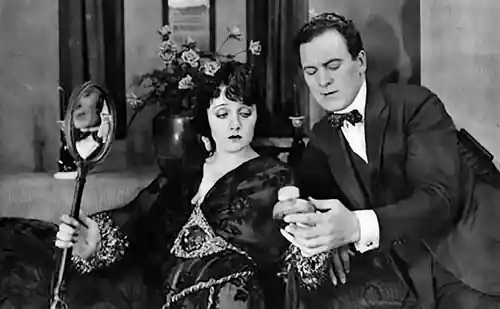
Meanwhile, Robert's new life with Sally quickly loses its luster. The initial thrill of her bohemian lifestyle and constant social engagements gives way to a crushing realization: Sally is all surface, no depth. Her effervescence, once so appealing, becomes tiresome, her lack of intellectual curiosity a glaring void. DeMille brilliantly contrasts the initial allure of the 'new' with the enduring value of substance. Robert, a man who sought freedom from perceived constraint, finds himself equally, if not more, constrained by Sally's relentless pursuit of pleasure. It's a subtle but effective critique of the hedonism that often accompanied the Jazz Age, suggesting that genuine happiness requires more than just fleeting thrills.
The stage is thus perfectly set for the inevitable reunion, which occurs, as if by fate, at a bustling summer resort. Here, a transformed Beth, radiating an almost incandescent charm, re-enters Robert's orbit. He doesn't immediately recognize her, a testament to the completeness of her metamorphosis. The irony is palpable: the very qualities he once yearned for in another woman, he now finds embodied, amplified, and refined in his former wife. This isn't just about physical attraction; it's about a deeper appreciation for the person Beth has become – a woman of wit, elegance, and self-possession. The film doesn't shy away from the complexities of this rekindling. It asks us to consider whether Robert truly loves Beth for who she is, or for the image she now projects. Yet, the narrative steers towards a hopeful conclusion, implying that his renewed affection is indeed rooted in a recognition of her intrinsic worth, now beautifully complemented by her newfound confidence and style.

DeMille's directorial fingerprints are all over Why Change Your Wife?. His penchant for lavish sets and costumes is on full display, particularly in the scenes depicting Sally’s opulent, if somewhat chaotic, apartment and the vibrant social milieu of the resort. These visual flourishes aren't mere extravagance; they serve to underscore the themes of superficiality and the seductive power of appearances. The costumes, in particular, are characters unto themselves, charting Beth's journey from dowdy housewife to sophisticated siren. The film's pacing is brisk, a hallmark of DeMille's ability to keep audiences engaged, even in the silent era. He understood the power of visual storytelling, using exaggerated expressions, dramatic gestures, and carefully composed shots to convey emotion and drive the plot forward. The use of intertitles is sparse but effective, allowing the visual narrative to speak volumes.
The performances are uniformly strong, but it's Gloria Swanson who truly shines. Her portrayal of Beth is a masterclass in silent film acting. She conveys Beth's initial sorrow and resignation with heartbreaking poignancy, then transitions seamlessly to a woman brimming with newfound confidence and allure. Her transformation is utterly believable, making her journey feel earned and deeply satisfying. William Boyd, as Robert, manages to make his character both frustratingly shallow and ultimately sympathetic, a man who, despite his missteps, genuinely seeks happiness. Bebe Daniels, as Sally, is a force of nature, embodying the untamed spirit of the Jazz Age with infectious energy, ensuring that her character is more than just a plot device. The supporting cast, including Julia Faye and Theodore Kosloff, add further texture to DeMille's meticulously crafted world.
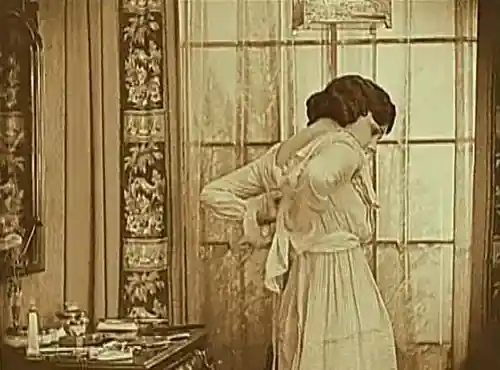
One of the most fascinating aspects of Why Change Your Wife? is its commentary on gender roles and societal expectations. While the film ultimately reunites the original couple, it does so on Beth's terms. She isn't just taking Robert back; she's choosing him, having discovered her own worth and desirability. This subtly subversive message, wrapped in a package of romantic comedy, speaks volumes about the evolving perceptions of women in the post-suffrage era. It suggests that a woman's value is not solely tied to her domestic role, but to her capacity for self-improvement and her independent spirit. This theme of personal agency, and the struggle against societal norms, can be seen as a precursor to narratives found in films like The Price of Tyranny, where characters often wrestle with oppressive external forces to assert their individuality.
The film also subtly critiques the superficiality of modern life. Robert's initial attraction to Sally is purely aesthetic and hedonistic. He's drawn to her flash, her fun, her lack of domesticity. But this attraction proves fleeting because it lacks depth. The film champions the idea that true companionship and enduring love are built on shared understanding, mutual respect, and a willingness to evolve together. It’s a timeless lesson, presented with a distinctly 1920s flair. The film's exploration of divorce, while not groundbreaking by today's standards, was still a relatively bold subject for mainstream cinema of the time, reflecting a growing social acceptance, or at least acknowledgment, of marital dissolution.
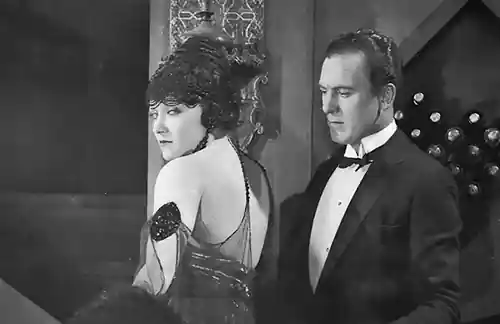
From a technical perspective, the cinematography is exquisite, capturing the luxurious interiors and vibrant exteriors with remarkable clarity. DeMille's use of lighting, particularly in the more dramatic scenes, enhances the emotional impact, drawing the audience deeper into the characters' inner turmoil and eventual triumph. The attention to detail in the set design, from Beth's initially staid home to Sally's extravagant digs, serves as a visual shorthand for the characters' personalities and values. This meticulous world-building is a hallmark of DeMille, ensuring that every frame contributes to the overarching narrative and thematic resonance.
It's easy to dismiss silent films as relics of a bygone era, but Why Change Your Wife? proves just how vibrant and engaging they can be. It's a film that speaks across the decades, offering insights into human nature that remain remarkably pertinent. The central dilemma – the search for passion and fulfillment within or outside a committed relationship – is one that continues to challenge couples today. DeMille, ever the showman, delivers this weighty theme with a light touch, infusing it with humor, glamour, and undeniable romantic appeal. The film's enduring popularity is a testament to its timeless storytelling and the captivating performances of its lead actors.
In conclusion, Why Change Your Wife? stands as a sparkling example of early 20th-century Hollywood cinema, a delightful concoction of romance, social commentary, and visual splendor. It's a must-see for anyone interested in the evolution of film, the history of fashion, or simply a compelling story of love, loss, and self-discovery. Gloria Swanson's performance alone is worth the price of admission, a dazzling display of star power and dramatic prowess. DeMille’s vision, bold and unyielding, crafts a narrative that is both entertaining and thought-provoking, a true gem that reminds us why some stories, and some films, never truly fade. It’s a film that dares to ask if changing your wife is truly the answer, or if the change needed lies within. And in answering that, it offers a surprisingly modern take on marital bliss and personal agency, proving that the more things change, the more some fundamental truths about human connection remain beautifully, eternally the same.
IMDb 7
1928
Community
Log in to comment.