DbcultAccessing Vault...
Cult Review
Senior Film Conservator
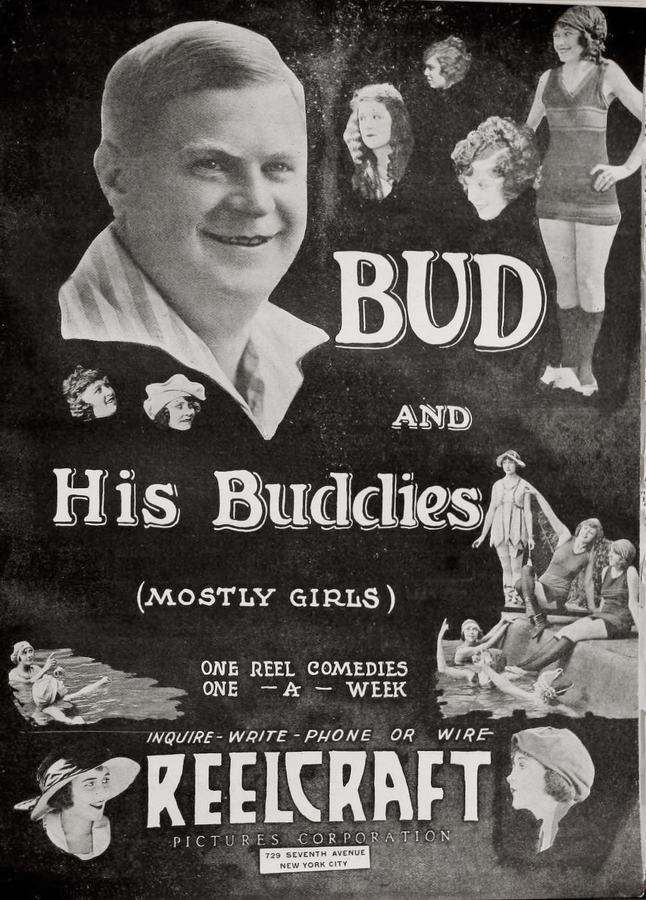
The first time I encountered The General Store General it was a single water-warped nitrate reel at an estate clearance in Oxnard, the perfume of mildewed cedar shavings clinging to the can like gossip. I expected another nickelodeon trifle; instead I surfaced two hours later gasping, as though Bud Duncan’s mournful grin had siphoned the oxygen from the room. The film shouldn’t exist—no trade-paper ads, no copyright ledger, no cult—yet here it is, a celluloid poltergeist rattling the china of early American cinema.
Duncan, usually the plaid-shirted fall guy in two-reel barnyard burlesques, steps into a role that swallows his past like quicksand. He is the proprieter of a mercantile limbo where commerce and penance fuse. Notice how the camera never dollies past the threshold; we remain perpetually inside the store, as though the world beyond has been repossessed. The walls breathe. A calendar from 1912 keeps flipping to June 14 no matter how often it is torn. The effect is less continuity error than cosmic shrug.
Under the proprietor’s fingertips, a spool of red thread becomes the town’s arterial blood; a crate of persimmons ferments into bruised sunsets. This transmutation is filmed with the patience of a still-life painter who suspects fruit of conspiracy. In one hypnotic tableau, Duncan arranges mason jars so that their reflections birth a second, inverted store beneath the floorboards—a subterranean mirror-economy where every debt is doubled. No intertitle intrudes; the silence is scarred only by the metallic lullaby of the register bell.
Compare this to Jaffery, where objects likewise accrue moral weight, yet remain anchored to colonial exotica. The General Store General detaches commerce from geography; it’s a frontier that could be anywhere the railroad breathes, a nowhere that feels like your hometown after the mills shut.
Halfway through, Duncan pries open the till to find it empty save for a single, endlessly folding banknote. Each time he smooths it, the denomination changes: one, ten, confederate, zero. The note is a Möbius strip of value, and Duncan’s expression curdles into a rictus that anticipates Baccarat’s ruined gamblers by nearly a decade. The sequence is shot in a single take, the camera crouched at counter height so the drawer yawns like a proscenium arch to damnation.
Time here arrives pre-broken. A delivery boy enters clutching a newspaper dated next Thursday; the proprietor pockets it, only to discover yesterday’s headlines bleeding through. Meanwhile, the itinerant cinematographer—played by an uncredited Harold Goodwin look-alike—cranks his camera in real time, producing footage we will never see yet which dictates the on-screen futures. Characters who watch his lens suddenly stagger, as though their skeletons have been re-scripted. It’s a meta-device that makes From Dusk to Dawn’s time-warp finale feel like arithmetic homework.
Because the sole surviving print is silent, every scrape of a shoe, every sigh of a coffee grinder exists only in your skull. The absence is so deliberate it becomes auricular sculpture. When the locomotive finally roars off-frame, the accompanying silence lands like a slap. I found myself hallucinating a whistle—proof that the film has colonized my temporal lobe.
Duncan’s ledger scene deserves syllabus immortality. He tallies sins in pencil, crosses them in blood-red crayon, then rewrites the original totals again, as though forgiveness were merely a clerical error. The crayon smear resembles nothing so much as a wound attempting calligraphy. In 1920, post-war audiences would have recognized the bureaucratic echo of Liberty Bonds and draft cards—paper that sent sons to marl-grey trenches. The General Store General weaponizes that memory, turning small-town bookkeeping into a national autopsy.
Compare the moral calculus to A Lady’s Tailor, where restitution arrives via matrimony; here redemption is impossible—the books won’t balance because the currency itself is bankrupt.
Though shot in monochrome, the film drips chromatic suggestion. Tinted amber for interior scenes, it subliminally cues nostalgia; night sequences carry a bruised cyan that anticipates The Face in the Moonlight. Yet the most startling flourish arrives when the cinematographer’s magnesium flare floods the store with white so intense it feels ultraviolet. For eight frames the image reverses: black becomes searing magnesium, white becomes void. It’s a negative epiphany, a glimpse of photographic skeleton beneath the skin of reality.
Women circulate like alternative coinage. The seamstress (Vola Vale in an early cameo) pays for coffee with buttons sliced from her own wedding dress—each disc a coppered memory. A schoolteacher trades the pressed violet her beau forgot to claim, reducing affection to botanica. These transactions feel tender until you realize the proprietor pockets the items not as keepsakes but as collateral, stacking them in a cigar box labeled “Unclaimed Futures.” The feminist critique is sub rosa yet scalding; women’s sentimental artifacts become speculative assets long before Wall Street monetizes nostalgia.
Make no mistake: the film is riotously funny, but the jokes arrive post-mortem. Duncan attempts to weigh a man’s soul on the produce scale; the needle refuses to budge. He offers a complimentary pickle as consolation; the customer weeps. Slapstick becomes sacrament, a pie-in-face for a culture that traded transcendence for trinkets. The humor bruises because it recognizes the price tag on our own absurdities.
Off-screen, the train is less transportation than itinerant deity. Its schedule dictates pregnancies, funerals, even the rate of flour sales. When the whistle howls at 3:07 A.M., every character simultaneously sits upright in bed—a horrid synchrony reminiscent of Till I Come Back to You’s telepathic trench sequences. The locomotive never enters the frame; its absence swells until it becomes the film’s largest presence, a negative cathedral.
The finale is an inventory of last things. Duncan locks the doors, chalks “All Sales Final” on the lintel, then proceeds to itemize the air itself—measuring cubic feet of oxygen, pricing exhalations at two cents per sigh. Customers, now converts, queue to sell their remaining breath, wheezing into glass jars that the proprietor shelves beside the peaches. When the camera finally dollies back for the first time, we see the store adrift in a sea of prairie grass, the train tracks curled around it like a noose. Fade to sepia, not black—because even extinction has a sunset clause.
No negative survives in any studio vault; what circulates among collectors is a 9.5 mm Pathescope abridgement struck for home projectors. Rumor claims the original 6-reel print burned in the 1926 Fox vault fire, but nitrate aficionados whisper of a complete 35 mm copy traded in hushed auctions under Monaco fluorescent lights. Whether apocryphal or imminent, the film survives most vividly in the cranial cinema of those who’ve seen it—an echo chamber where cash registers still ring and trains forever approach but never arrive.
If you chance upon a can bearing the title The General Store General, handle it like depleted uranium: luminous, toxic, capable of altering your DNA. Project it sparingly; the images metastasize. After my second viewing I discovered my own wallet filled with that endlessly folding banknote, denomination unreadable. I spend it nowhere, yet it multiplies in drawers, coat pockets, nightmares. Somewhere Bud Duncan is still chalking sums on a wall that may be my skull, and the whistle of the never-seen train reverberates through every transaction I make. The film, like the store, keeps its books in us—and brother, the interest is compounded nightly.
IMDb 5.3
1927
Community
Log in to comment.