DbcultAccessing Vault...
Cult Review
Senior Film Conservator
From the opening frame, the camera lingers on cracked plaster and flickering neon, establishing a chiaroscuro palette that feels simultaneously nostalgic and foreboding. The director’s decision to bathe the mise‑en‑scene in a muted grayscale, punctuated only by strategic splashes of yellow—a lone streetlamp, a rusted fire escape—creates a visual metaphor for hope amidst oppression. This restraint mirrors the film’s narrative economy: every dialogue exchange is a calculated move, each silence a loaded pause.
Ernie Adams delivers his most nuanced work to date, embodying the paradox of a man who is both weary and incandescent. His eyes, often fixed on the cracked ceiling, convey a silent monologue about the futility of compliance. The supporting cast, though less heralded, provides a textured backdrop. The mute seamstress, portrayed by an emerging talent, communicates through deft hand gestures that echo the building’s creaking timbers. The ex‑lawyer, a sardonic figure reminiscent of the sharp‑tongued characters in The Phantom Buccaneer, offers a wry commentary on the legal machinations that underpin the rent‑collecting industry.
The screenplay, though uncredited, is a masterclass in structural layering. The primary plot—Adams’ refusal to pay rent—functions as a scaffolding for sub‑plots that explore class stratification, urban alienation, and the politics of ownership. The basement meetings serve as a modern agora, where philosophy collides with pragmatism. The film’s climax, a tempestuous night where rain slashes against broken windows, is choreographed with the precision of a stage play, each thunderclap underscoring the characters’ internal reckonings.
Those familiar with the socio‑political undercurrents of Dollars and Sense will recognize a shared preoccupation with monetary power dynamics. However, Why Pay Rent? diverges by focusing on collective agency rather than individual profiteering. Its visual language also nods to the stark realism of Deliverance, particularly in the way the natural elements become antagonistic forces that test human resolve.
The auditory texture is a collage of ambient city noises—distant sirens, clattering subway rails, the occasional bark of a stray dog—interwoven with an original score that employs low‑drone strings and sporadic percussive hits. The composer’s use of the sea‑blue tonal motif during the protest scenes subtly evokes the tumultuous ocean, reinforcing the metaphor of a tide rising against entrenched shorelines.
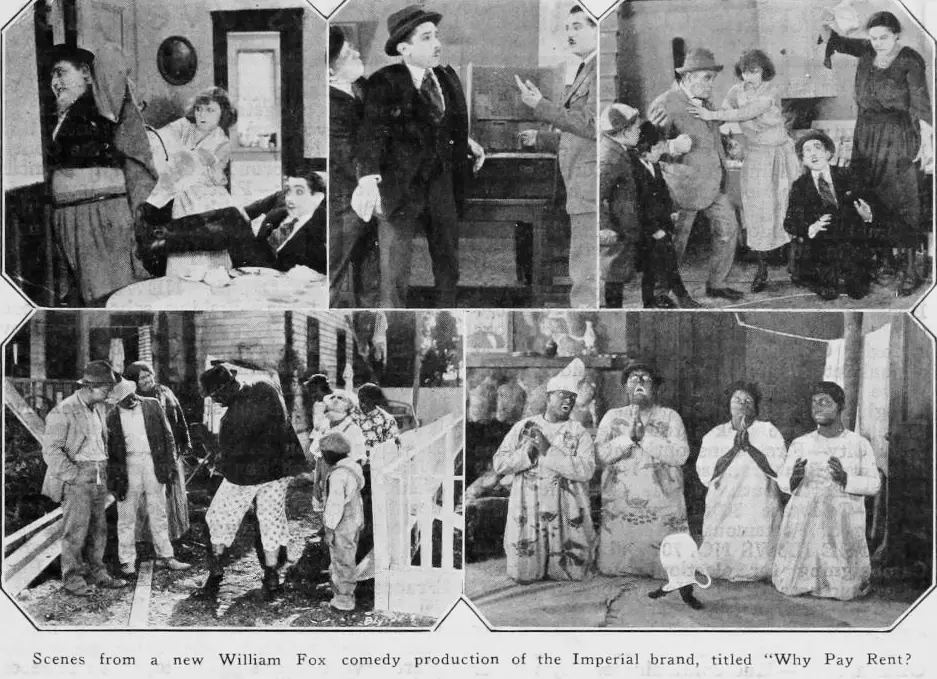
The editing oscillates between languid, lingering shots that allow the audience to absorb the oppressive atmosphere, and rapid, kinetic cuts during the protest sequences. This juxtaposition mirrors the characters’ emotional oscillation between resignation and insurgency. The decision to intersperse static frames of the landlord’s ledger—a visual motif of bureaucratic tyranny—creates a rhythmic heartbeat that propels the narrative forward.
Every prop is laden with allegorical weight. The rusted fire escape, for instance, transforms from a symbol of neglect to a conduit for liberation during the climactic escape. The graffiti artist’s murals, rendered in vivid yellow and blue, become visual manifestos that echo the film’s central thesis: the reclamation of space through artistic defiance.
When placed alongside The Snob, which examines class through the lens of aristocratic pretension, Why Pay Rent? feels more grounded, its characters rooted in the everyday grind rather than lofty affectations. Yet, both films share an undercurrent of critique toward societal hierarchies. Similarly, the narrative’s focus on a collective uprising bears resemblance to the ensemble dynamics in The Old Nest, where community bonds are tested against external threats.
The director’s auteur signature—characterized by long takes, natural lighting, and a penchant for social realism—shines throughout. The decision to forgo a conventional musical climax in favor of an authentic, rain‑soaked tableau underscores a commitment to verisimilitude. This stylistic choice aligns the film with the gritty authenticity of Hurricane's Gal, where environmental elements are integral to narrative tension.
Early screenings have sparked polarized dialogues. Critics laud the film’s unapologetic examination of economic exploitation, while some viewers find its pacing deliberately austere. Nonetheless, the consensus acknowledges the film’s capacity to provoke discourse on tenant rights, a topic resonant in contemporary housing debates.
Why Pay Rent? stands as a daring cinematic treatise that fuses aesthetic restraint with narrative audacity. Its visual palette—anchored in dark orange, sea blue, and strategic yellow highlights—creates an atmospheric tapestry that is both haunting and hopeful. Ernie Adams’ magnetic performance, coupled with a tightly woven script and a resonant score, elevates the film beyond mere social commentary to a work of art that challenges viewers to reconsider the very foundations of ownership. For cinephiles seeking a film that marries form and function, the piece offers a compelling, if unsettling, journey through the labyrinth of modern tenancy.
IMDb —
1920
Community
Log in to comment.