DbcultAccessing Vault...
7.3/10
Senior Film Conservator
A definitive 7.3/10 rating for a film that redefined the boundaries of cult cinema. Destruction remains a cornerstone of transgressive art.
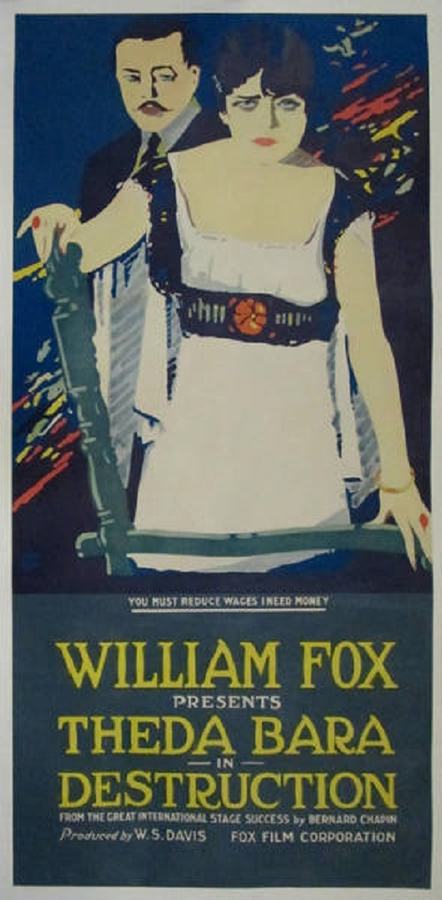
Ah, the silent era! A time when grand gestures, piercing gazes, and the sheer force of a performer's presence could convey more than a thousand words. And few, if any, commanded that presence quite like Theda Bara. In Destruction, a cinematic artifact from 1916, Bara fully embodies the 'vamp' persona that made her an icon, delivering a performance that is at once chillingly calculated and utterly magnetic. This isn't just a film; it's a deep dive into the darker recesses of human ambition, a morality play draped in the opulent, yet often sinister, trappings of early 20th-century society. It’s a testament to the enduring power of silent cinema to tell stories of profound psychological depth, even without the benefit of spoken dialogue.
The narrative, penned by Bernard Chapin and Will S. Davis, with a clear spiritual lineage to the stark naturalism of Émile Zola, plunges us into the world of Fernande. Bara's Fernande is not merely a woman; she is a force of nature, albeit one corrupted by an insatiable greed. Her marriage is not an act of love, but a strategic maneuver, a cold-blooded calculation to secure the vast fortune of an elderly man. This premise alone sets a tone of impending doom, a sense that we are witnessing the unfolding of a Greek tragedy, albeit one filtered through the nascent language of film. The film wastes no time in establishing Fernande’s ruthless pragmatism, laying bare her motivations with an almost shocking candor through Bara’s expressive pantomime.
What makes Fernande so compelling, and indeed, so terrifying, is her utter lack of compunction. Her schemes are not born of desperation but of a chilling entitlement. She expects her husband to die, and with his death, she expects his wealth to be hers. This kind of brazen, almost aristocratic villainy was a hallmark of the 'vamp' character, and Bara, with her piercing eyes and exotic allure, was its undisputed queen. There's a certain perverse admiration one might feel for such a single-minded pursuit of desire, even as it chills you to the bone. It's a stark contrast to the more overtly sympathetic, albeit often tragic, female figures of the era, such as those found in films like The Squaw Man, where moral dilemmas are often rooted in sacrifice rather than self-serving ambition.
The plot, however, throws a curveball. The husband, in an unexpected turn, succumbs to his ailments before he can execute a crucial amendment to his will. This unforeseen twist reroutes his immense fortune directly to his son, played with a blend of earnestness and burgeoning defiance by Johnnie Walker. This development, far from deterring Fernande, merely sharpens her focus. Her avarice intensifies, morphing from a desire for inheritance into a murderous resolve. The son becomes the new target, an obstacle to be brutally removed. This escalation from cold calculation to active malevolence is a pivotal moment, showcasing the depth of Fernande's depravity and setting the stage for a deadly cat-and-mouse game.
Director Will S. Davis masterfully builds suspense throughout these sequences. The visual language of silent film, often relying on stark contrasts, dramatic close-ups, and carefully choreographed movements, is deployed with precision. The tension is palpable as Fernande plots, her every glance and gesture laden with sinister intent. The audience is privy to her machinations, making us complicit witnesses to her dark designs. This voyeuristic quality is a powerful tool, drawing us deeper into the narrative's grim embrace. The struggle between Fernande and the son is not just a physical one; it's a battle of wits, a clash of wills that drives the latter half of the film with an almost relentless energy.
The performances across the board, particularly from the supporting cast, lend considerable weight to the drama. James A. Furey, James Sheridan, and Frank Evans, though perhaps not as central, contribute to the tapestry of characters who react to Fernande's destructive path, often with a mix of suspicion and helplessness. Carleton Macy and J. Herbert Frank, alongside the formidable Warner Oland, who often specialized in villainous or exotic roles, add layers of societal context and dramatic interaction, often serving as foils or unwitting pawns in Fernande's larger scheme. Their reactions, conveyed through the exaggerated yet effective acting style of the era, underscore the moral implications of Fernande's actions, creating a sense of a world slowly being poisoned by her presence. One could draw parallels to the intricate social dynamics and hidden dangers explored in films like The Club of the Black Mask, where external threats often emerge from within seemingly respectable circles.
Bara's portrayal of Fernande is a masterclass in silent film acting. Her expressiveness, particularly through her eyes and the subtle shifts of her facial muscles, conveys a terrifying range of emotions, from icy determination to barely contained fury. She doesn't just play a character; she inhabits a predatory archetype. The 'vamp' was more than just a seductress; she was an emblem of female power, often destructive, but undeniably potent, challenging societal norms in ways that were both scandalous and exhilarating for contemporary audiences. Her presence alone elevates the film beyond a simple melodrama into something far more primal and psychologically charged. This is a performance that resonates with the raw, untamed spirit of characters seen in films like The Regeneration, where individuals grapple with their instincts against a backdrop of societal decay.
The influence of Émile Zola is particularly evident in the film's unflinching depiction of human greed and the grim consequences it engenders. Zola's naturalism sought to portray life as it truly was, often focusing on the darker aspects of human nature and the deterministic forces of environment and heredity. Destruction, in its core narrative of avarice leading to murder, echoes the stark moral landscape of Zola's novels, where characters are often driven by powerful, almost primal urges. The film doesn't shy away from the brutality of Fernande's intentions, presenting them with a directness that would have been quite shocking for its time. This commitment to a certain realism, even within the melodramatic framework of silent film, gives Destruction a gravitas that endures.
As the film progresses, the son, initially portrayed as somewhat naive, begins to demonstrate an unexpected resilience and cunning. This shift in his character is crucial, as it transforms the narrative from a simple tale of victim and aggressor into a more complex duel of wits. The audience roots for him, not just because he is the 'good' character, but because his survival represents a triumph of justice over unbridled malevolence. The tension mounts with each failed attempt by Fernande, each near-miss, building to a crescendo that feels both earned and inevitable. The film manages to sustain this suspense through visual storytelling, using editing and framing to convey the escalating danger and the son's growing awareness.
The climax of Destruction is a thrilling exhibition of silent film dramatics. Fernande, believing herself on the cusp of victory, is outfoxed by the very person she sought to eliminate. The son's ingenuity, his ability to turn the tables on his would-be killer, provides a satisfying, if not entirely conventional, resolution. It's a testament to the power of the human spirit to resist oppression, even from within one's own family. The comeuppance of Fernande is not just a plot point; it's a moral imperative, a necessary restoration of order after her chaotic reign of greed. This kind of karmic justice, while perhaps less ambiguous than some of Zola's more nihilistic conclusions, provides the audience with a sense of closure and reinforces traditional moral frameworks. The narrative's intricate plotting and the ultimate triumph of the underdog might remind viewers of the clever escapades in films like The Fighting Hope, where characters often navigate perilous situations through sheer wit.
Beyond its narrative thrills, Destruction offers a fascinating glimpse into the social anxieties of the early 20th century. The 'vamp' figure, epitomized by Bara, represented a fear of female emancipation gone awry, a woman who used her sexuality and intelligence not for domestic bliss but for personal gain, even at the cost of human life. This subversion of traditional gender roles, while demonized, also captivated audiences, reflecting a societal fascination with the forbidden. The film, therefore, functions not just as entertainment but as a cultural barometer, reflecting the changing landscape of gender dynamics and moral boundaries. It's a stark contrast to the often idealized heroines found in films like The Littlest Rebel, where innocence and virtue are paramount.
The film's legacy lies not only in its star but in its bold narrative choices and its effective use of the silent medium. Theda Bara, with her intense on-screen persona, created a character that transcended the screen, becoming a cultural phenomenon. Her Fernande is a definitive portrayal of the vamp, a character type that would influence cinema for decades to come. The direction of Will S. Davis ensures that the story, despite its age, remains coherent and compelling, demonstrating a keen understanding of visual storytelling. The film's ability to maintain suspense and character development without dialogue is a testament to the artistry of silent filmmakers, proving that powerful narratives need not rely on spoken words to resonate deeply with an audience. One could even argue that its thematic darkness and psychological intensity foreshadow later, more overtly 'noir' elements in cinema, much like the somber tones of Der Eid des Stephan Huller - II.
In conclusion, Destruction is more than just a historical curiosity; it is a potent piece of early cinema that continues to fascinate. It’s a showcase for Theda Bara's iconic vamp persona, a chilling exploration of human greed, and a testament to the power of silent storytelling. The intricate plot, the strong performances, and the underlying Zolaesque naturalism combine to create a film that, despite its age, still grips the viewer with its tale of ambition, betrayal, and ultimate justice. For those interested in the foundational elements of cinematic villainy and the captivating allure of the silent screen, Destruction remains an essential viewing, a dark jewel in the crown of early Hollywood. It stands as a stark reminder of the potent storytelling that characterized an era often misunderstood or overlooked, demanding its place alongside other significant dramatic works like The Juggernaut or the morally complex Conscience, each exploring the perilous paths human desires can forge.
The character of Fernande, brought to vivid, malevolent life by Theda Bara, leaves an indelible mark. She is not merely a villain but a symbol, a reflection of societal fears and fascinations regarding unchecked ambition. Her story, while melodramatic, taps into universal themes of greed, power, and the corrupting influence of wealth. The film’s exploration of these themes, particularly through the lens of a powerful female antagonist, was groundbreaking for its time. It challenged audiences to confront uncomfortable truths about human nature, pushing the boundaries of what was acceptable on screen. The meticulous plotting, where every action of Fernande’s is a calculated step towards her nefarious goals, makes her a character of chilling efficiency. This deliberate pacing and strategic character development are hallmarks of sophisticated storytelling, even in the nascent days of cinema. It’s a film that asks us to consider the true cost of 'winning' when the game itself is inherently destructive, a philosophical inquiry that persists in modern narratives and even echoes some of the moral quandaries found in The Spanish Jade, where fate and human will collide in tragic circumstances.
The enduring power of Destruction lies in its ability to transcend its historical context and speak to contemporary audiences about timeless human flaws. Theda Bara’s performance, in particular, remains a masterclass in non-verbal communication, demonstrating how much can be conveyed through expression and movement alone. It's a reminder that silent films, far from being primitive, were highly sophisticated artistic endeavors, capable of conveying complex emotional and psychological landscapes. The film's dark aesthetic, its focus on moral decay, and its ultimately redemptive conclusion make it a compelling watch for anyone interested in the evolution of cinematic narrative and the powerful impact of early film stars. It's a journey into the heart of silent cinema's dramatic capabilities, a journey well worth taking. The relentless pursuit of an objective, whether good or ill, is a cinematic motif seen across various cultures and eras, from the intricate plots of European films like O Crime dos Banhados to the dramatic stakes of Gypsy Love, but few portray it with the unadulterated, raw intensity found in Bara's Fernande.
IMDb 6.1
1936
Community
Log in to comment.