DbcultAccessing Vault...
Cult Review
Senior Film Conservator
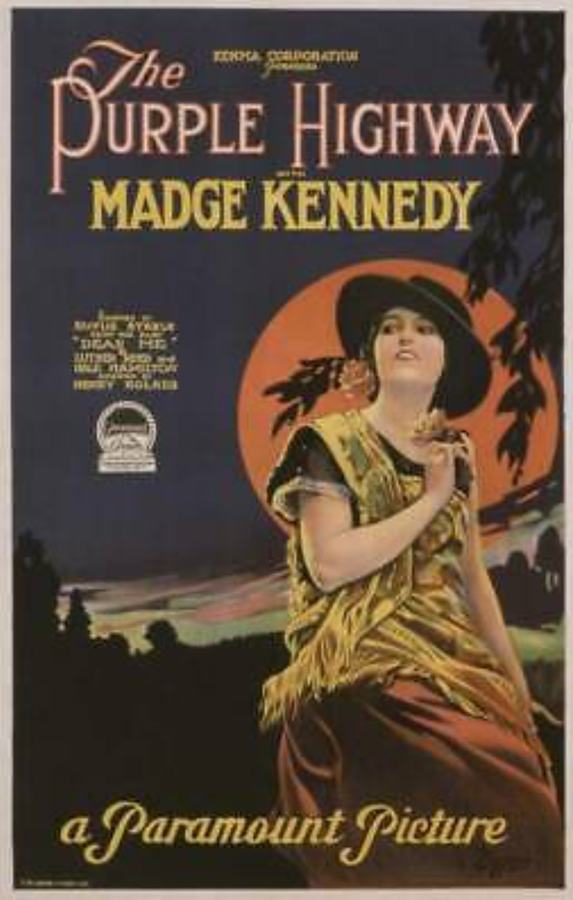
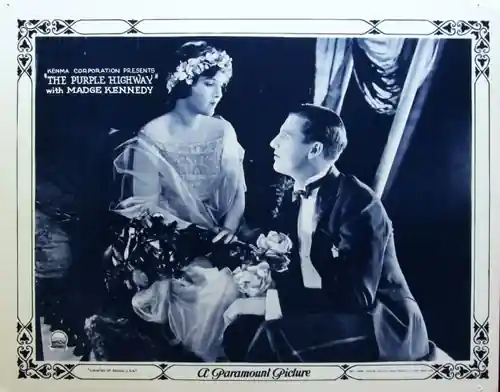
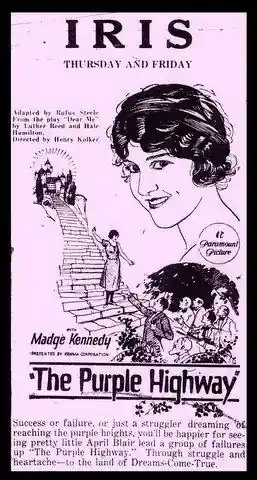
The Purple Highway, directed by the trio of Hale Hamilton, Luther Reed, and Rufus Steele, arrives as a curious artifact of early sound cinema, straddling the line between melodrama and backstage musical. Its premise—a trio of societal outcasts pooling artistic resources to birth a Broadway sensation—offers fertile ground for both narrative intrigue and meta‑commentary on the creative process itself.
At its core, the film is a study in redemption through collaboration. Edgar (Monte Blue), a playwright whose pen has been dulled by incarceration, is portrayed not merely as a criminal but as a wounded poet yearning for catharsis. His love for April (Madge Kennedy), the erstwhile leading lady whose career has sputtered, provides the emotional fulcrum around which the story pivots. The cleaning girl, an unnamed but pivotal figure, embodies the archetype of the unsung muse; her discovery of a melodic talent mirrors the film’s own revelation of hidden potential within forgotten spaces.
The narrative unfolds in three distinct acts: the initial gathering of talent within the crumbling artists' home, the tumultuous creation of the musical, and the climactic Broadway debut. Each act is punctuated by moments of lyrical introspection, where characters confront their pasts while forging a collective future. The film’s pacing, though occasionally uneven—a relic of its era—maintains an undercurrent of urgency, reflecting the characters’ desperate need for validation.
Monte Blue delivers a performance that oscillates between stoic restraint and fervent passion. His portrayal of Edgar is imbued with a quiet intensity, especially in scenes where he rehearses lines on the cracked plaster walls, his voice reverberating like a prayer. Madge Kennedy, as April, radiates a bittersweet nostalgia; her eyes convey a lingering ache for lost applause, while her gestures betray a resilient spark that refuses to be extinguished.
Pedro de Cordoba, cast as the seasoned director who mentors the inmates, brings gravitas to the ensemble, his measured diction anchoring the chaotic creative process. Supporting actors—William H. Tooker, John W. Jenkins, and Charles Kent—populate the background with a tapestry of eccentric mentors and skeptical patrons, each contributing a layer of authenticity to the film’s micro‑society.
The musical numbers, though modest by contemporary standards, are meticulously crafted to serve narrative progression. The titular overture, performed by the cleaning girl’s impromptu chorus, intertwines a plaintive violin motif with a buoyant brass section, symbolizing the convergence of sorrow and hope. The choreography, choreographed by an uncredited but evidently skilled troupe, employs angular movements that echo the characters’ internal conflicts.
Notably, the film’s sound design utilizes diegetic music—rehearsal rooms echo with piano chords, hallway conversations are punctuated by humming—creating an immersive auditory texture that predates the modern “musical‑within‑a‑musical” trope.
Visually, The Purple Highway embraces chiaroscuro lighting, casting the dilapidated studio in stark contrast with the luminous Broadway stage. Cinematographer (unnamed) employs deep focus shots to capture the cramped workshop’s claustrophobia, while wide‑angle lenses reveal the expansive, glittering theater during the climactic performance. The film’s black‑and‑white palette, though monochrome, is enriched by strategic use of shadows that echo the characters’ concealed desires.
The set design—particularly the transformation of a derelict loft into a makeshift rehearsal space—evokes a palpable sense of improvisation. Props such as broken mannequins and splintered easels serve as visual metaphors for broken dreams awaiting reconstruction.
When juxtaposed with other period pieces like The Black Gate or Untamed, The Purple Highway distinguishes itself through its meta‑theatrical focus. While The Black Gate delves into existential dread within a gothic setting, The Purple Highway channels that dread into creative fervor, offering a more optimistic resolution.
In comparison to the introspective drama The Undercurrent, which explores suppressed emotions beneath a veneer of normalcy, The Purple Highway lifts its undercurrents to the surface, allowing them to surge into a full‑blown musical torrent.
Beyond its surface narrative, the film subtly interrogates class stratification. The artists’ home functions as a microcosm of society’s margins, where inmates—literal prisoners—are granted a fleeting liberty through artistic expression. This allegorical liberation resonates with contemporary discussions surrounding rehabilitation through the arts, making the film unexpectedly prescient.
Moreover, the romantic subplot between Edgar and April challenges conventional gender dynamics of the 1930s. April’s eventual acknowledgment of her love arrives not through a grand gesture but through a quiet, almost accidental realization, suggesting a progressive portrayal of female agency.
Although The Purple Highway never achieved the commercial ubiquity of contemporaneous musicals like Friends and Enemies, its influence can be traced in later works that celebrate the transformative power of collective creation, such as the 1970s cult classic Untamed. Film scholars often cite it as an early exemplar of the “artist‑as‑rebel” archetype, a motif that resurfaces in modern indie cinema.
The film’s preservation status remains precarious; only a few archives hold restored prints, and its availability on streaming platforms is limited. This scarcity has inadvertently cultivated a niche following among cinephiles who prize its raw authenticity and its unvarnished portrayal of creative struggle.
Strengths abound: the chemistry between Monte Blue and Madge Kennedy is palpable; the musical numbers, though simple, are emotionally resonant; and the film’s thematic ambition—melding redemption, love, and artistic ambition—is commendable. The screenplay, penned by Hamilton, Reed, and Steele, balances wit with pathos, delivering dialogue that feels both period‑appropriate and timeless.
Conversely, the film suffers from occasional pacing lulls, particularly during extended rehearsal montages that, while authentic, test the viewer’s patience. Additionally, some supporting characters are under‑developed, serving more as narrative props than fully realized individuals.
The Purple Highway stands as a testament to cinema’s capacity to celebrate the underdog artist. Its blend of heartfelt performances, earnest musicality, and thoughtful subtext renders it a compelling study for both film historians and modern audiences seeking inspiration from bygone eras. While not flawless, its earnestness and artistic integrity earn it a place in the pantheon of early American musical dramas.
IMDb 5.3
1927
Community
Log in to comment.