DbcultAccessing Vault...
Cult Review
Senior Film Conservator
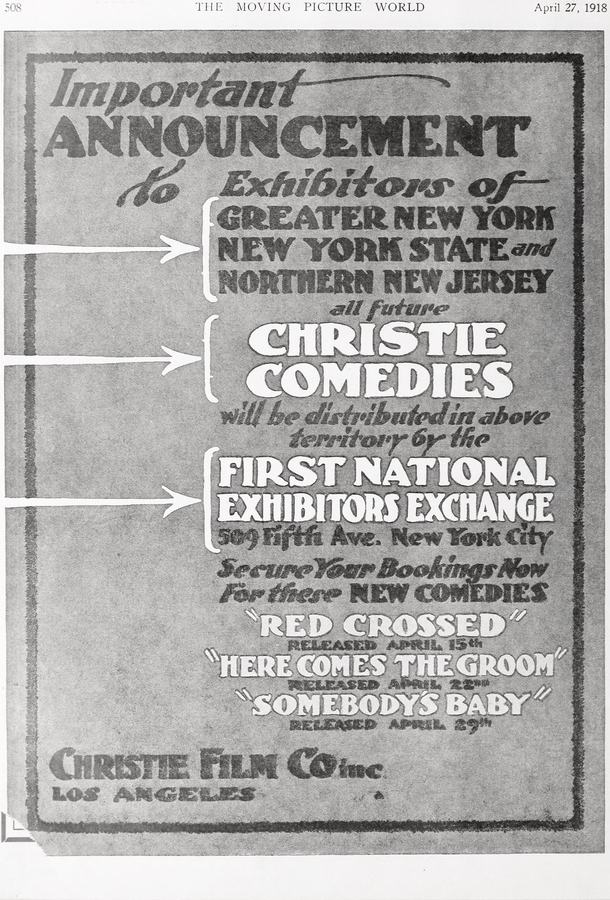
Stepping back into the cinematic past, one often encounters films that, despite their age, resonate with surprising modernity in their themes, or at the very least, offer a fascinating window into the societal mores of their time. Such is the case with 'Red Crossed', a silent era gem that, for all its unconvincing comedic beats, offers a rather delightful, if understated, commentary on marital dynamics, female agency, and the pervasive spirit of patriotism during a tumultuous period. Released at a time when the world was embroiled in a global conflict, the film's premise — a competition between a husband and wife to gather funds for patriotic purposes — taps directly into the prevailing zeitgeist, albeit with a uniquely domestic and playful twist.
The central conceit of 'Red Crossed' is, on paper, quite audacious. We are presented with a couple, presumably well-meaning, who decide to channel their energies into national service, not through traditional means, but through a rather unconventional contest of financial accumulation. This isn't merely about who can earn more; it's about who can demonstrate greater ingenuity, perhaps even a touch of subversive flair, in their fundraising endeavors. The film, starring the engaging Dorothy Dane and the reliable Billy Mason, sets the stage for a marital rivalry that transcends mere domestic squabbles, elevating it to a matter of civic duty and personal pride.
The plot thickens, or perhaps, lightens, with the wife's masterstroke. Discovering her husband engaged in a poker game with his friends – a pastime often viewed with a mixture of indulgence and mild disapproval in such narratives – she seizes an opportunity. What follows is a staged raid, a theatrical intervention where she, along with her comrades, dons the guise of police officers. This particular sequence, as the original synopsis suggests, is where the film's comedic aspirations might have faltered for contemporary audiences, perhaps leaning too heavily into broad farce rather than subtle wit. However, through the lens of early cinema, such overt displays of deception for a 'good' cause often carried a different kind of charm, a playful subversion of authority that audiences found amusing. It’s a moment that, despite its potential for narrative awkwardness, speaks volumes about the wife's character: resourceful, daring, and utterly committed to her objective, even if it means bending a few social conventions.
Dorothy Dane, a prominent figure in early cinema, brings a certain vivacity to her role. Her portrayal of the wife, whose name we are not explicitly given in the synopsis but who clearly drives the film's central conflict, is crucial. She embodies a proto-feminist spirit, not in a grand, revolutionary sense, but in the everyday assertion of her will and intellect. Her decision to outwit her husband, rather than simply ask for funds or engage in more traditional charity work, positions her as a woman of action. One might compare her spirited defiance to characters found in films like The Lady Outlaw or even The Masked Motive, where female protagonists operate outside conventional societal boundaries, albeit for different reasons. Here, the 'outlaw' spirit is channeled for patriotic ends, making her actions morally ambiguous yet ultimately laudable within the film's framework.
Billy Mason, as the husband, provides the perfect foil. His character, likely depicted with a degree of masculine confidence that quickly turns to bewildered chagrin, allows Dane's character to shine. The dynamic between them is key to the film's success, or lack thereof, in conveying its humor. Silent film acting, with its reliance on exaggerated gestures, facial expressions, and often melodramatic pantomime, would have been essential in communicating the husband's mounting disbelief and eventual capitulation. One can imagine his initial bluster giving way to a comical sense of defeat as his wife, disguised and determined, strips him of his poker winnings. This kind of gendered power play, where the wife outsmarts the husband, was a popular comedic trope, often used to gently challenge traditional patriarchal structures without outright dismantling them.
The 'unconvincing bit of comedy' noted in the plot summary is an intriguing point. What makes it unconvincing? Is it the broadness of the disguise, the ease with which the deception is pulled off, or perhaps the audience's own evolving sensibilities regarding humor? In the context of 1918, cinematic comedy was often less subtle than what we might appreciate today. Physical comedy, slapstick, and situational irony were paramount. The idea of a wife and her friends dressing up as police to raid a poker game might have been considered uproariously funny, a testament to the ingenuity of women and the gullibility of men. It speaks to a certain theatricality inherent in early filmmaking, where realism often took a backseat to spectacle and exaggerated performance. Perhaps it's less about the 'convincing' nature of the disguise and more about the audacity of the act itself, which would have surely elicited chuckles from audiences of the era.
The outcome of this clandestine operation is pivotal: the wife successfully gathers enough money to cover the wager, securing her victory in the fundraising competition. More importantly, she does so in exchange for a promise of silence. This adds another layer to the narrative, hinting at the social implications of such an act. The husband’s reputation, his pride, and perhaps even his standing among his friends are at stake. The wife’s leverage, therefore, extends beyond mere financial gain; it encompasses a quiet triumph in their marital contest, a subtle assertion of her capabilities. This theme of deception and its consequences, both personal and social, can be seen in other films of the period, such as The Impostor or Betrayed, though often with far more dramatic and less comedic implications.
The film's exploration of patriotism is also noteworthy. In an age before mass media, cinema played a crucial role in shaping public sentiment and mobilizing support for national causes. By embedding the fundraising effort within a comedic, domestic drama, 'Red Crossed' likely made the concept of civic duty more accessible and perhaps even more appealing to a broader audience. It humanizes the grand abstract concept of patriotism, showing how even within the confines of a household, individuals could contribute in their own unique ways. This patriotic undercurrent is a common thread in many films of the era, reflecting the pervasive call to arms and national unity.
While 'Red Crossed' might not possess the dramatic gravitas of The Wrath of the Gods or the intricate social commentary of Mysteries of Paris, its strength lies in its simplicity and its ability to capture a specific cultural moment. The film serves as a charming artifact, illustrating how themes of gender, competition, and national service were woven into popular entertainment. Ethel Lynne, though her role details are not specified in the synopsis, would have undoubtedly contributed to the ensemble, perhaps as one of the wife's comrades or another character involved in the poker game, adding texture to the narrative's comedic fabric.
From a technical perspective, silent films like 'Red Crossed' relied heavily on clear visual storytelling, expressive acting, and well-placed intertitles to convey plot and dialogue. The direction, even without specific details, would have aimed for clarity and impact, ensuring that the audience understood the motivations behind the raid and the comedic payoff. The pacing, a critical element in silent cinema, would have been carefully managed to build anticipation for the 'police raid' and then deliver the punchline effectively. Although lacking the technological sophistication of later eras, these films often demonstrated an impressive understanding of visual narrative, using camera placement, editing, and mise-en-scène to great effect.
The film's legacy, while perhaps not as widely celebrated as some of its more dramatic contemporaries like Love Never Dies or The American Beauty, lies in its representation of social dynamics. It quietly, comically, challenges the notion of a wife as merely a supportive figure, instead presenting her as an active, strategic participant in both domestic and civic spheres. This portrayal of female initiative, even in a lighthearted context, was subtly progressive for its time. It shows a woman not just capable of managing a household, but of executing a complex, albeit humorous, scheme to achieve a goal she deems important.
Consider the broader context of women's roles during this period. The Great War had necessitated women taking on new responsibilities in society and the workforce, challenging traditional gender boundaries. Films like 'Red Crossed', in their own small way, reflected these shifting perceptions. The wife's ability to outmaneuver her husband, even in a playful competition, could be seen as a cinematic echo of the broader societal changes occurring outside the cinema halls. It's a testament to the power of narrative to subtly reflect and influence cultural shifts.
The specific mention of the comedy being 'unconvincing' prompts a deeper reflection on the subjective nature of humor across time. What might have elicited hearty laughter in 1918 could easily fall flat a century later. This isn't necessarily a flaw of the film itself, but rather a fascinating indicator of how cultural references, comedic timing, and audience expectations evolve. For modern viewers, the charm might lie less in the laugh-out-loud moments and more in the historical curiosity, the period costumes, the silent film acting conventions, and the sheer audacity of the premise itself. It encourages us to engage with the film on its own terms, appreciating its historical context rather than judging it solely by contemporary comedic standards.
Furthermore, the film's title, 'Red Crossed', itself invites a degree of interpretation. Does 'Red' refer to the patriotic colors, or perhaps a subtle nod to the 'red tape' or even the 'red-handed' nature of the wife's scheme? And 'Crossed' implies both a challenge, a crossing of swords (or wits), and perhaps a crossing of social boundaries. The title, though simple, holds layers of meaning that enrich the viewing experience, hinting at the playful deception and the underlying competitive spirit that defines the narrative.
In conclusion, 'Red Crossed' is more than just a forgotten silent film; it is a delightful, if imperfect, window into early 20th-century entertainment and societal values. It showcases the emerging talents of actors like Dorothy Dane and Billy Mason, and it reflects a period where patriotism and domestic life intertwined in unexpected ways. While its comedic elements might require a historical lens for full appreciation, the film's core message of resourcefulness, marital dynamics, and the pursuit of a common goal—even through unconventional means—remains universally engaging. It stands as a testament to the ingenuity of early filmmakers in crafting narratives that, even in their simplicity, resonate with a unique charm and historical significance. It may not have the epic scope of Neft vä milyonlar sältänätindä or the intricate character studies of Höhenluft, but its unassuming brilliance lies in its ability to tell a simple story with a spirited heart, making it a worthy subject for any cinephile's exploration of early American cinema.
The charm of 'Red Crossed' also lies in its subversion of expectations. The wife's actions, while technically bordering on unlawful, are framed within the context of a noble cause – patriotic fundraising. This moral ambiguity, where the 'ends justify the means,' is a classic narrative device that allows for both comedy and a subtle critique of social norms. The fact that she secures silence with the money further emphasizes her strategic prowess; she not only wins the competition but also controls the narrative of her victory within their social circle. This kind of nuanced character behavior, even in a silent comedy, adds a layer of depth that elevates it beyond mere slapstick.
Looking back at the film through the prism of other contemporary works, one can see 'Red Crossed' fitting into a broader trend of films that explored the lighter side of life, even amidst serious global events. It’s a contrast to the more overtly dramatic or moralistic narratives often seen in films like The Disciple or The Door Between. Instead, it aligns more closely with the spirit of playful escapism that cinema often provided, offering audiences a moment of levity and amusement. The film reminds us that even during times of great hardship, people sought out stories that could entertain, provoke thought, and perhaps even offer a gentle laugh at the foibles of human nature, especially when those foibles were wrapped in the guise of patriotic duty.
The performances by Dorothy Dane and Billy Mason, even without the benefit of sound, would have conveyed a rich tapestry of emotions. Dane's expressions, her determined gait, and her conspiratorial glances would have painted a picture of a woman confident in her scheme. Mason's reactions, from initial amusement to dawning horror and eventual resignation, would have provided the essential comedic counterpoint. The skill of silent film actors lay in their ability to communicate complex internal states through purely external means, a talent that is often underestimated today. Their chemistry, even in an adversarial context, would have been key to making the marital competition feel engaging and relatable.
Ultimately, 'Red Crossed' stands as a charming, if minor, entry in the annals of silent cinema. It's a film that, despite its age and the perhaps anachronistic nature of its humor, offers a valuable glimpse into the social fabric of its era. It's a story of ingenuity, playful deception, and a unique take on patriotism, all wrapped up in a package that, even with its 'unconvincing comedy,' manages to entertain and intrigue. For those interested in the evolution of film, gender roles in early cinema, or simply a lighthearted historical romp, 'Red Crossed' offers a quaint yet compelling viewing experience, showcasing how even the simplest premises could be spun into engaging cinematic tales. It's a film that crosses the boundaries of time, inviting modern audiences to appreciate the enduring appeal of clever storytelling, no matter how it's presented.
IMDb —
1921
Community
Log in to comment.