DbcultAccessing Vault...
4.3/10
Senior Film Conservator
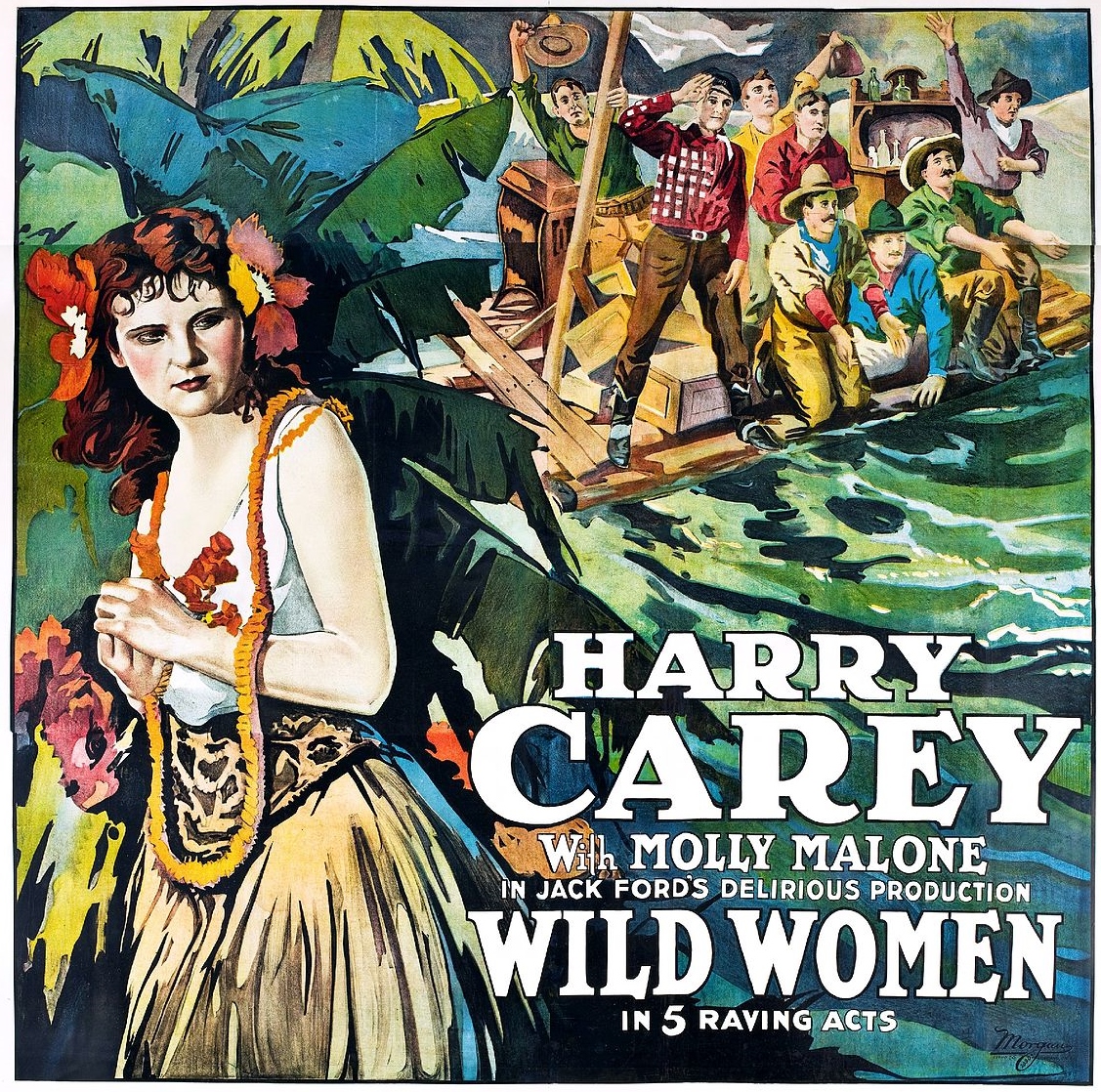
A definitive 4.3/10 rating for a film that redefined the boundaries of cult cinema. Wild Women remains a cornerstone of transgressive art.
To witness Wild Women (1918) is to observe the primordial soup of American cinema beginning to boil. Directed by a young Jack Ford—long before he became the monumental John Ford of The Searchers—this film represents a fascinating intersection of the frontier ethos and the experimental whimsy of the silent era. It is a work that refuses to be tethered to the terrestrial demands of the Western genre, opting instead for a picaresque journey that oscillates between the sweat of the rodeo and the ethereal logic of a fever dream. Unlike the more grounded narratives of the time, such as The Pinch Hitter, which sought to lionize the domestic virtues of the American male, Ford and his frequent collaborator Harry Carey were interested in something far more anarchic.
The film functions as a cornerstone of the 'Cheyenne Harry' series, a character who served as a precursor to the more complex anti-heroes Ford would later develop with John Wayne. Harry Carey’s performance is a masterclass in understated masculinity; he possesses a rugged nonchalance that feels remarkably modern compared to the theatrical gesticulations common in 1918. The opening sequences, which detail the camaraderie of the cowboys as they attempt to win prize money for their friend Rawhide Jack, are captured with a documentary-like reverence for the physical labor and skill of the rodeo. Here, Ford’s eye for composition—the way figures are silhouetted against the vast, unforgiving horizon—is already evident, echoing the mythic proportions found in later epics like Ruslan i Lyudmila, albeit on a more intimate, dusty scale.
The narrative pivot of Wild Women occurs during a sequence of celebratory intoxication that would likely have ruffled the feathers of the impending Temperance movement. After their victory, the boys indulge in a night of revelry that is portrayed with a visceral, dizzying energy. This isn't just a plot device; it is a cinematic bridge. As they fall into a deep, drunken lethargy, the film sheds its Western skin. The transition is seamless yet jarring, a testament to the editing prowess of the period. We are no longer in the American West; we are cast adrift on a South Sea island, a setting that feels as though it were plucked from the exotic fantasies of On the Spanish Main or the seafaring adventures of Peg of the Pirates.
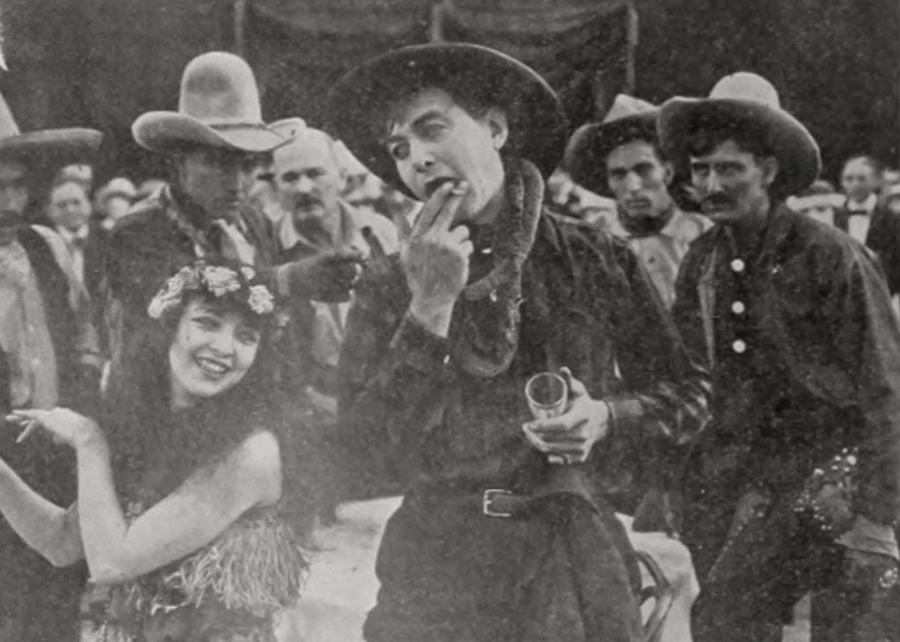
This island sequence is where Ford’s burgeoning genius for visual storytelling truly erupts. The juxtaposition of Stetson-clad cowboys against a backdrop of palm trees and 'wild women' creates a surrealist tension that predates the formal Surrealist movement in cinema. While films like The Witch explored the supernatural through the lens of folklore and horror, Wild Women approaches the fantastic through the lens of the subconscious. It is a comedic exploration of the 'Other,' where the cowboys’ traditional skills are rendered useless in a landscape governed by different social and physical laws. The 'wild women' of the title are not merely objects of desire but are portrayed with a kinetic, almost feral energy that challenges the protagonists' sense of order.
Technically, Wild Women is a revelation of early lighting techniques. The use of natural light in the outdoor rodeo scenes provides a stark, high-contrast aesthetic that emphasizes the grit and grime of the frontier. Conversely, the dream sequences utilize more controlled, expressive lighting that mirrors the internal state of the sleeping cowboys. One cannot help but compare this stylistic duality to the atmospheric intensity of Il fuoco (la favilla - la vampa - la cenere), where light and shadow are used to delineate the boundaries of passion and despair. Ford’s camera isn't just recording action; it is interpreting the emotional weight of the scene.
The ensemble cast, featuring Vester Pegg and Molly Malone, provides a sturdy framework for Carey’s lead. Malone, in particular, brings a vibrant presence that balances the stoic masculinity of the male leads. The chemistry between the actors suggests a troupe that has worked together extensively, a precursor to the 'John Ford Stock Company' that would eventually include names like Ward Bond and Ben Johnson. This sense of lived-in camaraderie is what prevents the film’s more absurd elements from descending into farce. There is a genuine warmth in the way these men interact, a loyalty that is as palpable as the dust on their boots.
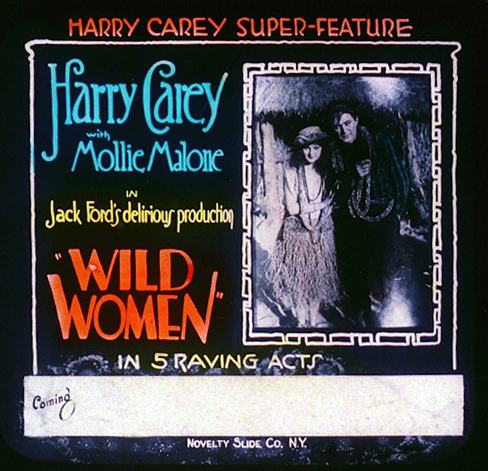
When placed alongside its contemporaries, Wild Women stands out for its structural audacity. Where a film like The Man Who Disappeared follows a more linear, suspense-driven trajectory, Ford’s work is comfortable in its own ambiguity. It shares a certain thematic DNA with Fast Company in its exploration of social dynamics, yet it remains uniquely focused on the internal life of its hero. The film’s willingness to engage in what can only be described as a 'Western-Comedy-Fantasy' hybrid is a bold move that many modern directors would struggle to execute with such grace.
Even when compared to European imports of the era, such as the Danish drama Den retfærdiges hustru, Ford’s film feels uniquely American in its optimism and its fascination with the 'wide open spaces'—even when those spaces are confined to the theater of the mind. It lacks the heavy-handed moralizing of The Eternal Strife, preferring instead to let the audience find the meaning in the madness. The film is a celebration of the spirit of the West, reimagined as a playground for the imagination.
It is a tragedy of cinematic history that many of Ford’s early silents are lost or exist only in fragmented forms. Wild Women, however, provides enough of a blueprint to understand why Ford would eventually become the architect of the American Western. His ability to humanize the mythic and find the mythic in the human is on full display here. The film’s conclusion, which brings the cowboys back to their waking reality, is handled with a deft touch that avoids the 'it was all a dream' cliché. Instead, the dream feels like an essential experience that has deepened the bond between the characters.
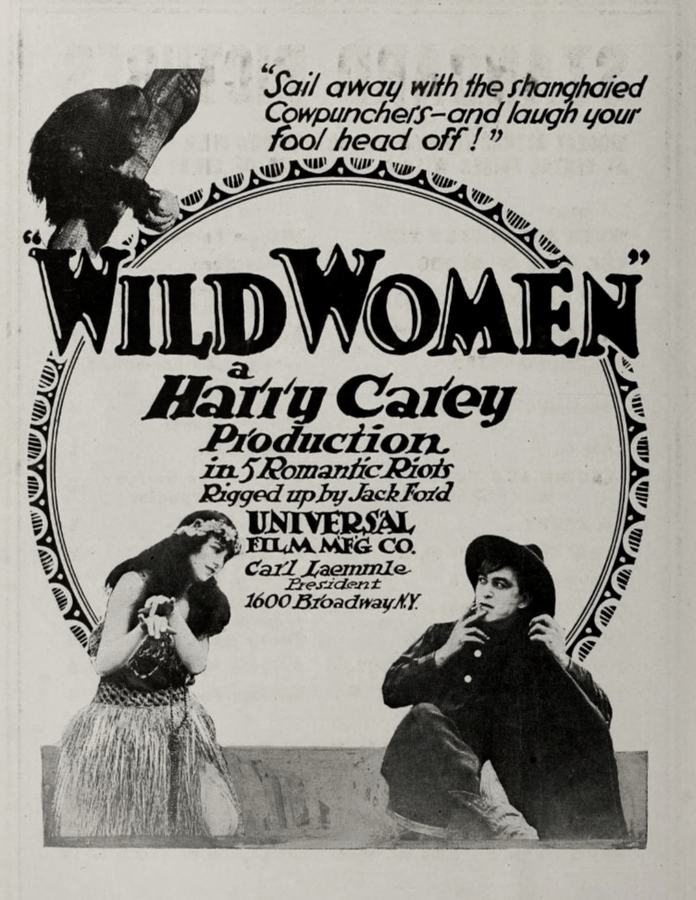
In the broader context of 1918, a year defined by global upheaval and the waning of the First World War, films like Wild Women and How We Beat the Emden provided necessary escapism. But while the latter focused on the triumphs of reality, Ford’s film suggested that the greatest adventures are those we take within ourselves. It is a work of startling originality, a dusty, drunken, and delightful excursion into the heart of the cowboy mythos. It may not have the historical weight of A Vida do Barão do Rio Branco, but in terms of pure cinematic joy and the development of visual grammar, it is an indispensable piece of the puzzle.
Ultimately, Wild Women is a testament to the power of collaboration. The writing team of George Hively, Harry Carey, and John Ford crafted a script that was flexible enough to accommodate both high-stakes action and low-brow humor. It is a film that understands the importance of the 'pinch hitter'—the unexpected element that changes the game. Whether it is the sudden appearance of a South Sea island or the tender moment of a cowboy helping a friend, the film is constantly surprising its audience. It is a reminder that even in the earliest days of the medium, masters like Ford were already pushing the boundaries of what a story could be.
IMDb 6.2
1915
Community
Log in to comment.