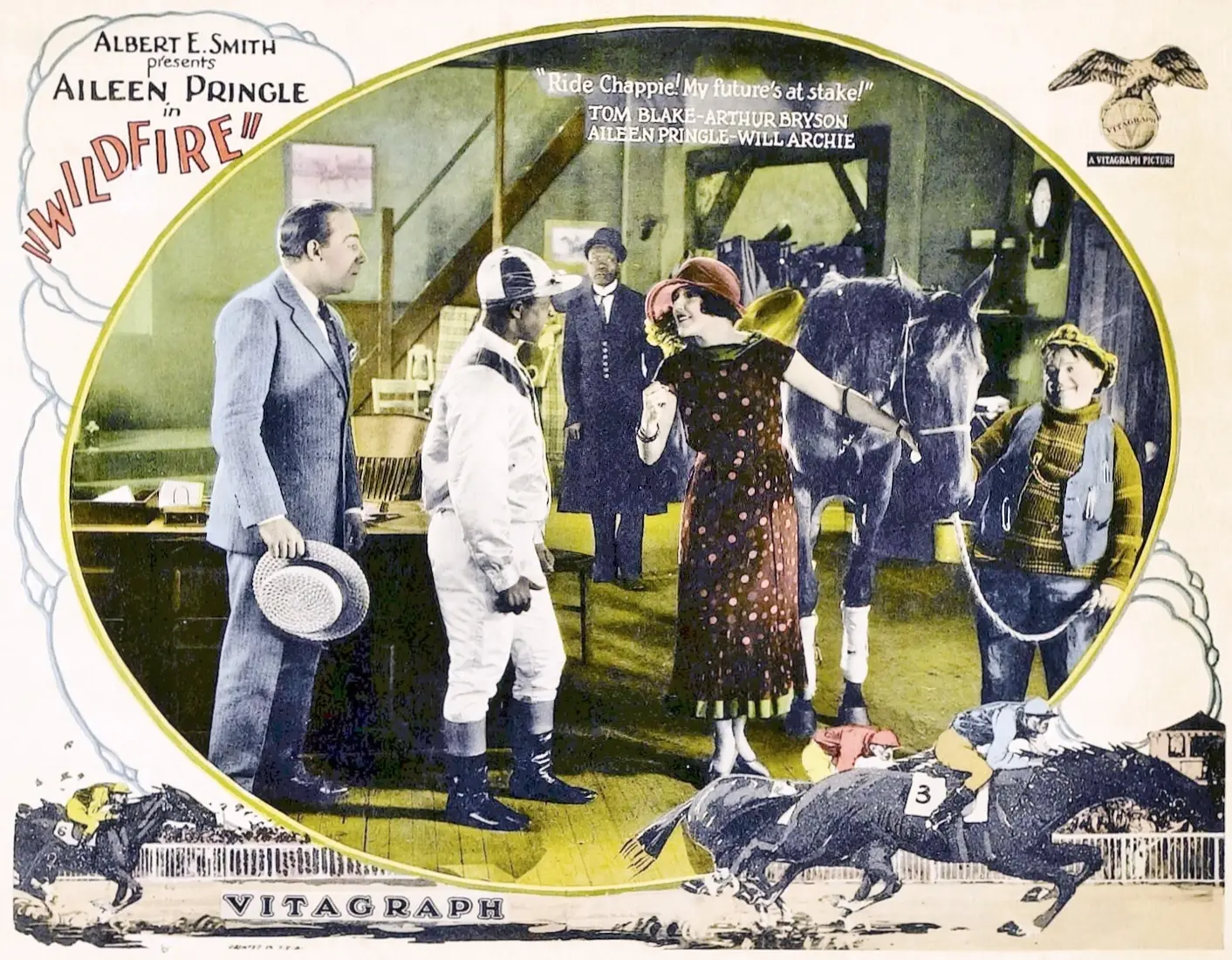
In the early 1920s, the world of horse racing was a veritable battleground, and few knew it better than Claire Barrington. Operating the Duffy racing stables under the guise of anonymity, Claire's primary goal was to secure a favorable match for her sister, Myrtle, with Ralph Woodhurst, a man whose father was vehemently opposed to the horse racing industry. The stakes were high, and any hint of her involvement could jeopardize the marriage alliance. This intricate web of deception sets the stage for a poignant tale of love, betrayal, and redemption.
Enter John Duffy, the mortgage holder of the Duffy stables. His intentions were not as altruistic as they seemed. With a mortgage hanging over the stables, Duffy saw an opportunity to force Claire into marriage. However, Claire was no fool, and she had her heart set on Garrison, a man who had been away for five years, presumed dead. Garrison returned just in time for the big race, his presence a stark reminder of the past and a fresh start.
Garrison's return was a catalyst for change. An old grudge against Duffy from their military days resurfaced, fueling a new mission. He sought to bankrupt the Duffy stables, unaware that he was working against the woman he loved. His plan was to buy Jackdaw, the fastest racehorse, with the aim of defeating Wildfire, the prized Duffy filly. The stage was set for a showdown that would challenge not only the stability of the Duffy stables but also the very foundation of Claire's heart.
The plot thickens when Duffy sets fire to his own stables, a desperate move to discredit Garrison and to ensure the downfall of Claire by destroying Wildfire. The irony of the situation was not lost on the audience; despite the fire, Wildfire was saved. The real drama unfolded during the race, where Duffy hired Chappie Raster, a jockey with ulterior motives, to throw the race. Claire, however, was one step ahead of Duffy's schemes. Her strategic maneuvering and unwavering love for Garrison ensured that Wildfire crossed the finish line by a hair's breadth.
The resolution of 'Wildfire' is both satisfying and poignant. Claire and Garrison's relationship is restored, and Duffy is left to face the consequences of his actions. The film's conclusion offers a bittersweet victory, celebrating the triumph of love and the triumph of truth over deception.
'Wildfire' is a remarkable piece of cinema, blending elements of romance, drama, and suspense. The performances by Edmund Breese, Aileen Pringle, and Tom Blake are particularly noteworthy, bringing depth and authenticity to their characters. The direction, by writers George Broadhurst, George V. Hobart, and Gerald C. Duffy, is masterful, capturing the essence of the era and the complexities of the characters' motivations.
While 'Wildfire' holds up well as a historical drama, it also resonates with contemporary audiences. The themes of loyalty, deception, and the pursuit of love are universal, making it a timeless piece of cinema. For fans of period dramas and classic Hollywood films, 'Wildfire' is a must-watch. It offers not only a thrilling narrative but also a rich tapestry of human emotions and the enduring power of love.
In comparison with other films of the era, such as 'Days of Daring' or 'An Alaskan Honeymoon', 'Wildfire' stands out for its intricate plot and the depth of its characters. While it may not have the same level of spectacle as some of its contemporaries, 'Wildfire' compensates with its emotional depth and the nuanced portrayal of its characters.
In conclusion, 'Wildfire' is a cinematic gem that offers a rich, layered narrative. Its ability to engage the audience with its complex plot and compelling characters makes it a standout work in the genre of historical dramas. Whether you are a fan of classic cinema or simply enjoy a well-told story, 'Wildfire' is a film that is sure to captivate and inspire.