DbcultAccessing Vault...
Cult Review
Senior Film Conservator
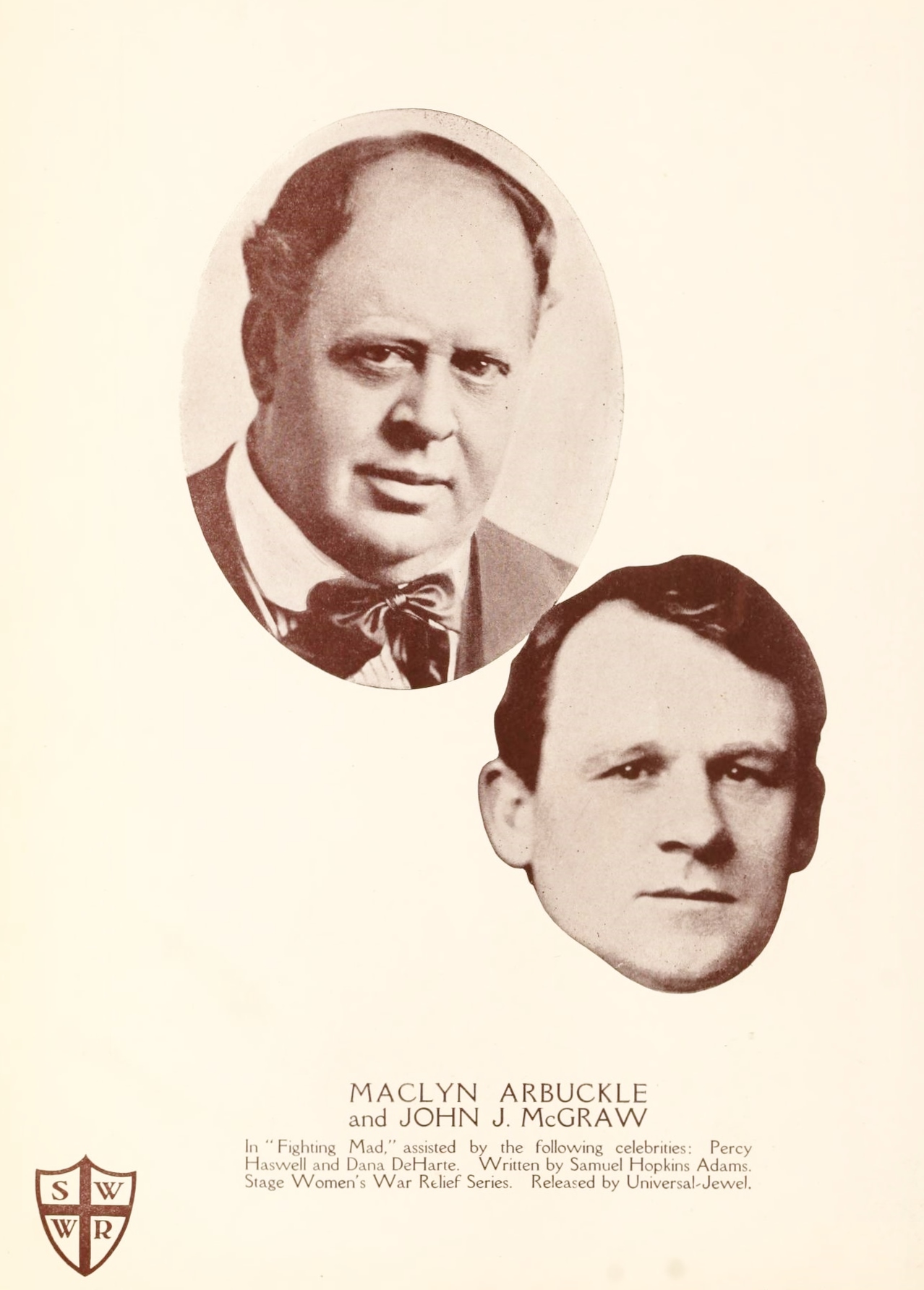
Stepping back into the cinematic tapestry of 1919, one encounters Fighting Mad, a picture whose very title promises an exploration of human endurance and the explosive consequences of injustice. This silent drama, penned by the insightful Samuel Hopkins Adams, is far more than a simple melodrama; it is a trenchant social commentary, a visceral character study, and a testament to the raw power of early filmmaking. The film plunges us into a world where the scales of justice are not merely tipped, but actively manipulated, forcing its protagonist into a crucible of moral and physical conflict.
At its core, Fighting Mad is an examination of righteous indignation, personified with remarkable gravitas by Macklyn Arbuckle as Jefferson 'Jep' Kincaid. Arbuckle, a figure often celebrated for his comedic prowess, here delivers a performance of profound depth, showcasing a range that transcends the era's often broad strokes. Kincaid is introduced as a man of principle, a respected lumberman whose livelihood is inextricably linked to the land and the community he cherishes. His initial approach to conflict is one of reasoned discourse, a belief in the inherent fairness of the system. This portrayal sets up a compelling dramatic arc, as the audience witnesses his gradual disillusionment, a slow burn of despair that eventually ignites into a justifiable fury. It’s a masterful transformation, rendered with a subtlety that belies the common perception of silent film acting.
The antagonist, Silas Thorne, brought to life with chilling effectiveness by Percy Haswell, represents the predatory underbelly of burgeoning industrialization. Thorne is not merely a villain; he is an embodiment of unchecked ambition, a titan whose insatiable hunger for land and resources respects no moral boundaries. His methods are insidious, weaving a web of legal chicanery and outright coercion that ensnares the unsuspecting Kincaid. Haswell imbues Thorne with a cold, calculating demeanor, a stark contrast to Arbuckle’s earthy integrity. The conflict is not merely personal but ideological, a clash between the communal spirit of the old frontier and the ruthless individualism of nascent capitalism. This thematic resonance finds echoes in other films of the era, such as The Closed Road, which similarly explores the corrupting influence of power, though perhaps without the same raw, emotional intensity that Arbuckle brings to his role here.
The corruption extends beyond Thorne himself, seeping into the very institutions meant to uphold justice. Local authorities, once seen as pillars of impartiality, become complicit in Thorne's schemes, their integrity eroded by his pervasive influence. This portrayal of systemic corruption is particularly poignant, as it underscores Kincaid’s growing isolation and his realization that the traditional avenues for redress are closed off to him. It’s a cynical view, perhaps, but one grounded in the social realities that Samuel Hopkins Adams often exposed in his muckraking journalism. The film doesn't flinch from depicting the uncomfortable truth that even in a supposed land of opportunity, power can dictate outcomes.
Amidst this moral quagmire, Dana De Harte shines as Mary Thorne, Silas’s daughter. Her character is not merely a romantic interest for Kincaid, but a vital moral compass within the narrative. Mary is a woman torn between filial loyalty and a profound sense of justice, a witness to her father’s ruthlessness and the suffering it inflicts. De Harte portrays this internal conflict with delicate nuance, her expressions conveying a depth of sorrow and burgeoning rebellion. Her eventual alignment with Kincaid is not a simple act of falling in love, but a conscious choice to stand on the side of righteousness, even if it means betraying her own blood. This adds a layer of tragic complexity to the story, elevating it beyond a simplistic good-versus-evil dichotomy.
A truly intriguing casting choice is the appearance of John J. McGraw, then a legendary figure in baseball, as 'The Judge.' McGraw's presence, while perhaps a novelty stunt for audiences of the time, is cleverly integrated into the narrative. His character is not merely a passive arbiter but a figure of pragmatic morality, a man whose presence offers Kincaid a much-needed anchor in a sea of despair. The Judge, unlike the compromised local officials, operates with a clear-eyed understanding of human nature and the necessity of direct action when all other avenues are exhausted. He embodies a certain frontier justice, a recognition that sometimes, the law must be supplemented by a more primal defense of what is right. This role, though potentially brief, provides a vital turning point, validating Kincaid’s eventual decision to abandon civility for a more confrontational approach.
The film’s pacing is deliberate, allowing the audience to fully immerse themselves in Kincaid’s emotional odyssey. We witness his initial shock, his attempts at negotiation, his growing frustration, and finally, the breaking point where his inherent decency gives way to a simmering rage. This build-up is crucial to the film’s impact, making Kincaid’s eventual transformation into a man 'fighting mad' not only believable but entirely sympathetic. Arbuckle masterfully uses his physicality, his large frame conveying both a gentle strength and, later, an intimidating power. His eyes, often downcast in sorrow, blaze with an unholy fire when he finally decides to act. It's a performance that resonates with the raw, untamed spirit of the early American frontier, where self-reliance was not just a virtue but a necessity for survival.
Compared to other dramatic offerings of the period, such as The Heart of the Blue Ridge, which often leaned into more overt romanticism and pastoral ideals, Fighting Mad offers a grittier, more realistic portrayal of conflict. While both films explore human passions, Fighting Mad grounds its emotional core in socio-economic struggle, giving its drama a more tangible, less ethereal quality. The film doesn't shy away from depicting the harsh realities faced by ordinary people against powerful entities, a theme that remains perennially relevant.
The influence of Samuel Hopkins Adams is palpable throughout the narrative. Known for his unflinching exposés and his commitment to social justice, Adams imbues Fighting Mad with a sense of moral urgency. The screenplay is not just a vehicle for entertainment but a platform for critique, highlighting the injustices inherent in a system where wealth often dictates power. Adams’s ability to craft compelling characters while simultaneously addressing complex societal issues is a hallmark of his work, and it elevates this film beyond mere genre fare. His meticulous attention to the erosion of legal and ethical boundaries provides a sturdy framework for the dramatic unfolding of Kincaid's plight.
The narrative structure, while adhering to some conventions of the time, also displays a sophisticated understanding of dramatic tension. The plot doesn't rush to its climax; instead, it allows the pressure to build incrementally, mirroring Kincaid’s internal turmoil. This slow-burn approach, where each setback chips away at the protagonist’s resolve, makes the eventual explosion of 'fighting mad' all the more cathartic and earned. It’s a testament to Adams’s skill as a storyteller and the director's ability to translate that vision to the screen, understanding the power of prolonged suffering before ultimate action.
The climax of Fighting Mad is a visceral and deeply satisfying culmination of the preceding drama. It is not merely a physical confrontation, though it contains elements of that, but a profound clash of ideologies. Kincaid, having exhausted all avenues of civility, stands as a lone figure against the monolithic power of Thorne, representing the individual’s primal right to defend what is his. The imagery here is powerful, reminiscent of the enduring struggle seen in films like The Combat, where personal battles take on allegorical significance. However, Fighting Mad roots its conflict in a more tangible, socio-economic context, making the stakes feel acutely real.
The film’s resolution, while perhaps offering a measure of justice, doesn’t sugarcoat the arduous journey taken to achieve it. It suggests that sometimes, the only way to combat entrenched corruption is through an act of sheer, unadulterated will, a defiant roar in the face of overwhelming odds. This message, delivered with such conviction by Arbuckle, resonates strongly, asserting the enduring power of the individual spirit against the machinery of injustice. It’s a potent reminder that freedom often comes at a steep price, demanding a willingness to fight when all else fails.
Beyond the performances and narrative, the film’s technical aspects, though products of their time, contribute significantly to its enduring appeal. The cinematography, with its stark contrasts and evocative close-ups, effectively captures the emotional turmoil of the characters and the oppressive atmosphere of Thorne’s influence. The editing, while perhaps less frenetic than modern cinema, is thoughtfully paced, allowing key moments to breathe and resonate. One can draw parallels to the visual storytelling in The Narrow Trail, which similarly used landscape and character framing to enhance its narrative of struggle and determination.
The director, whose name unfortunately often gets overshadowed by the star power of Arbuckle and the writing of Adams, demonstrates a keen understanding of visual storytelling. Without the aid of spoken dialogue, the subtle gestures, the framing of shots, and the deliberate movement of actors become paramount. The way Kincaid’s posture changes from upright confidence to stooped despair, and then to a rigid, determined stance, speaks volumes. This attention to detail ensures that the emotional beats land with considerable force, making the audience feel every blow dealt to Kincaid’s spirit and every surge of his retaliatory resolve.
In an era that also produced films like A Soul Without Windows, which delved into psychological drama, Fighting Mad stands out for its blend of personal struggle and overt social commentary. It’s a film that doesn’t shy away from presenting a hero who is flawed, pushed to his absolute limits, and forced to embrace a more primitive form of justice. This makes Kincaid a more relatable and enduring figure than many of his more idealized contemporaries. His journey is a powerful reminder of the human capacity for resilience and the profound cost of fighting for one's principles.
Ultimately, Fighting Mad is more than a historical artifact; it is a timeless narrative about the struggle for justice in a world that often seems rigged against the common man. Macklyn Arbuckle’s performance is a revelation, a powerful depiction of a man transformed by adversity. Samuel Hopkins Adams’s screenplay provides a robust framework for this transformation, layering social critique with compelling personal drama. The film's message, that sometimes one must be 'fighting mad' to defend what is right, continues to resonate with an enduring relevance, making it a valuable piece of cinematic history deserving of rediscovery. It’s a potent reminder that the human spirit, when pushed to its breaking point, possesses an extraordinary capacity for resistance and ultimately, for triumph.
The careful construction of the plot, the nuanced character development, and the underlying thematic depth ensure that Fighting Mad transcends its era. It asks profound questions about morality, power, and the individual's role in challenging systemic injustice. While films like The Woman Who Dared explored female agency in a changing world, Fighting Mad focuses on the masculine struggle against encroaching corporate might, a battle fought with both legal cunning and, ultimately, raw courage. It’s a film that demands attention, not just for its historical significance, but for its enduring power to provoke thought and stir the soul.
IMDb 5.8
1924
Community
Log in to comment.