DbcultAccessing Vault...
Cult Review
Senior Film Conservator
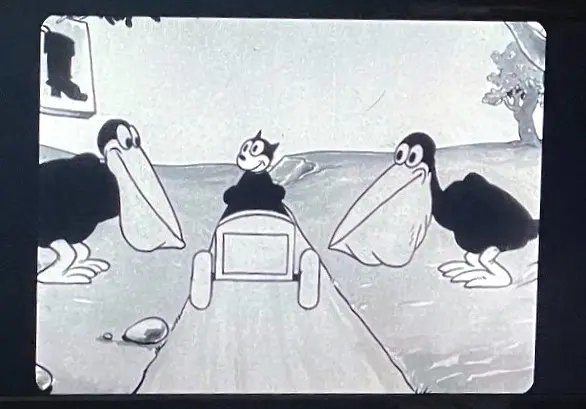
The year 1933 stood as a precipice in cinematic history, a final gasp of creative audacity before the restrictive iron curtain of the Hays Code descended to sanitize the American screen. Within this volatile window, Wine, Women, and Song emerged not merely as a piece of entertainment, but as a caustic sociopolitical commentary masked in the sequins of a backstage drama. To watch this film today is to witness the ghost of vaudeville being exorcised in real-time, capturing a cultural shift where the raucous energy of the variety stage was being cannibalized by the sleek, mechanical precision of the talkies. The film avoids the saccharine tropes common to the genre, opting instead for a chiaroscuro portrayal of ambition that feels more aligned with the psychological isolation found in The Isle of the Dead than the typical musical fluff of its era.
Lilyan Tashman, an actress often relegated to the margins of film history, delivers a performance here that is nothing short of revelatory. She embodies Marilyn Aranyos with a sophisticated melancholy, a woman whose every smile is a calculated defense mechanism. Tashman’s presence is the gravitational center of the film; she possesses a vulpine grace that suggests a character who has seen the worst of humanity and decided to wear it as a fashion statement. In many ways, her character’s struggle for agency in a male-dominated industry mirrors the social stigmas explored in The Branded Woman, where past indiscretions and the weight of public perception become a cage more restrictive than any prison cell.
The dialogue, sharp and frequently cynical, allows Tashman to weaponize her wit. There is a specific scene involving a dressing room confrontation that highlights the film's refusal to blink in the face of ugliness. As she brushes away the greasepaint, the metaphorical layers of her persona peel back, revealing a woman terrified of the encroaching irrelevance that haunts every performer. It is a masterclass in subtlety, utilizing micro-expressions to convey a lifetime of disappointment. This performance stands in stark contrast to the more theatrical acting styles of the silent era, signaling a move toward a grounded, almost hyper-realistic portrayal of the human condition.
At its core, Wine, Women, and Song is an interrogation of the 'casting couch' culture that defined early Hollywood and Broadway. The screenplay, penned with a surprising amount of venom, treats the pursuit of stardom as a Faustian bargain. We see the daughter, played with a fragile optimism by Marjorie Kane, entering the fray with the same wide-eyed wonder that characterized the protagonists in Broadway Gold. However, where other films might reward such innocence, this narrative seeks to dismantle it. The world of the film is one of predatory contracts and sycophantic agents, a landscape where talent is a secondary currency to youth and malleability.
"The film operates on the thesis that the stage is not a platform for art, but a meat grinder for the soul, where the only way to survive is to become as hard as the floorboards you dance upon."
The direction utilizes the cramped, claustrophobic spaces of backstage corridors to heighten the sense of entrapment. These are not the sprawling, opulent sets of a Busby Berkeley production; they are damp, poorly lit limestone rooms that feel as though they are closing in on the characters. This visual language of confinement is reminiscent of the tension found in Trapped by the London Sharks, where the environment itself becomes an antagonist. The cinematography by Herbert Kirkpatrick captures the dust motes dancing in the spotlight, a beautiful but fleeting image that serves as a perfect metaphor for the ephemeral nature of fame.
To understand the weight of Wine, Women, and Song, one must look at how it interacts with the broader cinematic landscape of the early 30s. While it shares some DNA with the mystery elements of Green Eyes—specifically in the way it treats the secrets hidden behind closed doors—it is primarily a domestic tragedy. The friction between mother and daughter is rooted in a desire for social mobility, a theme that echoes the class anxieties found in The Shuttle. Marilyn wants her daughter to marry into a life of stability, a 'marriage in name' that provides safety, much like the arrangements depicted in Married in Name Only.
However, the daughter’s refusal to follow this path creates a fracture that the film refuses to mend neatly. There is a pervasive sense of inevitability, a feeling that the cycles of poverty and performance are unbreakable. This fatalism is a hallmark of pre-Code cinema, which often rejected the 'happily ever after' in favor of a more lachrymose reality. Even the moments of levity feel forced, like a 'false alarm' of hope in a burning building, a concept explored through different lenses in A False Alarm.
Technically, the film is a fascinating study in early sound integration. The musical numbers are not presented as diegetic escapes but as grueling work. We see the sweat, the missed steps, and the exhaustion. This focus on the physical labor of performance links it to the naturalist tradition, almost as if we are observing specimens in a controlled environment, akin to the observational style of In a Naturalist's Garden. The sound design, while primitive by modern standards, effectively uses the cacophony of the theater—the tuning of instruments, the muffled roar of the crowd—to build an immersive, often overwhelming atmosphere.
The editing rhythm by Rose Loewinger is notably brisk, cutting between the artifice of the stage and the reality of the dressing room with a jarring frequency that mirrors the fractured psyche of the protagonist. This editing style prevents the audience from ever getting too comfortable with the 'show,' constantly reminding us of the cost of the spectacle. It is this refusal to let the audience escape into the music that makes Wine, Women, and Song such a potent piece of filmmaking. It demands that we look at the 'runt' of the litter, the overlooked performers who never make it to the big time, a sentiment that resonates with the empathy found in The Runt.
As the film reaches its crescendo, the traditional boundaries of the genre dissolve. It is no longer a musical; it is a ghost story. The ghost is the version of Marilyn that could have been, and the specter of the version her daughter is becoming. There is a profound sadness in the way the film treats its male characters as well. Lew Cody’s performance as the aging playboy provides a mirror to Tashman’s character; he is the 'seven bald pates' in the front row, a man whose wealth cannot buy back his youth or his integrity, a theme of moral decay that wouldn't be out of place in a satirical work like Seven Bald Pates or even the chaotic energy of Loose Lions.
Ultimately, Wine, Women, and Song is a vital piece of the 1930s cinematic puzzle. It captures a moment when the industry was forced to look at itself in the mirror and didn't like what it saw. It lacks the grand historical sweep of Christopher Columbus, but its intimate stakes feel far more urgent. It is a film about the survival of the spirit in a world that views the human heart as just another prop. For those seeking a sanitized version of the past, look elsewhere. But for those who want to feel the pulse of a bygone era, with all its grime and glory, this film is an essential viewing experience. It is a testament to the fact that even in the darkest corners of the 'wine' and the loudest choruses of the 'song,' there is a human truth waiting to be heard.
In the final analysis, the film’s impact lies in its refusal to offer easy absolution. Like the complex moral quandaries found in Syndig Kærlighed, the choices made by the characters leave a lasting stain. It is a work of profound empathy and biting critique, a rare combination that ensures its relevance long after the final curtain call. Tashman’s legacy is secured here, not as a decorative object, but as a formidable artist who understood that the most powerful thing one can do on screen is to show the world exactly how much it hurts to be alive.
IMDb —
1926
Community
Log in to comment.