DbcultAccessing Vault...
Cult Review
Senior Film Conservator
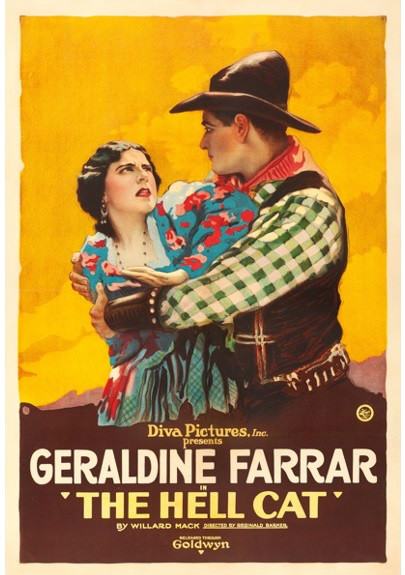
There's a certain raw, untamed energy that courses through the veins of early silent cinema, an almost primal storytelling force that, when wielded by true artists, transcends the limitations of its medium. Willard Mack's 1918 Western melodrama, 'The Hell Cat', starring the incandescent Geraldine Farrar, is a prime example of this phenomenon. It’s a film that doesn't merely tell a story; it roars it, with a ferocity and passion that belies its age. Watching it today, one is struck not just by its historical significance, but by its enduring power as a narrative of female resilience and frontier justice.
The cinematic landscape of the late 1910s was fertile ground for tales of daring and romance, often set against the rugged, mythologized backdrop of the American West. Yet, even within this burgeoning genre, 'The Hell Cat' distinguished itself through its audacious protagonist, Pancha O'Brien, brought to life with electrifying intensity by Farrar. This isn't just another damsel in distress; Pancha is a force of nature, a woman whose spirit burns as brightly as the prairie sun, and whose will is as unyielding as the mountains. Her journey from the beloved daughter of an Irish rancher to a woman driven by vengeance and survival is a testament to the era's growing appetite for complex female characters.
Geraldine Farrar, a name synonymous with operatic grandeur before her foray into film, brought an unparalleled dramatic flair to the silver screen. In 'The Hell Cat', she embodies Pancha with a captivating blend of vulnerability and indomitable strength. From the outset, Pancha is established as a woman of agency, openly reciprocating the affections of Sheriff Jack Webb (Milton Sills), a man of honor and duty. This initial portrayal of choice and desire immediately sets her apart from many passive heroines of the period. Her rejection of the outlaw Jim Dyke (Clarence Williams) is not timid or hesitant; it's forthright, defiant, and ultimately, the spark that ignites the film's central conflict. Farrar’s ability to convey such nuanced emotion without spoken dialogue is nothing short of masterful, relying on expressive physicality and piercing gazes that communicate volumes.
The narrative truly shifts into high gear when Dyke, a character painted with broad, villainous strokes, unleashes his brutal vengeance. The assault on Pancha's ranch, the inferno that consumes her home, and the tragic loss of her father are pivotal moments, transforming Pancha from a spirited rancher's daughter into a survivor forged in fire. This act of violence is not merely a plot device; it's the crucible in which Pancha's 'hell cat' persona is truly born. Her subsequent abduction by Dyke, far from reducing her to a victim, only serves to awaken a deeper well of cunning and resolve. One might draw a thematic, if not direct, parallel to the unwavering resolve seen in characters like the titular heroine in Joan of Arc, though Pancha's battle is intensely personal rather than national. Both, however, exhibit an extraordinary inner fortitude in the face of overwhelming adversity.
Jim Dyke, as portrayed by Clarence Williams, is a quintessential silent film villain – menacing, driven by possessive desire, and utterly ruthless. His actions are the catalyst for Pancha's suffering, yet also the impetus for her extraordinary display of wit and courage. The film doesn't delve deeply into his motivations beyond simple villainy, which is typical for the era, but his presence is undeniably impactful. He represents the lawless, untamed element of the frontier, a stark contrast to Sheriff Webb's embodiment of nascent order.
A fascinating, albeit brief, dynamic emerges with the introduction of Wan-o-mee, Dyke's jealous squaw, played by Texas Guinan. Her initial attempt to stab Pancha, fueled by primal jealousy, is a moment of intense, raw drama. What follows, however, is a remarkable turn of events: Pancha, instead of fearing her rival, disarms her with words, explaining her true affections lie with Jack and deftly manipulating Wan-o-mee into becoming her unwitting ally. This sequence is a stroke of narrative genius, highlighting Pancha's quick thinking and ability to turn a desperate situation to her advantage. It's a testament to the script by Willard Mack that such a complex interaction could be conveyed so effectively through visual storytelling and intertitles, avoiding simplistic tropes of female rivalry.
Pancha's agreement to marry Dyke, a calculated deception to buy time, underscores her intelligence and strategic mind. This isn't a passive acceptance of her fate; it's an active, dangerous maneuver. The journey to Cheyenne becomes a tense, psychological chess match, with Pancha biding her time, waiting for the opportune moment. The climax, when Sheriff Jack Webb and his posse finally catch up, is both thrilling and profoundly satisfying. But it’s Pancha herself, not the cavalry, who delivers the decisive blow. Her stabbing of Jim Dyke is an act of ultimate self-liberation, a reclaiming of her agency through a violent, but entirely justified, act. It’s a moment that resonates with a powerful sense of catharsis, a woman taking back what was brutally stolen from her.
Milton Sills, as Sheriff Jack Webb, provides the steadfast, honorable counterpoint to Dyke's depravity. His love for Pancha is evident, and his pursuit of the outlaw is driven by both duty and personal affection. The film's resolution, with Jack claiming responsibility for Dyke's death to protect Pancha, is a poignant act of love and sacrifice. It’s a moral compromise, perhaps, but one steeped in the romantic ideals of the Western hero. This final gesture solidifies their bond, culminating in a proposal that promises a future free from the shadow of vengeance. This kind of protective heroism, where the male lead takes a moral bullet for the female protagonist, was a common, if sometimes problematic, trope in the era, seen in various forms in melodramas and adventure films of the time, emphasizing the societal expectations of chivalry.
Geraldine Farrar’s transition from the hallowed stages of the Metropolitan Opera to the nascent world of motion pictures was a groundbreaking move, and 'The Hell Cat' brilliantly showcases why she was such a captivating presence. Her operatic background instilled in her a profound understanding of dramatic expression, a skill perfectly suited for the demands of silent film. Every gesture, every facial expression, every movement of her body in 'The Hell Cat' is imbued with meaning, communicating Pancha’s terror, defiance, cunning, and eventual triumph. She didn't merely act; she performed, with a theatricality that commanded the screen. Her star power was immense, drawing audiences who were eager to see their beloved diva in a new, accessible medium. Films like this cemented her status as one of the earliest and most influential cross-over stars, paving the way for countless others.
The visual language of silent cinema, particularly in a film of this vintage, relies heavily on the actor's ability to project emotion and intent without dialogue. Farrar’s performance is a masterclass in this art form. Her eyes, in particular, are incredibly expressive, conveying fear, hatred, and determination with equal intensity. The close-ups, when employed, zoom in on this raw emotional landscape, drawing the audience into Pancha's internal world. This reliance on visual storytelling also meant that the physical production—the sets, the costumes, the location shooting (if any)—had to be evocative and authentic, transporting the viewer directly into the Old West. The burning ranch sequence, for instance, must have been a visually arresting spectacle for audiences of the time, a testament to the practical effects capabilities of early cinema.
Willard Mack, as both writer and director (though primarily credited as writer here, the directorial vision is inherently linked to the script in this era), crafted a narrative that is tight, dramatic, and surprisingly modern in its portrayal of female strength. The pacing of 'The Hell Cat', typical of many silent features, builds tension incrementally, culminating in explosive bursts of action. Intertitles, while necessary, are used judiciously, allowing the visual narrative to take precedence. The film likely benefited from a stirring musical accompaniment during its original run, which would have amplified the emotional highs and lows, guiding the audience through Pancha's harrowing ordeal. This symbiotic relationship between visual, textual, and musical elements was the hallmark of compelling silent cinema.
Placing 'The Hell Cat' within the broader context of silent Westerns reveals its unique contributions. While many Westerns focused on male heroism, cattle rustling, or territorial disputes, this film foregrounds a woman's personal saga of survival and revenge. It speaks to a nascent recognition of female agency, even within the constraints of a patriarchal society and cinematic tradition. Films like Bullets and Brown Eyes or The Lure of Heart's Desire might have explored similar themes of romance and peril in the West, but 'The Hell Cat' distinguishes itself through the sheer force of Farrar's performance and the narrative's unflinching portrayal of violence and cunning on the part of its heroine. The film also showcases the burgeoning sophistication of storytelling, moving beyond simple morality plays to explore more complex emotional landscapes.
The film's exploration of themes like captivity and escape, albeit in a Western setting, echoes the dramatic tension found in other films of the era. One might consider the psychological pressures faced by characters in films such as The Slave Mart, where individuals are thrust into dire circumstances and must rely on their wits to navigate treacherous situations. While the specific contexts differ, the underlying human struggle for freedom and self-determination remains a potent common thread. Furthermore, the depiction of the 'other' through Wan-o-mee, while potentially problematic through a modern lens, offers a glimpse into the racial and cultural representations prevalent in early Hollywood, adding another layer for critical analysis.
In conclusion, 'The Hell Cat' is far more than a relic from a bygone era; it is a vibrant, compelling piece of cinematic history that deserves renewed appreciation. Geraldine Farrar's portrayal of Pancha O'Brien is a tour de force, a performance that elevates the film beyond mere genre fare into a powerful statement about feminine strength and defiance. Willard Mack's script, with its clever twists and propulsive narrative, provides the perfect vehicle for Farrar's talents. The film's ability to maintain intense dramatic tension, to elicit genuine empathy for its heroine, and to deliver a satisfying, albeit morally complex, resolution, speaks volumes about its enduring quality.
For those who appreciate the artistry of silent film, the captivating power of a strong female lead, or simply a rip-roaring Western with a difference, 'The Hell Cat' is an essential watch. It reminds us that long before the advent of sound, cinema possessed an incredible capacity to tell stories that gripped the heart and stirred the soul, leaving an indelible mark on the landscape of cinematic narrative. It's a testament to the power of a woman scorned, or rather, a woman wronged, who refuses to be a victim, and instead, becomes the architect of her own justice. A true gem from the golden age of silent film, its roar still echoes today.
IMDb —
1917
Community
Log in to comment.