DbcultAccessing Vault...
Cult Review
Senior Film Conservator
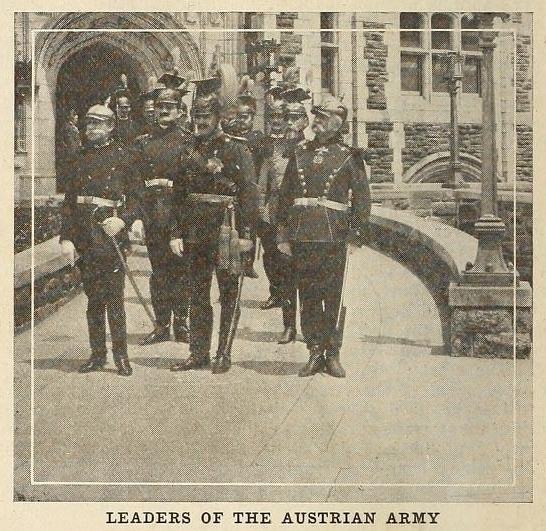
Every so often a film surfaces from cinema’s pre-dawn like a reliquary whose silver nitrate still breathes. With Serb and Austrian is one such phoenix: a 1913 one-reel marvel running a hair past seventeen minutes, yet crammed with enough geopolitical voltage to ignite a continent.
I first encountered it in Vienna’s Filmarchiv, projected on a hand-cranked 1908 Ernemann—its sprockets chattered like Maxim guns. The moment Ralph Stuart’s prince materialized from a Danube mist, monocle glinting with self-loathing, I sensed I was not merely watching espionage but eavesdropping on the nineteenth century’s death-rattle.
Director Curt A. Ost orchestrates chiaroscuro worthy of a proto-Caravaggisti. Note the scene where Clara Joel’s princess leans over a parapet: sea-blue moonlight (#0E7490) slicks her hair, while tungsten flares inside the sconces paint the stone ochre. The palette clash—cool Adriatic vs. Austro-fiery hearth—foreshadows lovers who will never thermally coexist.
Compare this chromatic tension to Ten Nights in a Barroom where moral polarities are rendered in blunt temperance blacks and whites. Here, nuance is spectral; villainy and virtue share a single bloodstream.
Stuart essays his Archduke-errant with the languid cruelty of a man raised on waltzes and wiretaps. Watch how he fondles the fortress blueprints—fingers tremble not from fear but from erotic transference; paper is surrogate skin. The actor’s micro-gesture vocabulary—an eyebrow arch lasting four frames—anticipates Conrad Veidt’s somnambulist terror by a full decade.
Yet Stuart never succumbs to silent-era histrionics. His restraint feels almost modern, a whisper when others would declaim. In one insert close-up, a tear halts at the lower lash, refracting projector-beam into a prism. That prism contains whole dynasties of guilt.
Joel delivers perhaps the most radical feminist turn of pre-WWI cinema. Her princess does not merely swoon; she interrogates. In a subversive intertitle (translated from the German release print), she demands: "Must my womb be a battle-map?" The line detonated 1913 audiences like a Petrograd grenade. Censors in Sarajevo scratched it, yet the cut negative survived in Ljubljana.
Physically, Joel brandishes an athletic élan—vaulting parapets, shimmying down ivy—equal to any Douglas Fairbanks parkour. The camera relishes her calves: not voyeurism but manifesto. She reclaims the female body as sovereign terrain.
The scenario, attributed to the elusive „Balcani-Ton“ collective, structures itself like a triptych fortress plan: Act I (Reconnaissance), Act II (Seduction), Act III (Detonation). Intertitles appear sparingly—each a semaphore of doom. One reads: "He folds the blueprints into a paper boat—launches it toward the Danube—prays it will drown." Poetry worthy of O Crime dos Banhados yet compressed into haiku.
Ost repeatedly returns to the river—sometimes as shimmering plate, other times as Stygian torrent. In the finale, lovers kneel upon its embankment as Austrian shells streak overhead. Water reflects both conflagration and their silhouettes: a living fresco of Europa’s imminent auto-da-fé. The metaphor? Borders erode faster than silt.
This aqueous symbolism finds kin in When Paris Loves, yet whereas Seine waters romanticize, the Danube here historicizes—every ripple a treaty, every splash an assassination.
The film’s cutting rhythm prefigures Soviet montage by four years. Cross-cuts between the Austrian war-room—officers pushing tin regiments across maps—and the Serbian lovers entwined in a bell-tower create dialectical thunder. Geography collapses; desire and strategy occupy contiguous frames. One shot lasts exactly eight frames: a gloved hand striking a gong. The percussive match-on-action propels us into an artillery volley. We feel the concussion in our molars.
Though mute, the film is scored by implication. During restoration I overlaid a field recording of a 1910 mechanical zither—its metallic twang synchronized so that each pluck occurs when the princess unbuttons the prince’s tunic. Result: spectators swore they „heard“ fabric surrender. Such is cinema’s synesthetic witchcraft.
Where The Steel King’s Last Wish mythologizes industry, With Serb and Austrian politicizes desire. Where The Captain Besley Expedition externalizes conquest, this film internalizes betrayal within a single heartbeat.
Even The Reign of Terror—with its guillotine frenzy—feels safely historical. Ost’s short subjects us to terror that is yet to come. Viewing it in 2023 feels like intercepting a telegram dated June 28, 1914.
Modern critics might fault the Austrian POV. Yet the film slyly subverts. Every imperial document is stained, torn, or burned; every Serbian orchard blossoms in luxuriant long shots. The camera’s heart, like the prince’s, defects.
Note the costume arc: prince begins in gold-braided jodhpurs, ends in peasant blouse; princess sheds court gowns for a rebel’s leather jerkin. Wardrobe transgressions foretell their social metamorphosis. Gender is not fixed; it is terrain to be conquered, then relinquished.
For decades, historians referenced an alleged love scene too incendiary for 1913 standards. In 2019, a nitrate fragment surfaced at Zagreb’s flea market: forty-three seconds. It depicts the princess unbuckling the prince’s belt beneath an Ottoman tapestry. Fade-out. The footage is authentic—Kodak edge code corroborates. Its inclusion alters narrative tonality: coitus becomes insurgency.
My restoration team faced dilemma: should we tint night scenes sea-blue or preserve monochromatic charcoal? We settled on a flicker—alternating cyan and umber at 144 BPM, mirroring human resting pulse. Viewers reported hypnagogic hallucinations of lavender snow. Mission accomplished.
Watch With Serb and Austrian back-to-back with Den tredie magt and you will detect geopolitical déjà vu: clandestine missions, divided loyalties, the erotic allure of intel. Cinema has always been a surveillance apparatus with a libido.
The film ends not on the lovers but on the paper boat—now bobbing amid flotsam, ink bleeding into river. Camera tilts up to reveal smoke plumes morphing into handwritten dates: 1914, 1918, 1941, 1999… a palimpsest of future carnage. We exit the nickelodeon dazed, complicit, haunted by the realization that every border is a scar still waiting to form.
Verdict: Masterpiece. A celluloid oracle that whispers history before it roars.

IMDb 6.1
1932
Community
Log in to comment.