DbcultAccessing Vault...
Cult Review
Senior Film Conservator
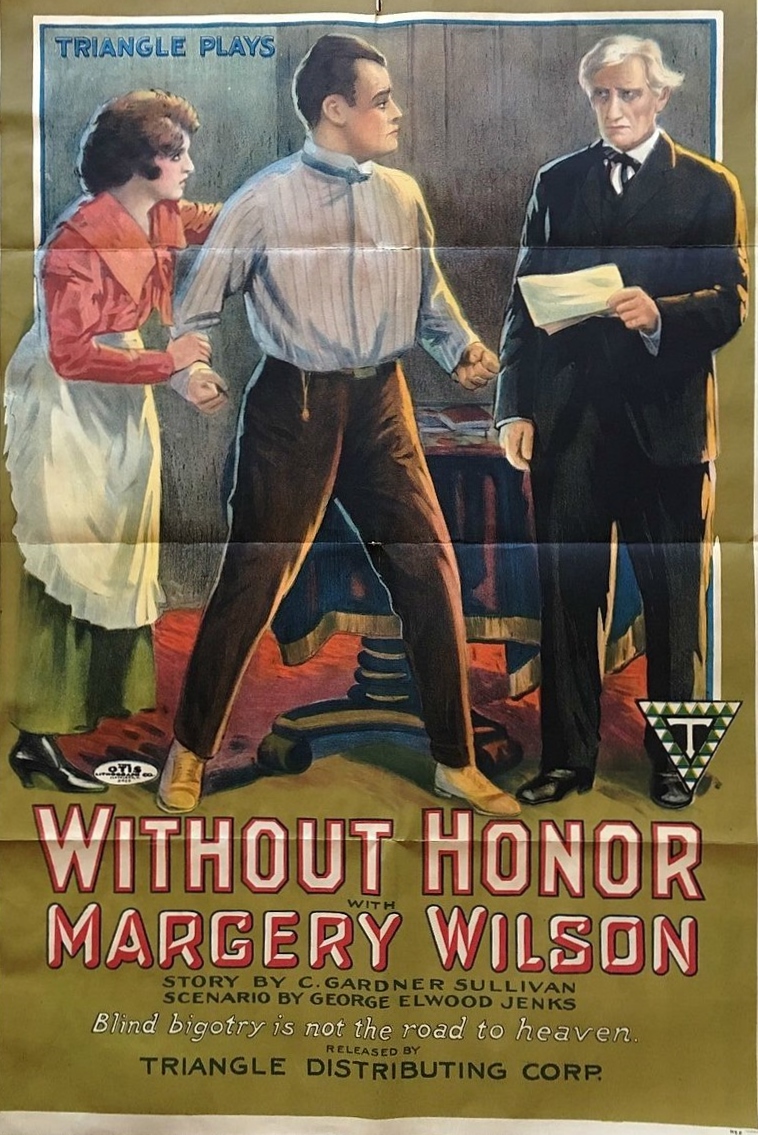
The first time I squinted at a 16mm dupe of Without Honor—flecked like a leopard, shrill like a banshee—I felt the same chill I get when stepping into a 19th-century daguerreotype parlor: the past is watching you, not vice versa. This 1925 one-reeler, clocking in at a skeletal 26 minutes, is less a narrative than a moral X-ray: every vertebra of male fragility illuminated by the uranium glow of hypocrisy.
Roy Hanford, played by Darrell Foss with the damp eyes of a spaniel who knows he’s about to be kicked, is introduced mid-flinch. The opening intertitle—white on black like a death certificate—reads: “A man may flee his father’s house, yet carry its shadows on his back.” Director Walter Edwards wastes zero footlight time: within ninety seconds we see Roy’s wife—Laura Sears in a performance of glacial ennui—yawning behind a veil of cigarette smoke while the deacon-father (Walter Edwards again, doubling roles with Pentecostal glee) brandishes a Bible like a search warrant. The blocking is proto-noir: characters arranged in depth, furniture turned into moral barricades.
Cut to the city—an expressionist fever of superimposed tramcars and phantom skyscrapers. Enter Breeze Ballard, the only character who moves diagonally through the frame, forever tilted like a salesman whose moral compass has been calibrated for commission. Margery Wilson plays Jeanie with a face that could launch a thousand pamphlets on social hygiene; her first close-up—lips parted, pupils dilated—feels like a crime scene photograph of hope.
The courtship montage is a masterclass in thrift: a shared umbrella dissolves into a marriage license dissolves into a baby’s rattle, all in under forty seconds. Edwards trusts the audience to fill the emotional gutters; the result is a vertiginous intimacy that longer films often dilute.
Just as domestic bliss peaks, the deacon re-enters like a Puritan terminator, clutching a bigamy warrant that may or may not be legally sound—continuity was never a sacrament in silent cinema. Roy’s denial of the marriage is staged in a single, agonizing two-shot: Jeanie’s face collapses in real time, the baby off-screen but wailing on the intertitle track. Foss achieves something rare in male performances of the era: he makes cowardice look metabolically expensive.
What follows is a chase across barren hills shot day-for-night with filter trickery, the grain swelling like bruised skin. Roy’s death—toppling backward into a ravine—feels almost merciful; gravity dispenses the punishment society only threatens. Edwards films the plunge with a hand-cranked hesitation, each frame a stutter of existential free-fall.
Back in the village, the deacon incites a torch-less witch-hunt. The mob scenes borrow visual DNA from The Flower of Doom—faces half-lit, mouths black caverns of moral certainty. Anna Dodge, as the village busybody, delivers a sermon on feminine contagion so venomous you half-expect the film stock to blister.
Yet the climax refuses catharsis. Breeze’s last-minute evidence—an envelope flashed like a papal indulgence—doesn’t exonerate Jeanie so much as transfer ownership: from one man’s lie to another man’s rescue. The final tableau—Jeanie framed between Breeze and the horizon—reads less as romantic resolution than as a legal handover. Love, like bigamy, is a matter of paperwork.
Foss’s Roy is a study in adamic slouch; his shoulders seem to apologize for occupying space. Note how he removes his hat—two fingers only, as if the brim were scalding. Compare that to Edwards’s deacon: spine erect, voiceless yet sonorous, a man who has weaponized vertebrae. Wilson’s Jeanie oscillates between porcelain composure and hairline fractures; when she clutches her infant, the gesture is less maternal than forensic—holding evidence.
Ballard, essayed by an ebullient Arthur Millett, is the film’s only kinetic organism. His laugh—described in an intertitle as “the clatter of tin pans in a Pentecostal wind”—is the closest the movie gets to jazz. In a just universe, he and Jeanie would ride off into a screwball sunset; instead, the film shackles them to a future of plausible respectability, the most suffocating fate a 1925 audience could imagine.
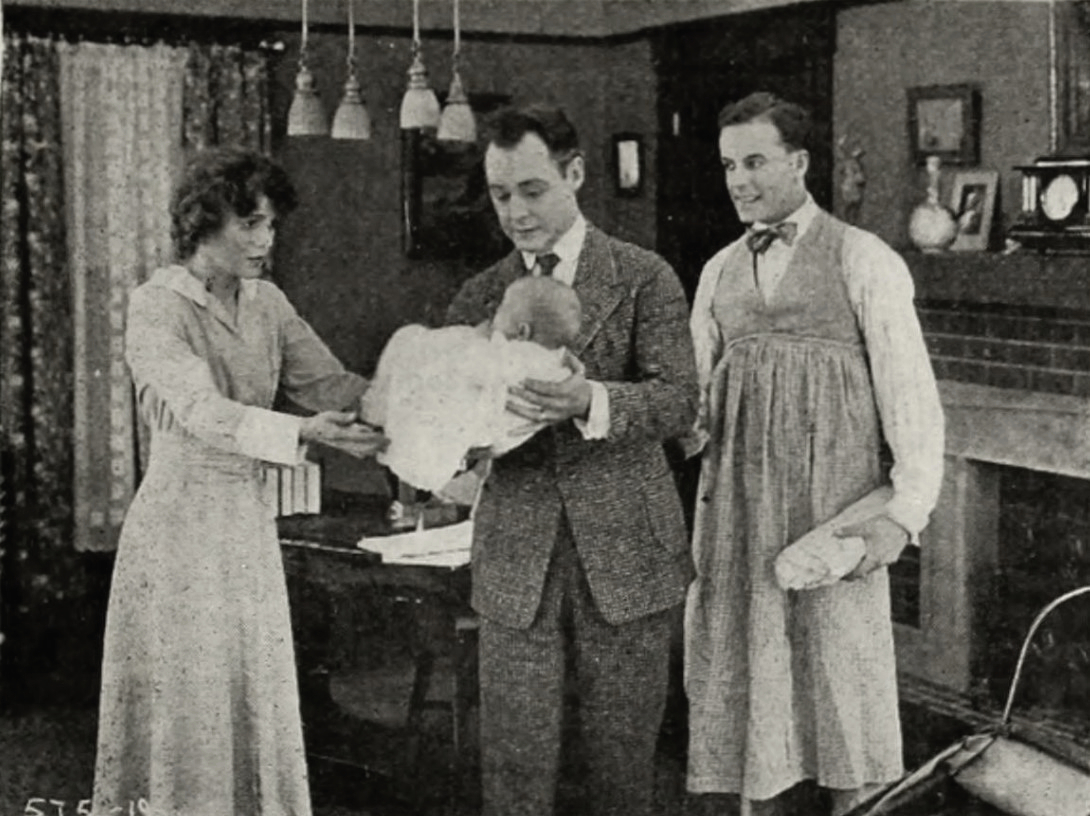
Cinematographer George Elwood Jenks (pulling double duty as scenarist) renders interior spaces like confessionals: windows become moral slats, light slicing faces into guilty geometry. When Roy signs the denial papers, the quill casts a shadow across the page resembling a chain—an effect so on-the-nose it loops back into Brechtian audacity.
Exterior shots favor low horizons, dwarfing characters against a sky that looks poured rather than photographed. The cliff from which Roy falls is framed from below, its lip jagged like a torn marriage certificate. These compositions anticipate the landscape nihilism of Colorado (1927) and the spiritual desolation of Das Spiel ist aus (1926).
The intertitles—often a liability in silents—here achieve haiku-like sting. My favorite: “A lie travels on horseback while truth limps barefoot.” Set against a black card, the words linger like cigarette smoke you can still taste minutes later. Another card, flashed during Jeanie’s ostracism, reads: “Whom the gods would destroy, they first label fallen.” The classical echo lends the film a tragic gravitas its running time shouldn’t be able to support, yet somehow does.
Make no mistake: Without Honor is a proto-feminist grenade wrapped in patriarchal tissue. Jeanie’s body is the battlefield upon which men negotiate theology. The deacon wields scripture; Roy wields denial; Breeze wields documentation. Each believes he is saving her, yet each instrumentalizes her suffering for moral currency. When Jeanie finally speaks her last intertitle—“I have earned the right to silence”—the line lands less as submission than as exhausted reclamation.
Contrast this with the matriarchal horror of Dionysus’ Anger, where women weaponize ecstasy, or the legal purgatory of The Scales of Justice where guilt is unisex. Here, gender operates like a rigged arcade claw: no matter where you drop the talon, the woman is always the prize and the trap.
No original cue sheets survive, so every modern screening is a séance. At the 2019 Pordenone Silent Film Festival, a trio improvised a score built around detuned ukulele and bowed saw—sonically evoking the moral nausea at the film’s core. I’ve also heard a synth-punk version in a Brooklyn basement that turned the deacon’s march into a Suicide-esque throb. The film’s brevity invites such experimentation; it’s a charcoal sketch that leaves room for your own scream.
The only known print—an Italian-subtitled 16mm—was rescued from a flooded seminary in Palermo in 1987. The analog restoration by Cineteca di Bologna scrubbed mold but retained the water-stained halo around the frame edges, making every scene look lit by distant artillery. Currently streaming on ArteKino with optional English subtitles, though the transfer is 720p at best. A 4K scan has been rumored since 2021, contingent on funding from a consortium of religious-studies departments—an irony the film itself would appreciate.
Look at Elia Kazan’s Wild River—another tale of patriarchal eviction—or Todd Haynes’ Safe, where the female body again becomes the site of moral contagion. Even Scorsese’s The Age of Innocence borrows the visual grammar of windows-as-moral-prisons. Without Honor is the patient zero of American cinema’s obsession with shame as civic currency.
It is a razor blade disguised as a postcard, a morality play that eats its own moral. Watch it once for plot, again for the negative space between intertitles, a third time to notice how Roy’s shoes accumulate dust at the exact rate of his dwindling soul. Then go outside, feel the sun, and realize the film has infected your bloodstream with a permanent vaccine against certainty.
If you’re hunting for companion pieces, pair this with For Husbands Only for a double bill on marital claustrophobia, or chase it with Leoni Leo for operatic gender reversal. But whatever you do, don’t watch it on your phone; this thing needs shadows long enough to trip over.
IMDb —
1918
Community
Log in to comment.