DbcultAccessing Vault...
Cult Review
Senior Film Conservator
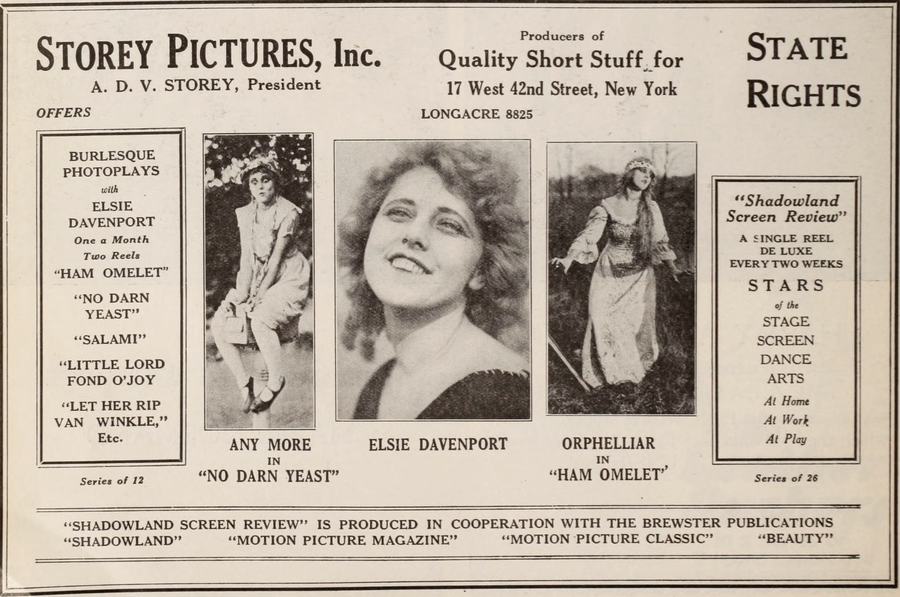
History often forgets that the earliest incarnations of cinema were not just attempts to document reality, but feral efforts to mock it. Peter's Pants, a burlesque of the Peter Pan legend, stands as a testament to this era's irreverent spirit. While contemporary audiences might be accustomed to the sanitized, CGI-laden spectacles of modern fantasy, this early work—anchored by the indomitable Elsie Davenport—reminds us that the roots of the 'Boy Who Wouldn't Grow Up' are deeply intertwined with the ribald, the ridiculous, and the radically anti-authoritarian.
To understand Peter's Pants, one must first reconcile with the term 'burlesque' as it existed in the early 20th century. This wasn't merely about striptease; it was a literary and theatrical tradition of caricature. It took the high-minded and dragged it through the mud of the mundane. In this film, the high-mindedness of J.M. Barrie’s prose is stripped away, replaced by a fixation on the literal 'pants' of the hero—a symbol of the restrictive social fabric that the character seeks to escape.
Unlike the gritty realism found in World's Heavyweight Championship Between Tommy Burns and Jack Johnson, where the camera serves as a cold witness to physical brutality, Peter's Pants uses the camera as an accomplice in a grand deception. It is a film that delights in its own artifice. Where a film like A Weaver of Dreams might lean into the ethereal and the romantic, Davenport’s Peter is grounded in a clumsy, delightful physicality that mocks the very idea of grace.
Davenport’s performance is the centrifugal force of the entire production. In an era where female performers were often relegated to the roles of the damsel or the domestic anchor—as seen in the more traditional narrative structures of A Vermont Romance—Davenport breaks the mold. She occupies the screen with a masculine bravado that is simultaneously a parody of masculinity itself. Her gestures are broad, her facial expressions are elastic, and her timing is impeccable.
She doesn't just play Peter; she deconstructs the archetype. There is a specific scene involving a struggle with a pair of oversized trousers that serves as a metaphor for the entire film: the struggle of the individual against the 'fit' of society. It’s a comedic beat that carries more weight than the heavy-handed moralizing found in The White Lie. Davenport understands that to truly mock a legend, you must first master the physicality of that legend.
When we look at the landscape of 1910s cinema, the diversity is staggering. Consider Neal of the Navy, a serial that relied on adventure and patriotic fervor. Peter's Pants is the antithesis of such earnestness. It doesn't want you to cheer for the hero; it wants you to laugh at the absurdity of the hero's existence. It shares a certain DNA with The Cheater in its exploration of social facades, but while the latter treats deception as a narrative engine, Peter's Pants treats it as a cosmic joke.
Even when compared to European imports like Fürst Seppl, which brought a different flavor of continental humor to the screen, Davenport’s work remains distinctly rooted in the Anglo-American music hall tradition. There is a raucousness here that is missing from the more somber The Scottish Covenanters. While that film seeks to preserve history, Peter's Pants seeks to set it on fire and dance around the flames.
Technically, the film is a fascinating artifact. The use of flat lighting and painted backdrops creates a sense of 'stage-on-screen' that enhances the burlesque feel. It doesn't attempt the epic scale of Quatre-vingt-treize, nor does it require the complex emotional layering of Atonement. Instead, it focuses on the immediacy of the gag. The editing is rudimentary but effective, cutting between Davenport's antics and the bewildered reactions of the supporting cast with a rhythm that mimics a live vaudeville set.
The costume design—specifically the titular pants—is a character in itself. They are baggy, ill-fitting, and constantly in the way. They represent the 'burden of adulthood' in a literal, physical sense. This is a far more clever use of costume than the simple period dress found in Boots. In Peter's Pants, the clothes don't make the man; they embarrass him.
There is a recurring theme of 'the fake' that runs through the film. Peter is a girl playing a boy who refuses to be a man. This layering of identity creates a 'counterfeit' reality that is much more interesting than the straightforward plot of Counterfeit. It challenges the audience to question what is real and what is performance. Is the 'fortunate youth' truly fortunate, or is he just a well-dressed prisoner? This echoes the sentiment in The Fortunate Youth, but strips away the sentimentality.
Furthermore, the film plays with the idea of 'law'—not the legalistic kind found in Love's Law, but the laws of physics and social decorum. Peter breaks every rule, not out of malice, but out of a fundamental inability to exist within them. This makes him a 'brave and bold' figure, though in a much more chaotic sense than the protagonist of Brave and Bold.
To dismiss Peter's Pants as a mere historical curiosity is to miss the point of cinematic evolution. It represents a moment in time when film was still finding its voice—a voice that was loud, crude, and hilariously honest. Elsie Davenport’s performance remains a high-water mark for early screen comedy, proving that you don't need a massive budget or a complex script to make a profound statement about the human condition.
In the end, we are all Peter, and we are all struggling with our pants. The film’s genius lies in its ability to take that universal struggle and turn it into a riotous, unforgettable burlesque. It is a work that deserves to be pulled from the shadows of the archives and celebrated for its audacity, its wit, and its refusal to grow up.
Final Rating: A seminal explosion of early 20th-century satire that remains as sharp as a pirate's cutlass.
IMDb —
1919
Community
Log in to comment.