DbcultAccessing Vault...
Cult Review
Senior Film Conservator
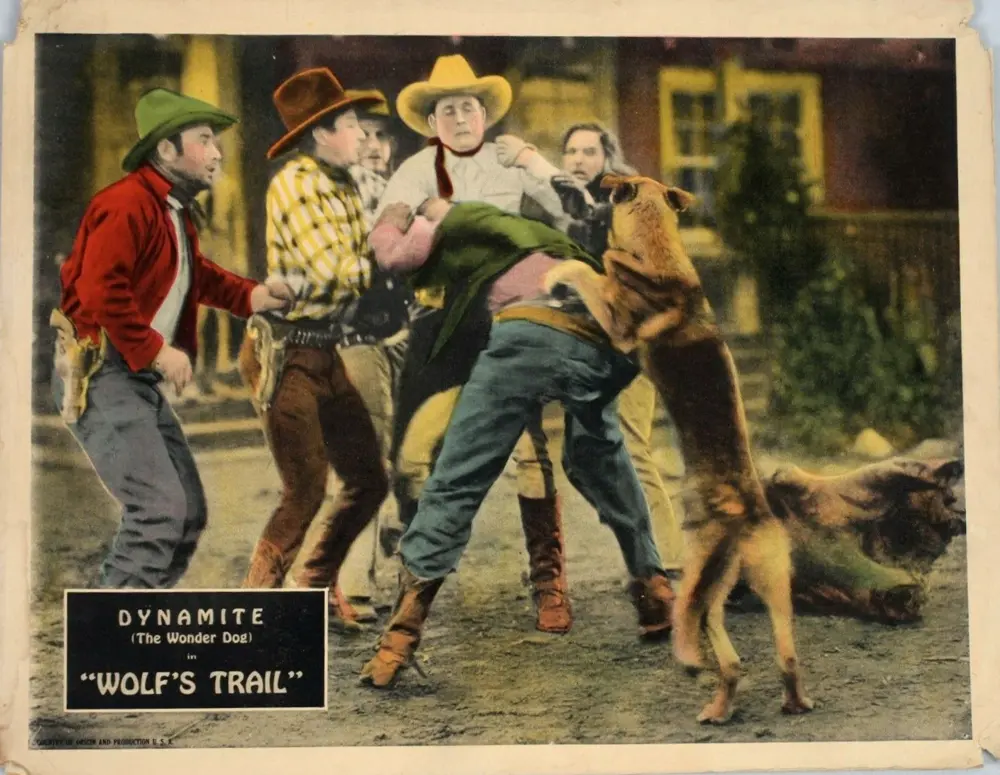
Is 'Wolf's Trail' worth watching today? Short answer: absolutely, but temper your expectations for a historical artifact, not a modern blockbuster. This film is an essential watch for silent film enthusiasts, cinephiles interested in the foundational elements of the Western genre, and anyone who appreciates raw, unvarnished storytelling from early Hollywood. It is decidedly not for audiences seeking fast-paced action, complex narratives, or contemporary production values.
It works. But it’s flawed. This particular expedition into the silent era’s wilderness is a fascinating, if sometimes uneven, experience. Its strengths lie in its earnest performances and surprisingly effective animal acting, anchoring a narrative that, while simple, captures a certain frontier spirit often lost in more polished productions.
This film works because: It leverages authentic performances, particularly from its canine star, Dynamite, and effectively conveys the harsh realities of frontier survival through its unvarnished cinematography and straightforward narrative.
This film fails because: Its pacing can occasionally drag, and the villain’s motivations are somewhat one-dimensional, typical of the era, which might test the patience of modern viewers accustomed to more nuanced antagonists.
You should watch it if: You are a dedicated silent film aficionado, a student of early Westerns, or simply curious about the foundational storytelling techniques that predated synchronized sound, especially if you appreciate films where animals play a pivotal, heroic role.
The narrative of 'Wolf's Trail' is a testament to the power of simplicity, a direct reflection of the storytelling ethos prevalent in its time. We are introduced to Joe Vance, portrayed with a stoic ruggedness by Joseph Bennett, a prospector whose life is inextricably linked to the unpredictable rhythms of the wilderness. His most compelling companion, and arguably the true heart of the film, is Dynamite, a German Shepherd whose intelligence and loyalty are depicted with remarkable authenticity.
Their journey is less about grand quests and more about the daily grind of survival: the search for sustenance, the navigation of treacherous terrain, and the constant vigilance against both natural predators and human malice. This existential struggle leads them into the orbit of Mary Cobb, brought to life by Helen Cobb with a quiet strength that belies the harshness of her circumstances, and her father, Silas, played by Edmund Cobb. These homesteaders embody the indomitable spirit of those who carved a life out of the wild, their existence perpetually threatened by those who would exploit their vulnerability.
The conflict, when it arises, is primal and immediate. A shadowy antagonist, driven by avarice, seeks to dispossess the Cobbs of their land, transforming a struggle for survival into a fight for justice. This escalating tension culminates in a desperate chase through the eponymous 'Wolf's Trail,' a symbolic and literal passage through peril. It’s here that the film truly leans into its strengths, showcasing the ingenuity of its heroes and the crucial, often overlooked, role of animal companions in such narratives. The plot, while straightforward, feels grounded and authentic, eschewing melodramatic excess for a more visceral portrayal of frontier life.
Yes, 'Wolf's Trail' absolutely holds value for contemporary viewers, particularly those with a discerning eye for cinematic history. It offers a rare window into the early days of genre filmmaking, showcasing how foundational tropes of the Western were established and explored before the advent of sound. The film serves as an important historical document, demonstrating the ingenuity required to tell compelling stories without dialogue.
Its enduring appeal lies in its raw, unfiltered depiction of the human spirit against overwhelming odds. While modern audiences might find the pacing slower than what they are accustomed to, the genuine emotion and palpable tension remain effective. It’s a testament to the power of visual storytelling that even without a spoken word, the struggles and triumphs of its characters resonate.
The acting in 'Wolf's Trail' is a masterclass in silent film performance, relying heavily on exaggerated gestures, expressive facial work, and a deeply physical presence. Joseph Bennett, as Joe Vance, embodies the archetypal rugged individualist. His performance is one of quiet determination, his eyes often conveying more emotion than a thousand lines of dialogue ever could. There’s a particular scene where he’s tending to a makeshift campfire, his silhouette stark against the fading light, that perfectly encapsulates his character’s solitary strength and resilience.
Helen Cobb, as Mary, delivers a portrayal that is both vulnerable and fiercely independent. She avoids the damsel-in-distress trope, instead presenting a woman hardened by the frontier but still capable of profound empathy. Her reaction shots, especially during moments of peril or quiet despair, are remarkably nuanced, communicating a silent fortitude that is truly captivating. One moment, when she calmly reloads a rifle under duress, speaks volumes about her character's self-reliance, placing her firmly in the pantheon of strong early cinematic heroines.
But the undeniable breakout star, the performance that truly elevates 'Wolf's Trail' above many of its contemporaries, is that of Dynamite the Dog. It's a genuine shame that films like this often get overlooked by modern audiences fixated on sound and color, as Dynamite delivers a performance so natural and intelligent it rivals, and often surpasses, that of his human counterparts. His actions are not merely trained tricks; they are integrated into the narrative with a seamlessness that suggests genuine understanding and instinct. From tracking scents across vast landscapes to actively participating in rescue efforts, Dynamite's presence is not just charming; it is absolutely critical to the plot's progression. His loyalty is palpable, his bravery unquestionable, and he often serves as the emotional anchor, providing moments of warmth and genuine suspense. There’s a sequence where Dynamite cleverly outwits a pursuer, creating a diversion that allows the humans to escape, which is executed with such precision it feels less like animal training and more like genuine collaboration.
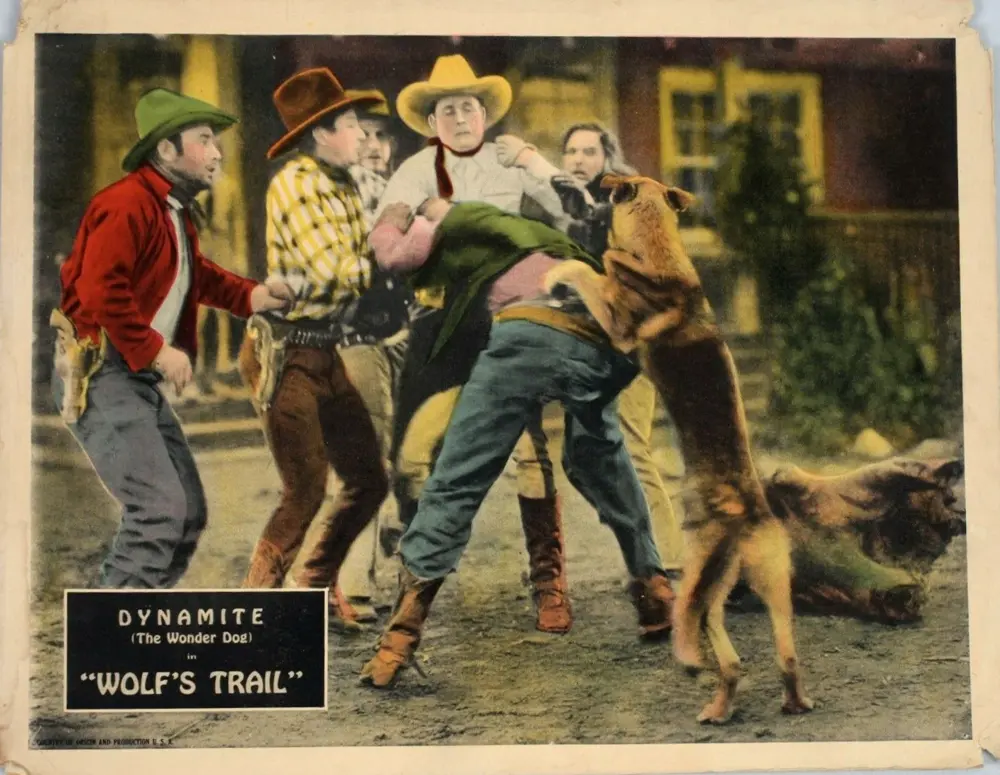
Edmund Cobb, as Silas, provides a grounded paternal presence, his weathered face telling a story of a life lived hard. While his role is smaller, his presence lends gravitas and a sense of history to the homesteaders’ plight. Dixie Lamont, Edwin Terry, and the other supporting cast members fulfill their roles adequately, though they are largely overshadowed by the magnetic presence of the leads and, of course, Dynamite.
The direction in 'Wolf's Trail,' while uncredited in some records, demonstrates a clear understanding of how to use the silent medium to its fullest. The filmmakers deftly employ wide shots to emphasize the isolation and grandeur of the wilderness, often dwarfing the human figures against towering mountains or endless plains. This visual strategy effectively communicates the struggle against a vast, indifferent nature. Close-ups are reserved for moments of intense emotion or critical plot points, ensuring their impact is maximized without the need for intertitles.
Cinematography, likely constrained by the technology of the era, still manages to capture some truly striking images. The use of natural light, particularly during dawn and dusk sequences, imbues the landscapes with a raw, almost painterly quality. While not as overtly artistic as some European silent films, the functional beauty of the American Western is clearly present. There's a particular shot of a lone rider silhouetted against a dramatic sunset that, despite its simplicity, evokes the classic iconography of the genre. The action sequences, though occasionally a little rough around the edges, are staged with a clear sense of spatial awareness, making the pursuits and confrontations easy to follow, a notable achievement for the time.
The camera work, while static for the most part, knows when to move, albeit subtly. Tracking shots during horseback chases, for instance, add a dynamic layer to the pursuit, pulling the audience into the urgency of the moment. It’s in these subtle choices that the direction truly shines, understanding that less can often be more in silent storytelling. Compared to the more stylized camera work seen in a film like The Song of Love, 'Wolf's Trail' opts for a more straightforward, documentary-like approach to its setting, which serves its gritty narrative well.
The pacing of 'Wolf's Trail' is typical of early silent features, which is to say it requires a different kind of patience from modern viewers. The film often takes its time, allowing scenes to breathe and emotions to register without the rush of dialogue. This deliberate tempo, while occasionally leading to moments that might feel slow by today's standards, also allows for a deeper appreciation of the visual storytelling and the sheer effort involved in the physical performances.
There are stretches, particularly in the initial setup, where the narrative builds slowly, establishing the harsh environment and the characters' daily struggles. However, once the conflict ignites, the pacing quickens considerably, culminating in a series of tense and surprisingly well-executed action sequences. This ebb and flow is characteristic, and arguably effective, in building suspense.
The tone is consistently gritty and realistic, largely eschewing the overt melodrama found in many silent films of the period. While there are clear heroes and villains, the film grounds its emotional beats in the tangible stakes of survival and justice. There’s a palpable sense of danger and genuine hardship, which lends the narrative a stark authenticity. The moments of warmth, often involving Dynamite, provide necessary emotional counterpoints to the prevailing struggle. It’s a tone that feels honest to its subject matter, reflecting the tough realities of the American frontier without excessive romanticism.
The silent era's language, conveyed through intertitles and visual cues, is utilized effectively. The intertitles are generally concise, providing just enough information to keep the plot moving without becoming overly verbose. The filmmakers trust their actors and their visuals to carry the bulk of the storytelling, a confidence that pays off handsomely, especially in the nuanced reactions of Helen Cobb and the expressive actions of Dynamite.
'Wolf's Trail' might not be a household name, but its importance to the history of the Western genre and silent cinema should not be underestimated. It represents a foundational building block, showcasing the nascent stages of storytelling that would eventually define American cinema. This film, in its unpretentious portrayal of survival and loyalty, laid groundwork for countless Westerns to follow, even if its direct influence is hard to trace.
One could argue that the film's greatest legacy is its demonstration of the profound connection between humans and animals, particularly working dogs. Dynamite's performance is not just impressive for a dog; it's impressive, full stop. It challenges the conventional understanding of 'acting' and highlights the unique contributions animals have made to cinema, often without the recognition they deserve. I hold the strong, debatable opinion that Dynamite’s performance here is more compelling and emotionally resonant than many human performances from the era, including some in more celebrated films like His Majesty, the American.
Furthermore, the film's ability to create tension and emotional investment without spoken dialogue is a powerful reminder of cinema's universal language. It forces the audience to engage more deeply with visual cues and the actors' expressions, a skill that modern, dialogue-heavy films often neglect. This makes 'Wolf's Trail' a valuable teaching tool for aspiring filmmakers and a rich experience for those who appreciate the craft of pure visual storytelling.
Its raw realism stands apart from the lightheartedness of something like Don't Shoot, offering a different facet of silent film production. The film is a significant piece for understanding how early cinema tackled themes of wilderness, justice, and the sheer grit required to forge a life in demanding circumstances. It’s a snapshot of a particular time and place, preserved on celluloid, offering insights into both the cinematic techniques and the cultural values of its era.
'Wolf's Trail' is more than just a relic; it’s a robust piece of early American cinema that, despite its age and silent format, manages to tell a compelling story of survival, loyalty, and the indomitable spirit of the frontier. While it demands a certain appreciation for the conventions of its era, the film rewards patient viewers with authentic performances, especially from its remarkable canine star, Dynamite. It’s a testament to the power of visual storytelling and a foundational text for anyone interested in the genesis of the Western genre. It may not be a flawless film, but its strengths far outweigh its weaknesses, making it a truly worthwhile cinematic excavation. Seek it out if you dare to traverse the silent trails of cinema history; you won't be disappointed.
IMDb —
1921
Community
Log in to comment.