DbcultAccessing Vault...
5.7/10
Senior Film Conservator
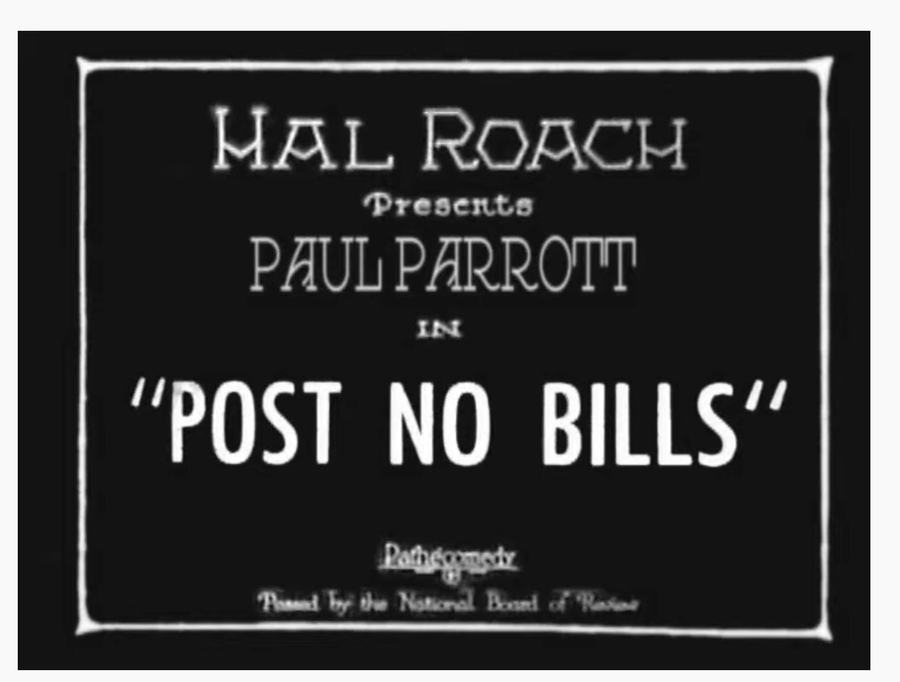
A definitive 5.7/10 rating for a film that redefined the boundaries of cult cinema. Post No Bills remains a cornerstone of transgressive art.
In the annals of early cinematic endeavors, where the moving image was still finding its voice and its narrative rhythms, certain films emerge as more than mere historical curiosities. They stand as vibrant, often prescient, commentaries on human nature and societal quirks. One such sparkling, albeit perhaps underappreciated, gem is the silent comedy Post No Bills. This delightful romp, a quintessential product of its era, offers far more than simple slapstick; it presents a satirical look at the burgeoning world of advertising and the often-absurd lengths to which individuals will go in pursuit of their professional zeal. It’s a film that, despite its age, feels remarkably contemporary in its observations, a testament to the enduring nature of human folly and the persistent invasiveness of commercial messaging. Its narrative, while straightforward, unfolds with an infectious energy that keeps the viewer captivated, highlighting the extraordinary talents of its cast and the ingenious visual storytelling that defined the silent film epoch.
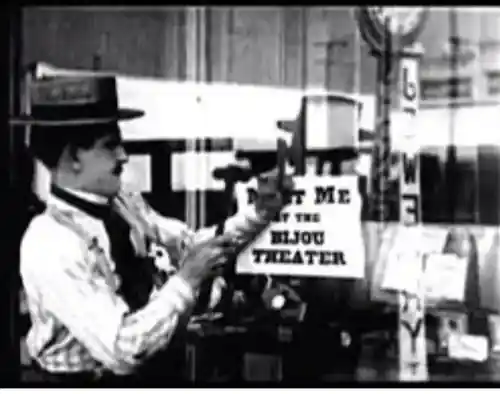
At the heart of this boisterous tableau is Paul, the press agent for the Bijou Theatre, portrayed with an almost frenetic intensity. Paul is not merely dedicated to his job; he is utterly consumed by it. His mission, to inform the public of the Bijou's attractions, transcends the conventional and plunges headfirst into the realm of the obsessive. For Paul, every surface is a potential billboard, every passer-by an unwitting canvas. His preferred method? Slapping placards onto the backs of unsuspecting citizens, transforming them into involuntary, ambulatory advertisements. This ingenious, yet utterly impudent, tactic forms the comedic backbone of the film, showcasing a protagonist whose professional fervor knows no bounds, and whose actions, while initially amusing, quickly spiral into a public nuisance of epic proportions. The film masterfully builds Paul's character through his actions, demonstrating his unwavering commitment to his craft, even as it brings him into direct conflict with the very public he aims to entice. His relentless pursuit of publicity, a trait that in a different context might be admirable, here becomes a source of escalating chaos and societal disruption, painting a vivid picture of a man driven to the brink by his singular focus.
The brilliance of Post No Bills lies significantly in its masterful deployment of visual storytelling, a hallmark of the silent era. Without dialogue, the narrative relies entirely on exaggerated physical comedy, expressive facial contortions, and meticulously choreographed sequences of escalating pandemonium. Each scene is a carefully constructed ballet of movement and reaction. The camera becomes an active participant, capturing the wide-eyed indignation of a gentleman suddenly branded with a theatrical poster, the exasperated pursuit of a furious victim, and the relentless, almost mechanical, efficiency of Paul's bill-posting technique. The film's pacing is relentless, a rapid succession of gags that build upon one another, creating a cumulative effect of delightful disorder. The expressions of the cast, from Paul’s determined grin to the myriad scowls and bewildered stares of the public, convey the entire emotional spectrum of the unfolding chaos. This reliance on purely visual cues not only showcases the artistic ingenuity of early filmmakers but also demonstrates a universal language of comedy that transcends temporal and cultural barriers. It's a testament to how much can be communicated without a single spoken word, relying instead on the universal grammar of human behavior and slapstick timing.
While Paul's antics are the central gravitational force, the film's comedic impact is greatly amplified by its talented ensemble cast. Though specific individual credits for many silent-era performers can sometimes be elusive, the collective energy brought by actors like Sammy Brooks, Jack Ackroyd, Bobby Ray, Helen Gilmore, Noah Young, James Parrott, Mark Jones, Ford West, Marie Mosquini, and George Rowe cannot be overstated. Each actor, whether playing a bewildered pedestrian, a pursuing authority figure, or a fellow theatre employee, contributes to the rich tapestry of reactions that fuels Paul's escalating misadventures. They are not merely background figures; they are crucial components of the comedic mechanism, their synchronized reactions and individual quirks elevating the humor. The physical reactions, the double-takes, the indignant glares, and the frantic chases are all meticulously executed, demonstrating a keen understanding of ensemble comedy. Without their convincing portrayal of a public increasingly fed up with Paul's antics, the film's central conflict—man versus the public he aims to serve—would lose much of its punch. Their performances transform Paul's singular obsession into a shared societal experience of annoyance and eventual retribution, making the chaos feel both grand and intimately relatable.
Beyond the immediate laughs, Post No Bills offers a surprisingly insightful, almost prophetic, commentary on the burgeoning world of advertising and its encroaching presence in public life. In an era when commercial messaging was rapidly evolving, the film satirizes the aggressive, often intrusive, tactics employed to capture public attention. Paul's actions, while comically exaggerated, represent a nascent form of guerrilla marketing, pushing the boundaries of what is acceptable in public spaces. The film implicitly asks: where does the right to advertise
IMDb 6.6
1929
Community
Log in to comment.