DbcultAccessing Vault...
6.5/10
Senior Film Conservator
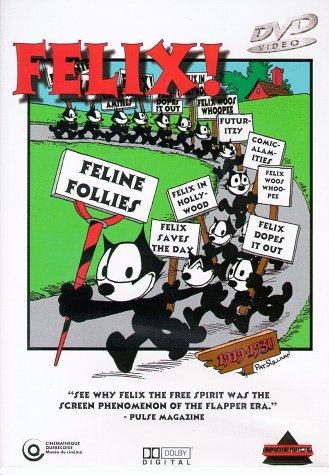
A definitive 6.5/10 rating for a film that redefined the boundaries of cult cinema. Felix in Hollywood remains a cornerstone of transgressive art.
To witness 1923's Felix in Hollywood is to observe the precise moment animation shed its status as a mere vaudevillian novelty and donned the mantle of sophisticated social satire. While contemporary audiences might view the rubber-hose aesthetic as quaint, Otto Messmer’s direction—often overshadowed by the credit-hungry Pat Sullivan—offers a biting critique of the industry’s burgeoning ego. The film operates on a frequency of desperation that mirrors the grit found in The Stealers, yet it elevates the struggle through the impossible physics of its protagonist.
The opening sequences are steeped in a pauperism that feels visceral. We see the starving actor, a man whose ambition has outpaced his caloric intake, contemplating the consumption of his own footwear—a gag that predates Chaplin’s iconic boot-feast. This isn't just slapstick; it is a grim acknowledgment of the artist's plight. Much like the characters in The Climbers, our protagonist is desperate to transcend his socioeconomic strata, but where humans are bound by the laws of gravity and biology, Felix is an entity of pure will. His transformation into a suitcase is the film's most potent metaphor: the pet becomes the tool, the companion becomes the commodity, all in service of reaching the hallowed grounds of Hollywood.
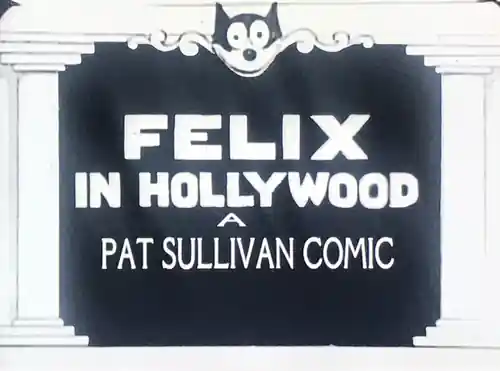
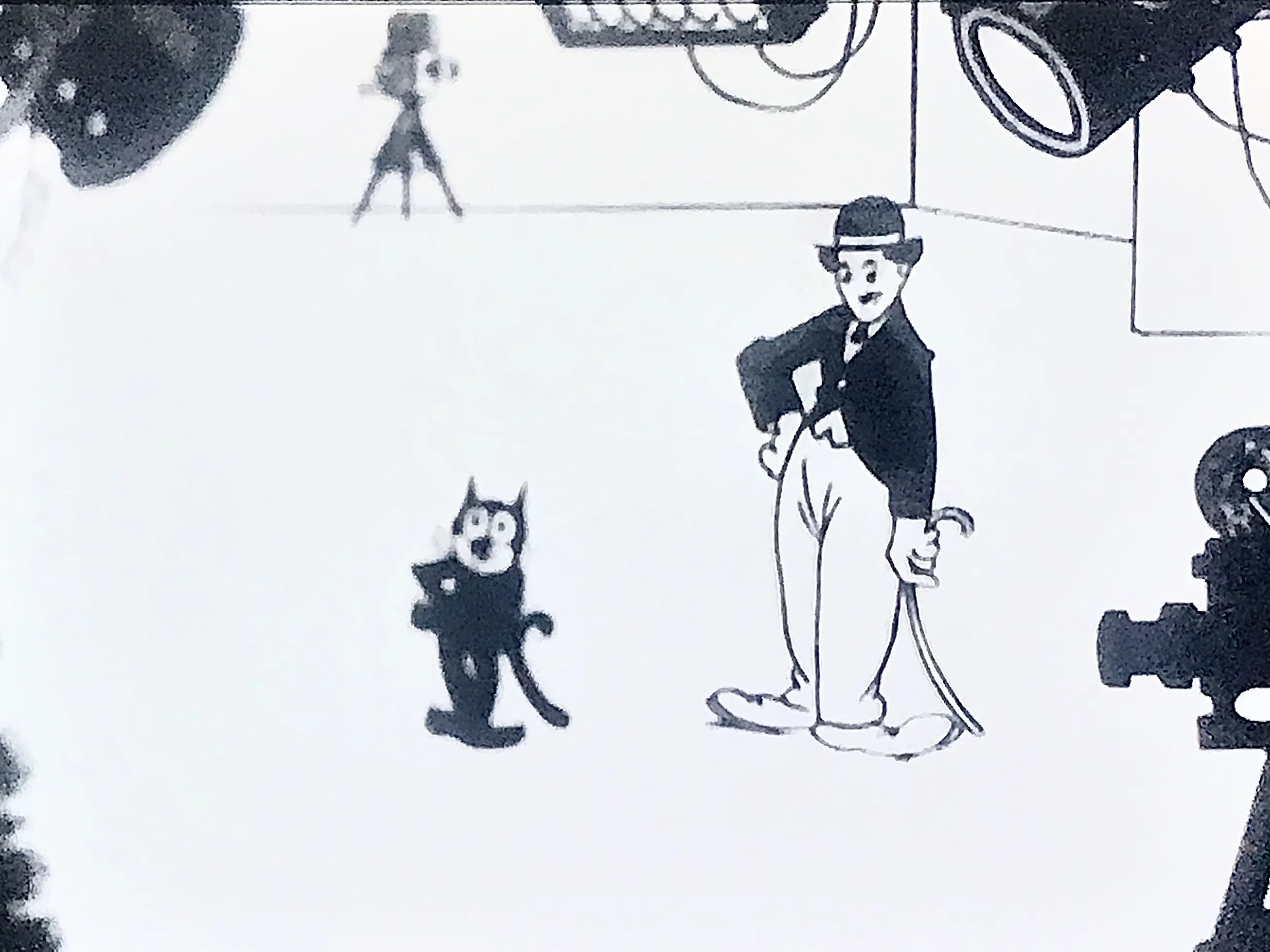
Upon arrival, the film shifts gears from a survivalist drama to a high-octane parody of the studio system. The animation becomes increasingly fluid as Felix encounters the icons of the era. The caricatures of Douglas Fairbanks, Mary Pickford, and Charlie Chaplin are not merely cameos; they are part of a larger commentary on the mechanization of celebrity. While Say! Young Fellow celebrated the Fairbanksian vigor, Messmer’s Felix mimics and mocks it with a feline agility that suggests the animated form is the true successor to the physical comedy of the silents.
The visual language here is remarkably dense. Notice how the background art, though minimalist, captures the sterility of the studio lots. It’s a stark contrast to the emotional weight seen in On Dangerous Paths. In the world of Felix, the path is not just dangerous; it is malleable. When a giant mosquito threatens a director, Felix’s solution—using a bottle of 'skeeter' repellent as a weapon—displays a level of creative problem-solving that borders on the avant-garde. The mosquito itself, a buzzing nightmare of sharp lines and aggressive movement, feels like a precursor to the darker themes explored in Der Thug. Im Dienste der Todesgöttin, albeit filtered through a lens of absurdist humor.
Technically, Felix in Hollywood is a masterclass in economy of motion. Messmer understood that the audience's eye doesn't need hyper-realism; it needs character. Felix’s signature walk—hands behind back, head bowed in contemplation—conveys more pathos than many live-action performances of the same year, such as those in La disfatta dell'Erinni. This film marks the first time a cartoon character truly interacted with 'real' people (albeit drawn versions of them), creating a meta-narrative that would later inspire everything from Who Framed Roger Rabbit to modern transmedia storytelling.
The use of black and white is not a limitation here but a stylistic choice that emphasizes the 'ink-and-paint' soul of the character. Felix is a void in the center of the screen, a black hole of personality that draws all attention toward him. This contrast is handled with far more nuance than the murky cinematography of The Iron Ring. Every frame is meticulously composed to ensure that Felix’s silhouette remains the focal point, even when the screen is cluttered with the frantic energy of a movie set.
If we look past the gags, there is a subtext of immigrant resilience. Felix and his owner are outsiders, much like the figures in Forgiven; or, the Jack of Diamonds. They are entering a world that doesn't want them, a world where the gates are guarded by indifference. Felix’s ability to 'fit in'—quite literally, by changing his shape—is the ultimate survival mechanism. He doesn't just survive Hollywood; he conquers it by becoming more useful than the humans around him. While films like Bucking the Line deal with direct confrontation, Felix wins through subversion and wit.
Consider the sequence where Felix is mistaken for a prop or a tool. This dehumanization (or de-felinization) is a sharp jab at how the industry treats its workers. Yet, Felix retains his agency. He is never a victim. Even when faced with the overwhelming scale of the dream factory, he remains the master of his own kinetic destiny. This resilience is a far cry from the tragic trajectories found in Kreuzigt sie!, offering instead a blueprint for the scrappy, indomitable spirit that would define American animation for decades.
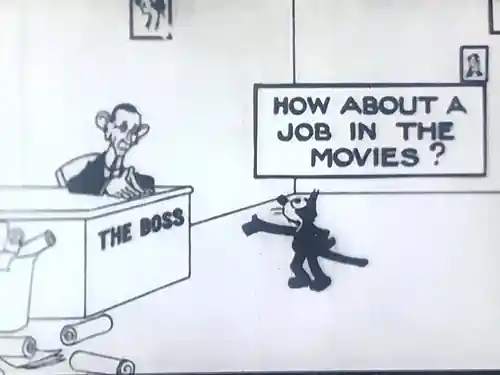
Comparing this to The Little Mademoiselle, one notices the difference in pacing. While the live-action features of the era often leaned on theatrical staging, Messmer utilized the frame as a playground. Things happen in the background of Felix in Hollywood that require multiple viewings to fully appreciate—a precursor to the 'Easter egg' culture of today. The film shares a certain wild, untamed energy with The Story of the Jaguar, yet it tames that energy into a structured narrative that feels both spontaneous and calculated.
The humor is often dark, bordering on the nihilistic. When Felix faces off against the giant mosquito, the violence is exaggerated to the point of abstraction. It reminds one of the visceral stakes in Colorado Pluck, but because it is drawn, the audience is granted the distance to laugh at the absurdity of death. This is the power of the medium: it allows us to process the anxieties of the age—starvation, failure, the crushing weight of the industry—without being destroyed by them.
The film’s conclusion, where Felix is signed to a contract, is the ultimate irony. The human actor who started the journey is sidelined by his own pet. It’s a prophetic look at how the 'character'—the IP, in modern parlance—would eventually become more valuable than the performer. The actor is a vessel, but Felix is a brand. This transition from personhood to product is handled with a wink and a smile, but its implications are as sharp as the mosquito’s proboscis. It echoes the transactional nature of fame explored in El que a hierro mata.
In the grand tapestry of early cinema, alongside experimental works like Koo Koo Kids, Felix in Hollywood stands as a monolith of creative autonomy. It is a film that refuses to be small. It demands to be seen as a legitimate piece of the Hollywood story, not just a footnote. Messmer’s work here is a reminder that even in a world of giants, a small, black cat with a penchant for self-transformation can find a way to own the screen. It is a triumph of the imagination over the limitations of the physical world, a testament to the enduring power of the inkwell.
Ultimately, Felix in Hollywood remains essential viewing for anyone interested in the DNA of visual storytelling. It is a bridge between the Victorian stage and the digital age, a relic that feels startlingly contemporary in its cynicism and its joy. It invites us to laugh at the industry that creates our dreams while simultaneously acknowledging that we are all, in some way, hiding in a suitcase, just trying to get through the studio gates.
IMDb —
1920
Community
Log in to comment.