DbcultAccessing Vault...
Cult Review
Senior Film Conservator
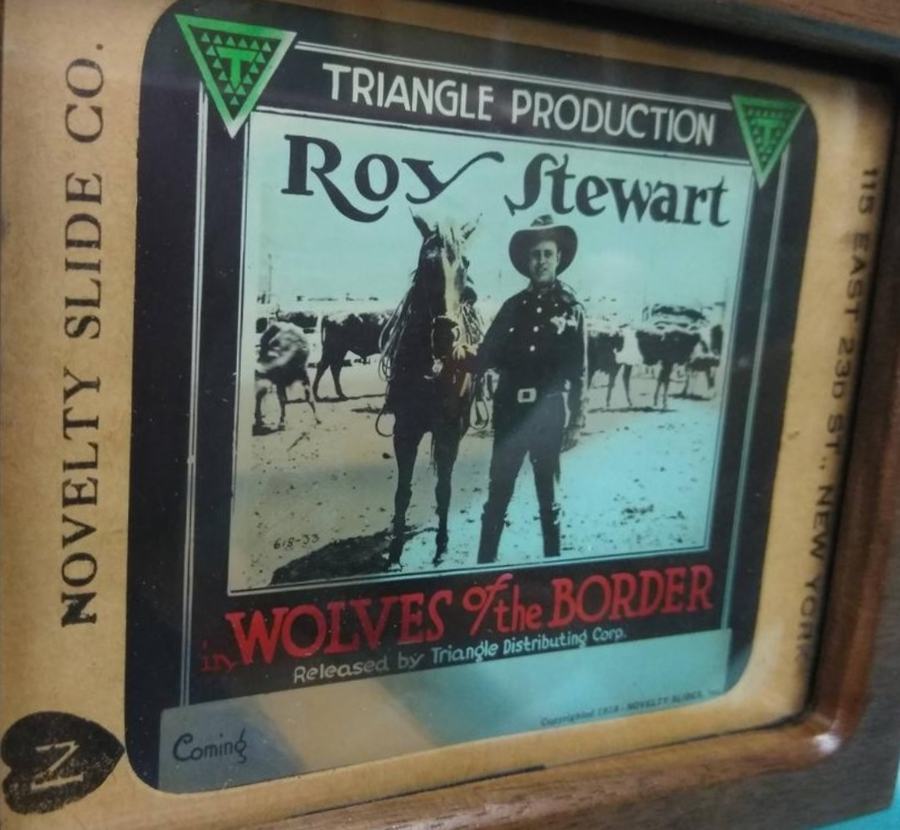
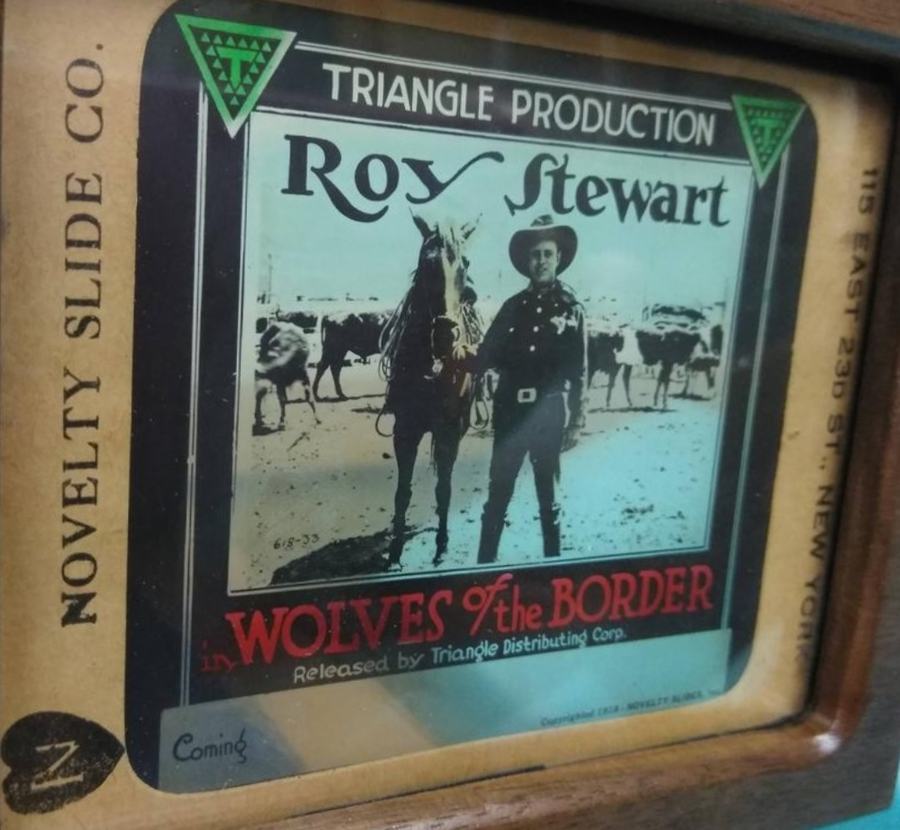
A cowboy’s shadow lengthens like spilled molasses across a corral at magic hour—Wolves of the Border understands that visual appetite before uttering its first title card.
Alan James’ 1925 silent, long buried in 16mm canisters mislabeled “ranch filler,” erupts into the present with the ferocity of a brushfire fanned by Santa Ana winds. Shot on the outskirts of Placerita Canyon when Hollywood’s backlot still smelled of sage, the picture distills the existential friction between pastoral nostalgia and industrial encroachment into 58 blistering minutes. Its DNA predates the widescreen ennui of Fires of Rebellion yet curiously rhymes with that later rumination on technology versus tradition; both films brandish landscape as character, though here the mesquite-scrub desert functions less as backdrop and more as tribunal.
Frank MacQuarrie’s Joe Warner
emerges like a daguerreotype granted legs—every wrinkle earned by sun, wind, and the quiet heartbreak of a wife buried beneath an ironwood. MacQuarrie, primarily a character heavy in oaters, invests Joe with Lear-adjacent gravitas; his squint alone could wither cactus. Watch the way he fingers a brittle lariat, testing its memory as though it were an ancestral rosary. The performance is all micro-gesture: the slight tremor when he spots barbed wire on the horizon, the involuntary clench of his molars when Ruth laughs at George’s newfangled windmill. Without spoken syllables, MacQuarrie delivers a master-class in physiognomic storytelling, reminding us that silent cinema at its apex could rival Russian allegory in moral heft.
Enter George Merritt—Louis Durham’s easy-shouldered foil—
clad not in fringe but in city-tailored twill, surveying acreage with a slide rule instead of a Colt. Durham’s matinee-idol profile is softened by an almost scholarly diffidence; he reads water-table treatises by lamplight while coyotes yip. The script cannily refuses to cast him as antagonist: his crime is modernity, not malice. One sublime intertitle—“Progress wears no spurs, yet rides faster than any pony”—encapsulates the film’s dialectic tension. George’s affection for Ruth is conveyed through glances that linger like violin vibrato, never trespassing into the lurid territory some silent westerns mistake for ardor.
Jack Curtis’ Pete Wright prowls the margins with predatory elegance.
Mustache waxed to dagger points, spurs filed to a surgical tinkle, Curtis channels a cobra hypnotizing field mice. Note the sequence where he rehearses his accusation against George in a cracked mirror, face half-lit by kerosene: the image fractures into a triptych of self-adoration, deceit, and fear—an Expressionist flourish worthy of Caligari. Pete’s jealousy is less romantic than existential; George’s very competence undermines Pete’s raison d’être as top ramrod. In that sense the film prefigures workplace psychodramas, though saddle-soaped.
Ruth, essayed by Josie Sedgwick with tomboy sprightliness,
refuses the cipher fate allotted many western heroines. She mends fence, wrangles calves, and when kidnapped, engineers her own delayed rescue by tearing her dress into trail-marker rags—an act of agency that nods toward the flapper energy percolating through Jazz-Age Hollywood. The chemistry between Sedgwick and Durham smolders via eyeline match cuts: a shared shot of hands accidentally grazing over a canteen cup speaks louder than pages of courtship dialogue.
Visually the picture is a chiaroscuro fever.
Cinematographer Roy H. Klaffki—unheralded artisan who would later lens newsreels of the Hoover Dam—exploits nitrate’s shimmering latitude. Day interiors are flooded with white-hot skylight that turns dust motes into galaxies; night exteriors pool cobalt shadows against campfire ember, achieving an almost cobalt-orange color theory two decades before Technicolor would flaunt similar palettes. One crane shot ascends above a stampede, transforming cattle into a surging obsidian river—an image echoed, perhaps coincidentally, in the climactic crowd scenes of One of Our Girls.
James’ montage rhythms anticipate Soviet kineticism yet remain rooted in Americana.
Observe the intercutting between Pete bargaining with José inside a dim cantina while, miles away, Joe teaches Ruth to spin a lariat beneath a blistering noon. The contrapuntal buildup coils tension like a watch spring, culminating in the night-raid set piece that still singes the imagination. Stunt riders—many of them former Buffalo Soldiers—execute full-speed falls into chaparral, while flash-paper squibs detonate along fence rails, each spark a Morse code of impending chaos.
Yet for all its spectacle, the film’s emotional fulcrum is silence:
the hush after gunfire when Joe surveys bullet-riddled corrals and realizes his obstinacy fertilized this ruin. MacQuarrie’s face collapses—not into tears but into a wordless howl captured only by the trembling of his shoulders. It is one of silent cinema’s most devastating depictions of masculine remorse, comparable to Renée Falconetti’s iconic suffering yet operating within the laconic codes of the West.
Alan James’ screenplay, economical as a telegraph, nonetheless sneaks in pastoral poetry.
Intertitles like “The wind combs the grass until it confesses its secrets” flirt with literary pretense but land because they counterbalance terse exposition. Compare this lyricism to the didactic moralism of The Little Samaritan; both films moralize, yet James trusts the audience to glean subtext from landscape, sparing us homiletic overkill.
Composer David L. Snary’s original 1925 cue sheets—recently resurrected by the San Francisco Silent Film Festival—
marry Wagnerian brass to Appalachian fiddle, producing a dissonant thrum that anticipates Copland’s later Americana. Snary prescribes a solo cello for Pete’s leitmotif, bow scraped near the bridge to mimic rattlesnake buzz; George’s motif unfolds in open-fifth banjo, evoking both progress and plaintive loneliness. The recomposed score toured with the restoration, proving that silent film music remains a living circulatory system.
Restoration-wise, the 4K photochemical marriage of two incomplete prints
—one from an Argentine archive, one discovered in a Wyoming barn—yielded a virtually complete negative. Digital cleanup excised mold blooms while retaining grain patina, so the night sky retains its granular velvet. Most revelatory: the tints were reconstructed via chemometric analysis of fade-resistant ledger inks, restoring amber lamplight and sea-blue dusk that earlier transfers had homogenized to grayscale.
Legacy? The picture’s DNA threads through Red River’s generational feuds, Shane’s gunsmoke morality, even There Will Be Blood’s oil-age anxieties.
Yet unlike those epics, Wolves of the Border runs lean as a coyote, refusing bloat. Its thesis—that technology and tradition need not be adversaries if tethered by mutual respect—feels downright radical in an era still sparring over carbon versus cattle. Cinephiles who revere Fyrvaktarens dotter for its maritime fatalism will find similar elemental grappling here, swapped for sagebrush.
Contemporary relevance arrives unforced:
barbed wire once spelled doom for open-range cowboys; today algorithmic fences corral digital nomads. Pete’s rumor mill prefigures social-media slander, while George’s windmill embodies renewable ingenuity distrusted by entrenched powers. The film whispers that every era’s “progress” will appear villainous to those whose identities hinge on obsolescence—a lesson applicable far beyond celluloid.
Performances, photography, and thematic heft converge into a western that, though silent, snarls louder than many talkie epics.
For viewers raised on CGI panoramas, the tactile dust, leather, and sweat offer a visceral detox. Conversely, newcomers wary of silent pacing will discover a thriller taut as wire: 58 minutes, not an ounce of celluloid lard.
So, saddle up. Let the borderlands teach you how suspicion curdles into violence, how reconciliation often gallops in on the horse of the very outsider you vilified.
★★★★½
4.5 out of 5 spurs
IMDb —
1918
Community
Log in to comment.