DbcultAccessing Vault...
Cult Review
Senior Film Conservator
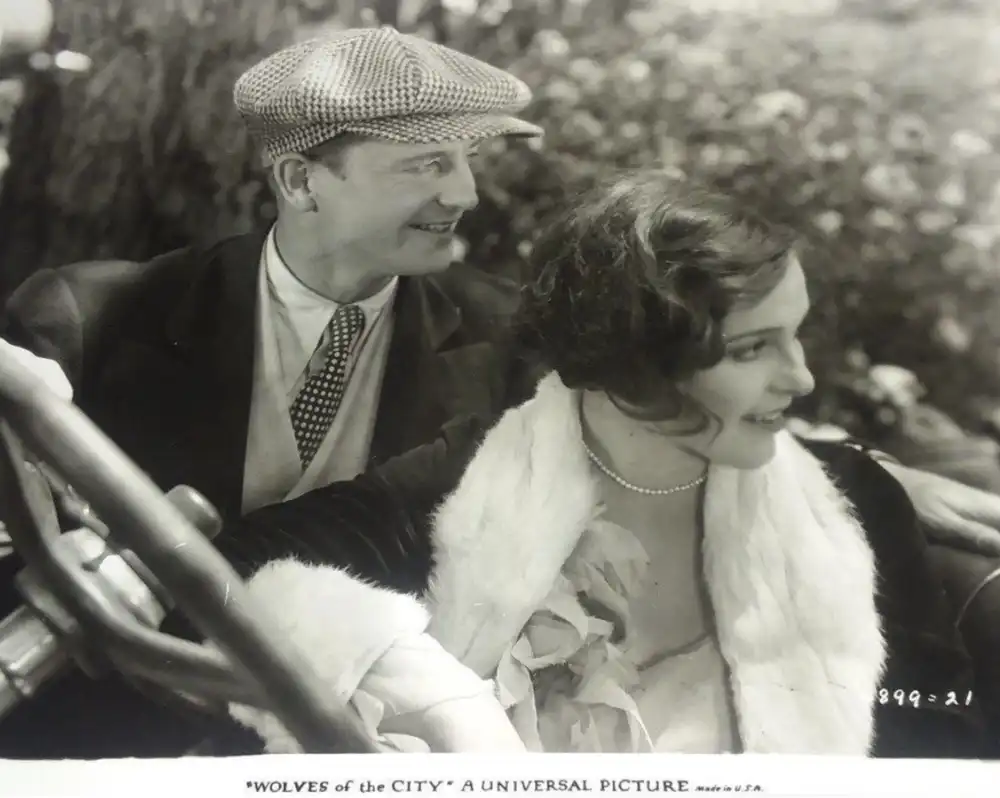
Okay, let’s talk about Wolves of the City. If you’re not usually into silent films, this one probably isn’t going to convert you. It's *very* much a product of its time. But for anyone who has a soft spot for early Westerns, or just wants to see how they used to make movies, it’s a neat little watch. Definitely worth digging up on a quiet afternoon if you’re curious about film history, but maybe skip if you need fast action and dialogue.
This film drops us right into a dusty town, a place that just feels *dirty* even through the grainy footage. And right there, holding court, is Louise Carver as 'Arizona Annie' — a saloon owner who, honestly, seems like she could take on anyone. She’s got this presence, you know? Like, you *feel* her authority even without a single spoken word.
The whole thing kicks off with a new sheriff, Bill Cody, riding into town. He’s got that classic, stoic cowboy vibe. All business. His mission? Clean up the town. Good luck with that when Annie’s around. You can just tell he’s in for a fight, not just with the bad guys but with the whole *vibe* of the place.
There’s a clear struggle right from the start. It’s the law against the wild west, personified by these two leads. And for a silent film, they do a pretty good job of showing that tension without needing any words.
One thing that really got me was how much the actors had to *perform* with their whole bodies. Bill Cody, he’s always got that determined look. His eyes are wide, sometimes a little too wide, but you get it. He’s the hero. And then there’s Sally Blane as the schoolmarm, playing the sweet, innocent type. She makes a great contrast.
But the real scene-stealer, honestly, might be Dick Sutherland as the main heavy. He’s got this incredible, *villainous* scowl. Every time he’s on screen, you just know he’s up to no good. It’s almost a caricature, but it works so well for the era. He’s just pure, unadulterated evil, and he doesn’t need a single line to tell you that.
The pacing, for folks used to modern movies, might feel a bit... slow. There are these long shots where characters just sort of *stare* at each other, letting the emotion sink in. Or, sometimes, you wonder if the reel just got stuck for a second. It's part of the charm, I guess.
There’s this one moment where Annie, Louise Carver, she’s just standing there, arms crossed, watching the sheriff. And the intertitle says something about her being 'Queen of the underworld.' It’s simple, but it *really* sells her power. She’s not just a woman running a bar; she’s a force.
And the brawls? Oh, the brawls. They are exactly what you’d expect from a 1929 Western. Lots of flailing arms, chairs breaking, guys falling over tables. It’s not exactly realistic, but it’s got a certain energy. You almost hear the piano player in the background speeding up his tune.
You can see the influence this kind of film had on everything that came after. The good guy riding in, the bad guys trying to stop him, the innocent bystander caught in the middle. It’s all here, in its rawest form. It's a reminder of how these stories got started.
The ending feels a little rushed after the slower build-up. All of a sudden, everything wraps up in a neat little bow. It’s satisfying enough, but you can feel them trying to get to the 'THE END' card. Almost like they ran out of film, or ideas. Who knows?
All in all, Wolves of the City is a genuine peek into the past. It’s not The Living Corpse in terms of dramatic weight, nor does it have the experimental flair of something like Ballet mécanique. But if you’re in the mood for some old-school Western charm, and you don’t mind the lack of sound, it’s a perfectly enjoyable way to spend an hour or so. Just remember to bring your own dramatic soundtrack.
IMDb 4.6
1911
Community
Log in to comment.