DbcultAccessing Vault...
5.7/10
Senior Film Conservator
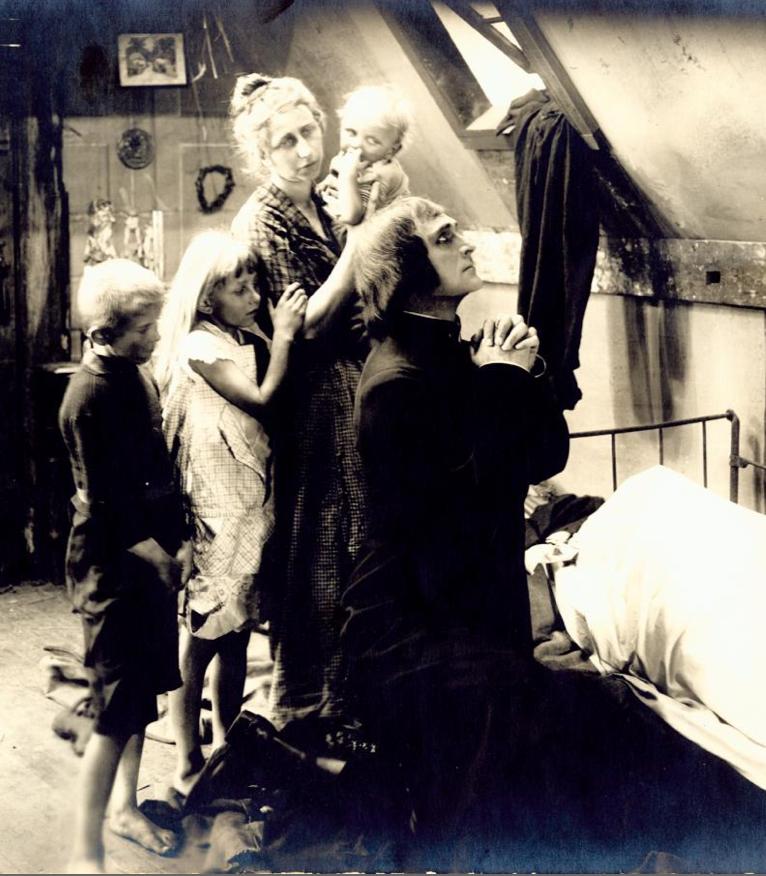
A definitive 5.7/10 rating for a film that redefined the boundaries of cult cinema. Livets Stormagter remains a cornerstone of transgressive art.
The early twentieth century witnessed a flourishing of Scandinavian cinema that remains, even a century later, a beacon of thematic complexity and visual innovation. Livets Stormagter (The Great Powers of Life) stands as a quintessential artifact of this era, directed with a keen eye for the psychological nuances that defined the Nordisk Film production house. It is a film that does not merely tell a story but orchestrates a collision between two disparate worlds: the austere, dogmatic reality of a street preacher and the gilded, fragile existence of the social elite.
At the heart of this narrative is Olaf Fønss, an actor whose presence in silent cinema was nothing short of magnetic. Portraying Ingo Theoso, Fønss avoids the pitfalls of melodramatic piety that often plagued early depictions of religious figures. Instead, he imbues Theoso with a quiet, almost haunting intensity. His character is a man who has found a singular purpose in the public recitation of Biblical texts, a role that places him on the periphery of society. He is a spectator to the mundane, a wanderer who views the city not as a home, but as a vast congregation in need of awakening.
This portrayal of the street preacher serves as a fascinating counterpoint to the characters seen in The Little Samaritan, where innocence is often used as a shield against the world's harshness. In contrast, Theoso’s faith is a weapon—a tool for disruption. He does not seek to comfort; he seeks to confront. The way he navigates the streets, oblivious to the stares of the skeptical, creates a sense of profound isolation that Fønss captures with remarkable subtlety.
The narrative pivot occurs when Theoso encounters Elisa, played with a luminous vulnerability by Augusta Blad. Elisa represents the zenith of material security. Her birthday is not just a personal milestone but a display of familial wealth and paternal affection. The jewelry given to her by her father is the physical manifestation of her status—a talisman of the 'stormagter' or great powers of the material world. When she loses this jewelry during her encounter with Theoso, the film shifts from a character study into a philosophical inquiry.
The loss of the jewelry is a brilliant narrative device. It strips Elisa of her armor and forces her into a state of spiritual nakedness. In many ways, this reminds the viewer of the moral stakes found in Fate's Boomerang, where the consequences of one's actions return in unexpected, often devastating ways. For Elisa, the lost jewelry is the catalyst for a metamorphosis, forcing her to look beyond the surface of her opulent life and recognize the humanity in the man she might otherwise have dismissed as a mere eccentric.
Visually, Livets Stormagter utilizes the limited technology of 1916 to create a world of deep shadows and piercing light. The cinematography emphasizes the contrast between the dark, cramped quarters of the city's underbelly and the expansive, brightly lit interiors of the upper-class homes. This visual dichotomy mirrors the internal struggle of the characters. The camera lingers on Fønss’s face, capturing the flickers of doubt and conviction, much like the intense character work seen in John Needham's Double.
The pacing of the film is deliberate, allowing the weight of the silence to settle over the audience. In an era before synchronized sound, the 'sermon' is delivered through the eyes. Theoso’s preaching is not heard, but felt through the reactions of those around him. This requires a high degree of expressive acting, and the ensemble cast—including Gudrun Bruun Stephensen and Albrecht Schmidt—delivers performances that are grounded in a realism that was quite advanced for its time.
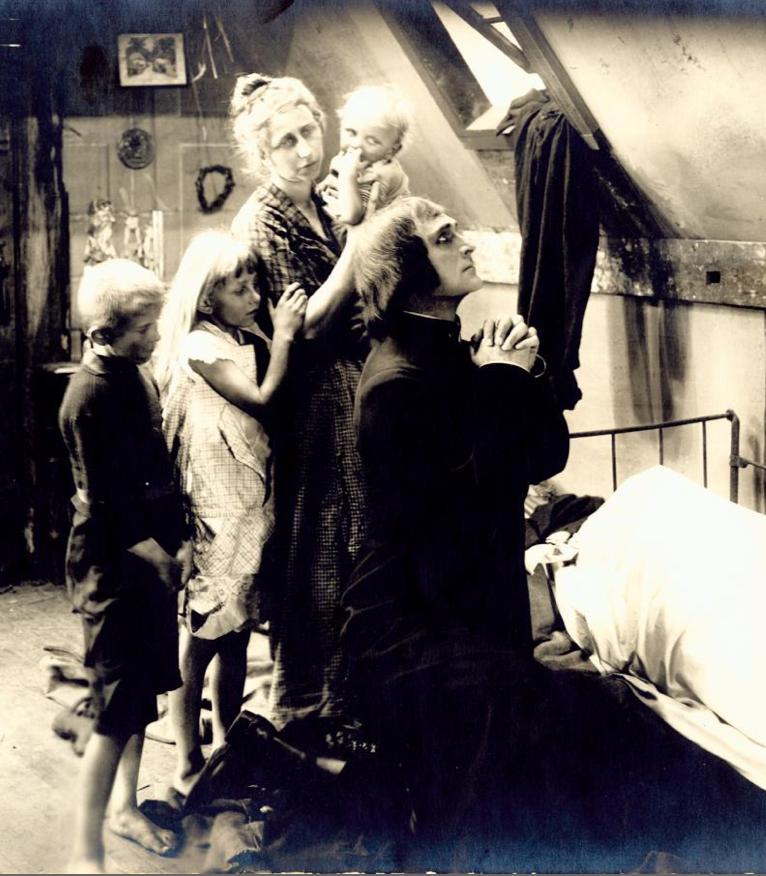
When comparing this film to its American or British contemporaries, such as The Vicar of Wakefield, one notices a distinct lack of sentimentality in the Danish approach. While The Vicar of Wakefield leans into the pastoral and the didactic, Livets Stormagter is more interested in the psychological friction between classes. There is a grit to the street scenes that feels almost documentary-like, a precursor to the social realism that would dominate European cinema in the decades to follow.
Furthermore, the film’s exploration of female agency—or the lack thereof—is poignant. Elisa’s identity is initially tied to the gifts of her father, much like the protagonist in The Girl Angle or the societal pressures explored in The Foolish Virgin. However, through her interaction with Theoso, she begins to carve out a space for her own moral autonomy. It is a subtle shift, but one that marks the film as a progressive piece of storytelling.
The title itself, The Great Powers of Life, suggests a grandiosity that the film manages to ground in intimate moments. These 'powers' are not just the spiritual forces Theoso invokes, but the social and economic engines that drive human behavior. The film suggests that while we may be subjects to the whims of fate—as seen in Dikaya sila—there is a fundamental dignity in the pursuit of truth, regardless of one's station in life.
The script by Djalmar Christofersen is remarkably tight for a silent feature. Every scene serves to further the ideological conflict. Whether it is the frantic search for the jewelry or the quiet moments of prayer, the narrative never loses its focus. It avoids the episodic nature of films like Peggy Leads the Way or the lightheartedness of Artie, the Millionaire Kid, opting instead for a somber, reflective tone that demands the viewer's full attention.
In the broader context of Olaf Fønss's career, Livets Stormagter is a pivotal work. It showcases his ability to command the screen without the need for grand histrionics. His Theoso is a man of the earth, yet not of it. This duality is what makes the film so enduring. It doesn't offer easy answers or a traditional happy ending. Instead, it leaves the audience with a sense of the profound complexity of the human condition.
The film’s influence can be seen in later works that deal with the intersection of faith and the modern world. It shares a certain DNA with When a Woman Sins in its exploration of moral transgression and redemption, though it handles these themes with a more intellectual, less sensationalist touch. Even when compared to the rugged individualism of The Sunset Trail or the raw physicality of Man and Beast, Livets Stormagter holds its own through its psychological depth and atmospheric mastery.
Ultimately, Livets Stormagter is a triumph of early cinema. It is a film that understands the power of the image to convey the unspoken struggles of the soul. For anyone interested in the history of Danish film or the evolution of the silent drama, it is an essential watch. It reminds us that while the 'great powers' of life—wealth, status, and time—are formidable, they are ultimately secondary to the internal journey of the individual. In the end, the jewelry is just metal and stone; it is the encounter between Ingo and Elisa that remains indelible.
Technical Note: The restoration of this film has preserved the evocative lighting that made Nordisk Film famous. The use of natural light in the street sequences provides a stark contrast to the controlled studio lighting of the interior scenes, further emphasizing the thematic divide between the preacher's world and the birthday girl's sanctuary. This attention to detail is what elevates the film from a simple morality play to a work of art.
IMDb —
1929
Community
Log in to comment.