DbcultAccessing Vault...
Cult Review
Senior Film Conservator
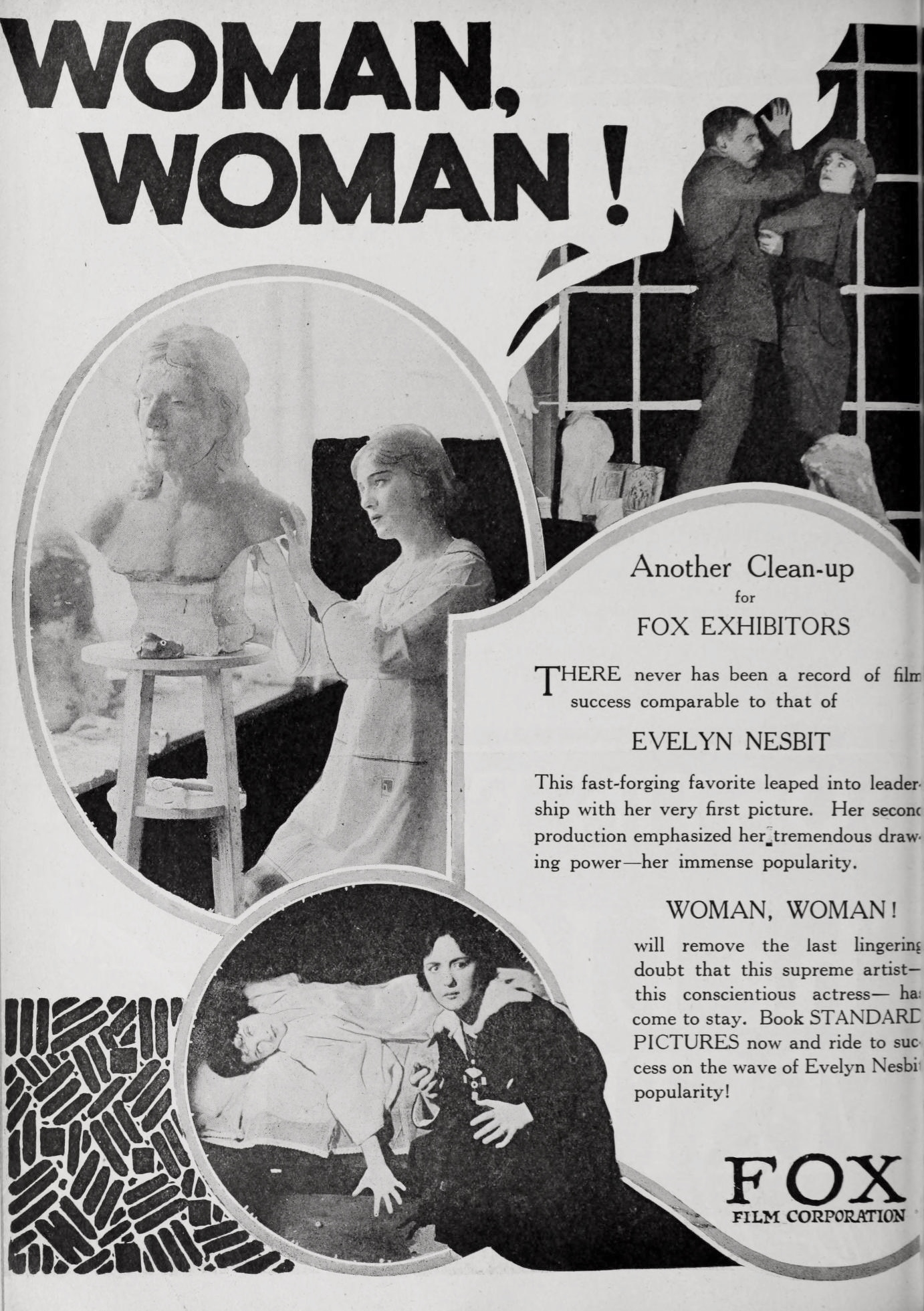
Ah, the silent era! A time of grand gestures, melodramatic flourishes, and narratives that, despite their age, often resonate with a surprising contemporary pulse. Such is the case with Kenean Buel’s 1923 cinematic offering, Woman, Woman! (slug: woman-woman), a film that, even a century later, feels like a potent time capsule, exploring themes of societal transformation, personal liberation, and the perennial search for identity amidst shifting moral landscapes. It plunges us headfirst into the vibrant, often tumultuous, world of Greenwich Village in the early 1920s, a veritable hotbed of bohemian ideals and challenging conventions. The film's enduring charm, and indeed its critical weight, lies in its unflinching portrayal of a young woman's struggle to navigate these heady currents.
Our protagonist, Alice Lindsay, played with a delicate yet determined vulnerability by Nora Cecil, arrives in New York from a small town, a classic ingenue archetype whose innocent eyes are about to be opened to a world far beyond her sheltered upbringing. This trope, while familiar, is handled with a nuanced hand here, allowing Alice’s journey from wide-eyed newcomer to a woman making profound life choices to feel earned. The Village, with its swirling artistic energy, its intellectual salons, and its radical social theories, becomes not just a setting, but a character in itself – a seductive, sometimes dangerous, entity that promises freedom but also demands a re-evaluation of everything one holds dear. The visual language of the film, though constrained by the technology of its time, manages to convey the intoxicating allure of this counter-cultural mecca, a place where traditional boundaries were not just blurred, but actively obliterated. It’s a world away from the more conventional struggles depicted in films like Silver Threads Among the Gold, which often clung to more traditional narratives of familial duty and romantic entanglement.
Central to Alice's immersion into this new milieu is the enigmatic figure of Gwenne Stevens, brought to life with captivating intensity by Anna Luther. Gwenne is not merely a character; she is the living embodiment of the 'free love' movement, a vocal and charismatic advocate for a lifestyle unburdened by conventional marital strictures or societal expectations. Her philosophy, revolutionary for its time, challenges Alice’s every preconceived notion of love, commitment, and female autonomy. Luther’s performance is a masterclass in silent film acting, conveying Gwenne’s magnetic appeal and unwavering conviction through subtle glances and commanding presence. She is a force, a siren of intellectual and emotional liberation, whose very existence confronts the era’s deeply entrenched patriarchal norms. One can almost feel the cultural shockwaves emanating from her character, echoing the seismic shifts happening in society at large. This dynamic tension between the traditional and the radically modern is where Woman, Woman! truly shines, offering a potent commentary on the evolving role of women in the post-World War I era, a theme also touched upon, albeit with different narrative aims, in films like The Siren, which often explored women's agency through more overtly romantic or dramatic lenses.
The film’s brilliance lies in its refusal to paint Gwenne as a simple villain or Alice as a naive fool. Instead, it presents a complex moral dilemma, allowing the audience to grapple with the alluring arguments for unbridled freedom against the comforting, if sometimes restrictive, embrace of tradition. Gwenne's philosophy, while perhaps extreme for some, stemmed from a genuine desire to break free from the perceived hypocrisies and oppressions of bourgeois society. Her character embodies the very spirit of the Village, a place where artists, writers, and thinkers sought to forge new paths, to live authentically, and to challenge the status quo. This exploration of alternative lifestyles and the societal reaction to them is a recurring motif in cinema of the period, finding parallels in the daring portrayals of societal outcasts or unconventional relationships in films such as Sodoms Ende, which similarly grappled with moral boundaries and societal judgments.
In stark contrast to Gwenne’s radicalism, we have Samson Rathbone, the civil engineer, portrayed with a quiet strength by William R. Dunn. Samson represents stability, conventionality, and perhaps, a more grounded vision of happiness. Alice’s decision to marry him, despite Gwenne’s persuasive arguments for a life unfettered by marital bonds, is the film's central turning point. It’s a choice that speaks volumes about Alice’s evolving understanding of herself and her desires. Is it a retreat from the challenges of true liberation, or a mature realization that genuine freedom lies not in the absence of commitment, but in choosing the right one? The film leaves room for interpretation, which is one of its enduring strengths. Dunn’s portrayal of Samson is understated, yet effective, providing the necessary emotional anchor for Alice’s tumultuous journey. His character is the antithesis of the ephemeral, often chaotic, relationships that defined parts of the bohemian scene, offering Alice a vision of domesticity and partnership that, for her, ultimately proves more appealing than the radical individualism preached by Gwenne. This choice mirrors the complex decisions faced by characters navigating societal pressures in films like Sold for Marriage, where personal desires often clash with external expectations, albeit in a different social context.
The performances across the board are commendable, capturing the spirit of the era with remarkable authenticity. Nora Cecil’s Alice is a compelling blend of innocence and burgeoning self-awareness, making her journey relatable and poignant. Anna Luther, as mentioned, is simply electrifying as Gwenne, embodying the allure and potential danger of radical ideals. William R. Dunn brings a grounded humanity to Samson. Other notable cast members like Gareth Hughes, Clifford Bruce, Florence Flinn, Frank Goldsmith, Henry Hallam, Evelyn Nesbit, and William H. Tooker contribute to the rich tapestry of the Village community, each adding a brushstroke to the vibrant, bustling canvas of New York life. Evelyn Nesbit, in particular, a figure of considerable notoriety in her own right, brings a certain historical resonance to her role, subtly nodding to the film’s engagement with contemporary social anxieties and celebrity culture.
Kenean Buel’s direction is marked by a clear understanding of the narrative’s emotional core. He skillfully balances the grand sweep of societal change with the intimate struggles of individual characters. The pacing is deliberate, allowing the audience to absorb the moral quandaries and character developments without feeling rushed. The visual storytelling, characteristic of the silent era, relies heavily on expressive performances, evocative intertitles, and thoughtful composition, all of which Buel masterfully employs. The screenplay, penned by Kenean Buel himself and Norma Lorimer, is surprisingly sophisticated for its time, avoiding simplistic moralizing in favor of a more nuanced exploration of its themes. It delves into the complexities of human desire, societal expectation, and the pursuit of happiness without offering easy answers. This level of thematic depth sets Woman, Woman! apart from many of its contemporaries, some of which, like Marvelous Maciste, focused more on spectacle and adventure than on intricate psychological drama.
The enduring power of Woman, Woman! lies in its profound thematic resonance. It’s a film that grapples with questions that remain relevant even today: What constitutes true freedom? How do individuals navigate the tension between personal desires and societal expectations? What role does love play in a rapidly changing world? The film’s exploration of 'free love' isn't just a historical curiosity; it’s a lens through which to examine broader conversations about sexual liberation, gender roles, and the ongoing quest for self-definition. While the specific context of Greenwich Village in the 1920s might be unique, the underlying human dilemmas are universal. This universal appeal, the ability to transcend its immediate historical moment, is a hallmark of truly great cinema, much like the timeless questions posed in films such as The Tangle, which explored complex human relationships and their societal implications.
The film also serves as a fascinating document of a specific cultural moment – the Jazz Age, with its rebellious spirit and its challenges to Victorian prudery. It captures the excitement and anxieties of an era marked by rapid modernization, Prohibition, and a burgeoning sense of individualism, particularly among women. Alice’s journey mirrors the collective journey of many women during this period, as they sought to define their own destinies outside the confines of traditional roles. This struggle for independence and identity is a recurring theme in silent cinema, finding echoes in films like Maid o' the Storm, which also depicted strong female characters asserting their will against challenging circumstances. The film doesn't shy away from depicting the potential pitfalls of radicalism, but it also celebrates the courage it takes to question established norms, making it a nuanced and thought-provoking piece of social commentary.
Ultimately, Woman, Woman! is a testament to the power of choice and the often-circuitous path to self-discovery. Alice Lindsay's decision to marry Samson Rathbone is not presented as a failure to embrace liberation, but rather as her own unique expression of agency. It’s a choice for a specific kind of happiness, a deliberate forging of a path that aligns with her evolving values. The film argues that true freedom isn't about adhering to any particular ideology, whether radical or conservative, but about the individual's right to choose their own destiny, to define what happiness means for them. This message, delivered through the compelling performances and thoughtful direction, ensures that the film remains more than just a historical artifact. It’s a vibrant, living narrative that continues to provoke thought and inspire discussion about the complexities of human relationships and the ever-present tension between individual aspiration and societal expectation. Its exploration of personal morality and societal pressure is as relevant today as it was in the roaring twenties, cementing its place as an important, if often overlooked, piece of cinematic history. This emphasis on individual agency and moral choice aligns it with the thematic concerns of films such as A Gentleman's Agreement, which also delved into personal decisions made under intense social scrutiny.
The film stands as a fascinating document of a pivotal moment in American culture, reflecting the anxieties and aspirations of a generation grappling with unprecedented change. It’s a reminder that the questions surrounding love, freedom, and identity are not new, but are continuously re-evaluated by each generation. Norma Lorimer and Kenean Buel crafted a narrative that, through its specific period details, manages to speak to universal human experiences, ensuring its continued relevance for those willing to engage with its rich tapestry of characters and ideas. It eschews the overt sensationalism of some contemporary works like The Scarlet Woman, opting instead for a more introspective and psychologically driven narrative. For anyone interested in the social history of the 1920s, the evolution of women's roles, or simply a compelling human drama, Woman, Woman! offers a profound and rewarding viewing experience, a true gem from the silent era that deserves rediscovery.
IMDb —
1930
Community
Log in to comment.