DbcultAccessing Vault...
4.6/10
Senior Film Conservator
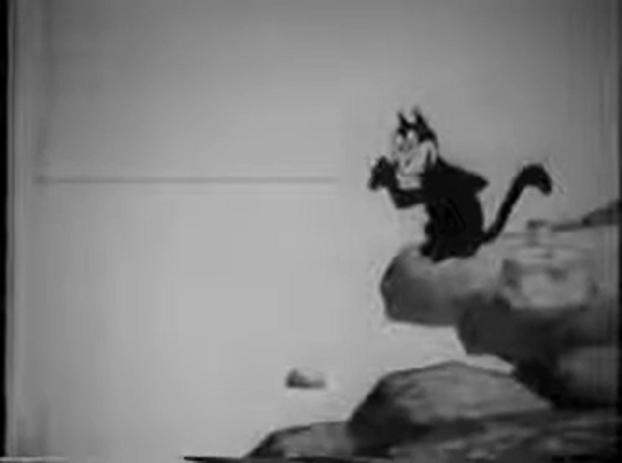
A definitive 4.6/10 rating for a film that redefined the boundaries of cult cinema. Wonders of the Deep remains a cornerstone of transgressive art.
The first image hits like a Rothko dipped in phosphor: a cat, fur the color of burnt toffee, suspended in glass that once held cheap brandy. Nothing prepares you for the hush that follows—no score, no gurgling foley, only the soft percussion of your own pulse as the bottle sinks. In that hush, cinema reverts to alchemy.
Directors who hide behind water often drown their metaphors; here the liquid is merely a membrane between curiosities. Our tabby voyeur becomes both witness and prism, refracting the ocean’s secret palette. Each creature he meets seems to have wandered out of a different myth cycle: lanternfish wearing headlights like lost jazz trumpeters; octopi whose chromatophores bloom into fleeting ukiyo-e waves; a sunfish shaped like a botched haiku. The camera—if one can still speak of cameras when half the footage feels biologically harvested—caresses these apparitions with the patience of a lover tracing yesterday’s bruise.
Yet the film’s true coup is scale. A bottle that should splinter under abyssal pressure instead becomes a terrarium of memory. We recall childhood snow globes, those plastic domes where fake blizzards obscured a tiny church. Replace snow with marine snow, the perpetual drizzle of dead things feeding new life; replace church with galleon; replace shaken wrist with tectonic slowness. The cat’s pupils widen until they are twin black moons, and we realize the voyage is not downward but inward.
Halfway down, narrative thins to a rumor. A current twirls the bottle through a forest of kelp wired like neural tissue; the cat’s reflection fragments into cubist shards. Is he remembering a warm windowsill? The buttery smell of his human’s wrist? The film refuses flashback, trusting instead the audience’s own scent-memories to solder empathy. When a translucent siphonophore snakes past, its body a string of Christmas lights gone necrotic, the cat does not flinch. He blinks once, slowly—the feline equivalent of a shrug against eternity.
Then comes the shipwreck, not the barnacle-encrusted cliché of pirate blockbusters but something skeletal, almost art-nouveau: ribs arcing like the ironwork of a Paris metro entrance. Coins spill from its hold in slow-motion avalanches, each piece spinning a semaphore of lost empires. The cat pads across them, paw-pads clicking against silver with the delicacy of a flamenco dancer. He finds the mirror, oval, verdigrised, yet still capable of catching a shaft of filtered daylight. One look: his reflection is not alone; behind him the silhouette of every human who ever tossed a bottle into the waves. The shot lingers until the glass fogs with his breath—an impossible breath at eight hundred meters—and the mirror clouds into a cataract.
What lands hardest is the silence after the bottle breaks. No triumphant score, no splashy catharsis; just the soft thud of cat feet on sand that no human will ever name. He sits amid the treasure, tail curled over paws, and closes his eyes. The screen fades not to black but to the same bioluminescent scatter that began the tale, suggesting the journey was circular, a Möbius strip of wonder. You exit the theater feeling that someone has rinsed your pupils with chilled absinthe.
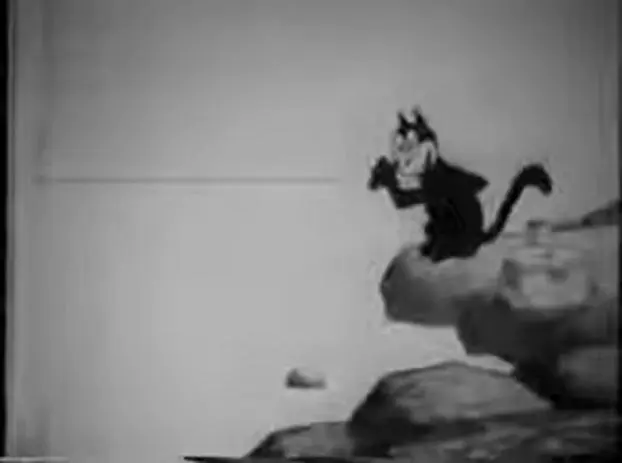
Technically, the film is a scandalous marriage of macro cinematography and generative particle simulation. Coral polyps bloom via algorithmic L-systems; caustics shimmer across the cat’s fur using subsurface scattering worthy of a Pixar budget, yet the budget here was reportedly the cost of a used hatchback. Credit the Lithuanian underwater VR lab that lent their homemade lens array, capturing 270-degree footage inside a diving bell no wider than a pizza box. Post-production took eighteen months of frame-by-frame rotoscoping to erase tethering cables, diver bubbles, and—delightfully—the occasional curious grunt fish.
Comparisons? Think of Sylvia of the Secret Service’s claustrophobic tension, but swap espionage for echinoderms. Or the wistful minimalism of One Wonderful Night, though here the wonder is aqueous, not nocturnal. Where Hot Dogs weaponizes kitsch and The Christian leans into moral tableau, Wonders of the Deep pursues something more elusive: the moment when curiosity metastasizes into reverence.
Some will fault the film for its refusal to anthropomorphize beyond the feline gaze. They want dialogue, a plucky sidekick, maybe a moral about ocean pollution. Give them Pufi instead. This poem prefers the unsayable: how beauty arrives unheralded, demands nothing, leaves you stranded between lungs and gills.
I watched it three times in forty-eight hours, each pass revealing new glyphs: a sea cucumber exhaling a perfect smoke ring; the way the cat’s left ear twitches exactly three frames before a distant whale’s call (ultrasound? premonition?); the subtle color shift from cobalt to indigo that marks the thermocline. By the third viewing I stopped scribbling notes and simply let my own breath sync with the slow rise and fall of the cat’s flank. When the end credits rolled—white letters on black like frost forming inside a midnight window—I realized I had been purring under my breath. Not metaphorically; an actual thrumming in the sternum, as if my body had decided to join the silent orchestra.
Detractors will label it a boutique screensaver, the same crowd who dismissed The Siren as perfume-commercial pablum. Let them. History will shelve this miniature beside the Lumières’ aquarium actualities and Chris Marker’s La Jetée, works that remind us cinema began as a magic trick, not a narrative delivery device.
Should you seek it? If you’ve ever pressed your face to an airplane window at 3 a.m. and felt the vertiginous tug of curved darkness, yes. If you’ve ever wondered what your cat sees when she stares for hours at an empty corner, absolutely. If you need closure, exposition, or a post-credit sting setting up a cinematic universe, kindly rejoin the queue for The Tenderfoot. The rest of us will be here, eyes salt-stung, hearts buoyed by the knowledge that somewhere a tabby treads across a fortune no human will ever spend, guarding it with the unblinking serenity of a monk who has already glimpsed the void and found it… purr-worthy.

IMDb 4.4
1923
Community
Log in to comment.