DbcultAccessing Vault...
Cult Review
Senior Film Conservator
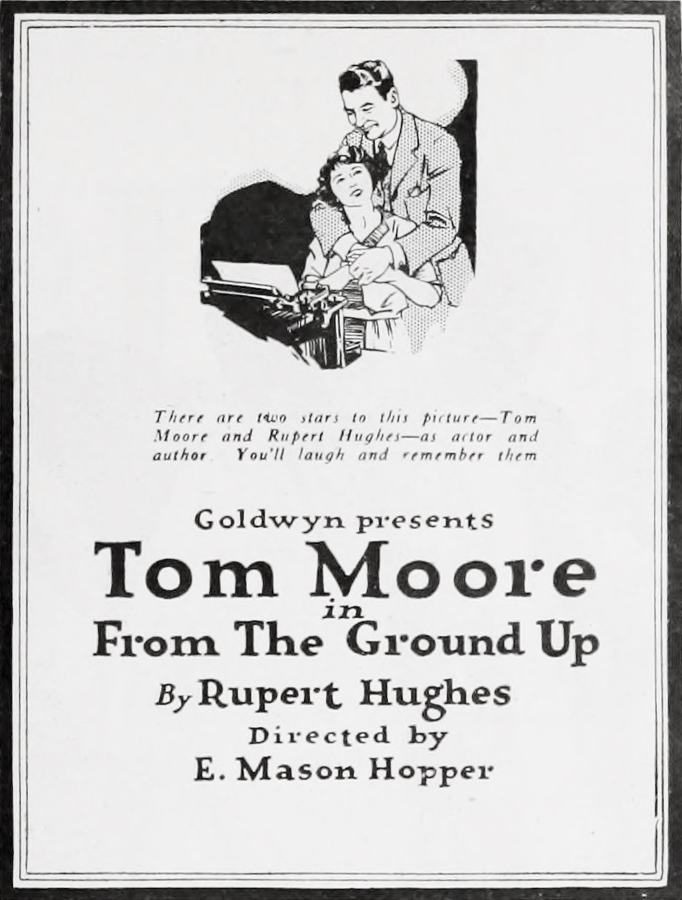
The flicker begins with a thud of pickaxes against bedrock, the screen quivering as if the earth itself were registering complaint. From the Ground Up—that blunt, declarative title—announces a film determined to excavate not merely foundations but the strata of caste, appetite, and self-invention. Hughes, whose pen once etched society columns for Vanity Fair, here wields intertitles like masonry trowels, slapping mortar between bricks of ambition and calamity.
Grace Pike’s Philena enters frame-first: velvet cloche angled like a dare, eyes telegraphing contempt for the gilded cage her father wishes padlocked by marriage to Carswell—an oleaginous name that sounds perpetually unctuous. One glimpse of the would-be fiancé, waxed mustache curling toward self-satisfaction, and we comprehend her revulsion without a single subtitle. The refusal is whispered yet seismic; in the adjacent parlor, monocled creditors already hover like carrion, sniffing insolvency.
Cut to the excavation pit: a Boschian rectangle of churned mud, timber cross-braces, and sweating men whose shoulder-blades shine through cotton like geological ridges. Here Tom Moore’s Terence Giluley—harmonica tucked in bib overalls—leans on shovel handle, gazing skyward where skeleton girders etch a blueprint of dreams against sooty cumulus. Notice how cinematographer Frank Zucker shoots from below, turning the half-built tower into an Art-Deci basilica of capital, its summit lost in glare. The image foreshadows Terence’s ascent; the camera itself kneels, anticipating his rise.
The transactional spark—Philena’s crisp dollar for Terence’s battered harmonica—plays out in an extreme close-up rare for 1923: her gloved thumb presses the bill into his calloused palm, the metal mouth-organ crossing frame like a secular Eucharist. Hughes withholds dialogue cards; instead we get a superimposition of swirling musical notation dissolving into steam-shovel gears, suggesting that art and labor can fuse, alchemize, propel. Critic Miriam Vale once argued silent cinema reached its apogee when objects became “eloquent by juxtaposition”; this moment is textbook.
From here the narrative hurtles forward on parallel tracks. Terence, galvanized, volunteers for overtime blasts, his torso bronzed under mercury lamps until the nitrate itself seems to glow like smelted ore. Promotion follows: first to foreman, then subcontractor, finally general contractor—each leap announced via a montage of ledgers, handshake seals, and ever-thicker rolled blueprints. Hughes accelerates time through match-cuts: a pickaxe arcs left-to-right, and in the subsequent frame a fountain pen completes the trajectory across a contract. Capitalism’s violence and its paperwork are revealed as contiguous gestures.
Philena’s descent is no less swift. The family townhouse, once gas-lit and tapestried, empties room by room as creditors tag furnishings with yellow tickets. In a sequence worthy of Nobody’s Wife, she confronts the auction block of her own possessions, yet Hughes refuses melodrama; instead he frames her against a mirror fractured by removal men, so her reflection splinters into shards—an economical visual metaphor for social fragmentation.
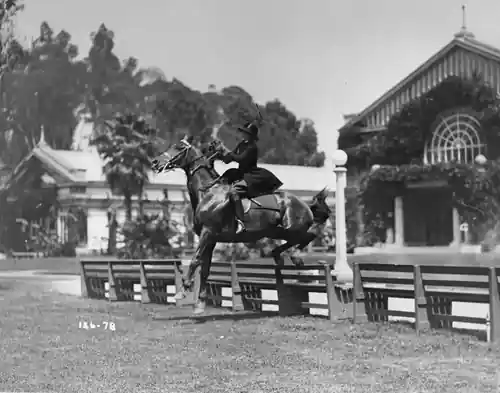
The horse episode arrives like a chiaroscuro sonata. Philena, determined to convert her last luxury into cash, rides her chestnut gelding along the Hudson palisade at dusk. Cinematographer Zucker lenses the sequence through day-for-night filters, moonlight pooling silver on mane and rider. A stray freight train whistle spooks the animal; hooves tangle in bramble, a tendon snaps. Close-ups of the horse’s eye—rolling, milk-white—intercut with Philena’s trembling hand stroking its neck until a lone off-screen gunshot signals mercy. The next morning she trudges home straw-hatted, trousers caked, the $500 sale price now unobtainable. It is one of silent cinema’s starkest depictions of capital liquidated into blood.
Night school scenes provide respite: rows of immigrant men and women parsing English consonants under a chalkboard that reads “THROUGH THOUGH THOUGHT.” Philena slips into a rear desk; Terence, fresh from supervising cranes, enters moments later. Their reunion is wordless—she offers a half-smile, he removes his cap, revealing hair damp from river fog. Hughes lets the space between desks vibrate with unspoken possibility. When the bell clangs, students surge into the street, gas lamps smearing gold across rain-slick pavement, and for the first time the film exhales tenderness rather than transaction.
Yet even courtship remains entangled in commerce. Terence posts an ad for a stenographer; Philena applies. Interview sequences unfold in a half-finished penthouse where wind rattles blueprints like dry leaves. Note how Hughes seats her with back to a gaping window—Manhattan yawning behind in miniature, a vertiginous reminder that employment itself is a precipice. She types, he dictates; the camera isolates her gloved fingers racing over keys, transforming labor into erotic semaphore. When he proposes, sliding a makeshift ring of iron wire across the desk, the gesture literalizes the film’s central thesis: affection forged in the crucible of mutual necessity.
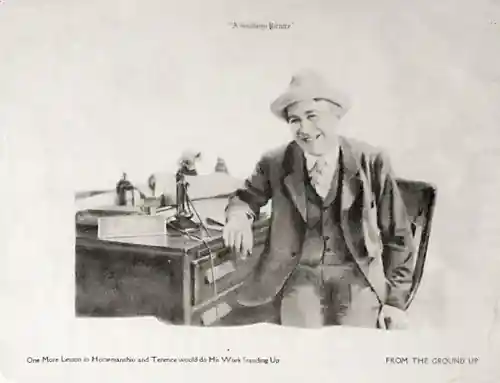
Performances resist the era’s typical broad strokes. Moore tempers swagger with hesitancy—his Terence repeatedly touches the harmonica in pocket as if checking a pulse. The pantomime conveys both confidence and the lingering fear that fortune might evaporate. Pike, meanwhile, wields stillness like a blade; watch her during the bankruptcy dinner scene, face half-shadowed by candelabra, eyes tracking creditors while lips remain sealed, a portrait of dignified defeat.
Hughes’s sociological eye rivals contemporaries such as A Romance of the Underworld yet avoids that film’s voyeurism. He lingers on laborers wolfing lunch pails, Irish accents clashing with Italian, the patois of rivet guns becoming percussive soundtrack. One montage cross-sections silk-stocked stockbrokers above ground with subterranean drillers, implying a literal class layering—capital’s geology. The implication: skyscrapers are vertical Manifest Destiny, every floor a stratum of social leverage.
Visually the film deploys a tri-chromatic palette—amber lamplight, viridescent dusk, and the sea-blue of predawn river haze—achieved via tinting that survives in the 2018 MoMA restoration. Notice how the yellow of Philena’s riding habit reappears as the yellow of auction tags, then again as the legal foolscap Terence signs—color as fate’s breadcrumb trail. Meanwhile, dark orange conflagrations (forge sparks, blast furnaces) recur whenever ambition ignites, culminating in a final shot of sunrise silhouetting the completed tower, the skyline itself a smoldering ingot.
For modern viewers, the film’s gender politics fascinate. Philena’s initial refusal of arranged marriage reads proto-feminist, yet her upward mobility still hinges on male patronage. Hughes neither condemns nor celebrates; instead he exposes structural contradictions. In night-school, Philena tutors Terence in grammar while he tutors her in ambition—an exchange suggesting equality as perpetual negotiation rather than static gift.
Comparative context enriches appreciation. Where Rose o’ the River romanticizes pastoral escape, From the Ground Up insists modern identity is poured in concrete. Its closest kin might be The Price, yet Hughes’s film trades that movie’s noir fatalism for a pragmatism both chillier and more hopeful: the couple’s final embrace occurs on a steel beam suspended mid-air, a vertiginous wager that love can balance upon the thinnest of girders.
Restoration notes: the 4K scan reveals texture long lost—grime under fingernails, brick dust haloing hair, the faint stenciled “U.S. MAIL” on a passing cart. The symphonic score commissioned by Donald Sosin interpolates factory whistles and harmonica riffs, bridging diegetic and non-diegetic sound. Viewers should seek the Blu-ray; streaming transfers crush blacks, erasing Zucker’s chiaroscuro.
Caveats: the film’s racial canvas is monochrome; African-American laborers appear fleetingly, unnamed, though archival payroll records confirm their presence on period crews. A fuller reckoning would excavate these erased histories—perhaps in a future supplemental documentary.
Verdict: From the Ground Up endures as a riveted paean to American self-reinvention, its romance etched in rebar and risk. In an era when reboots recycle IP, here is a property ripe for reclamation—not as remake but as mirror, reflecting our own century’s gig-economy precarity. Watch it, then walk any modern city street; you’ll sense the phantom clang of Hughes’s cranes, the echo of lovers negotiating futures on beams still warm from the forge.
IMDb 6.6
1936
Community
Log in to comment.