DbcultAccessing Vault...
2.4/10
Senior Film Conservator
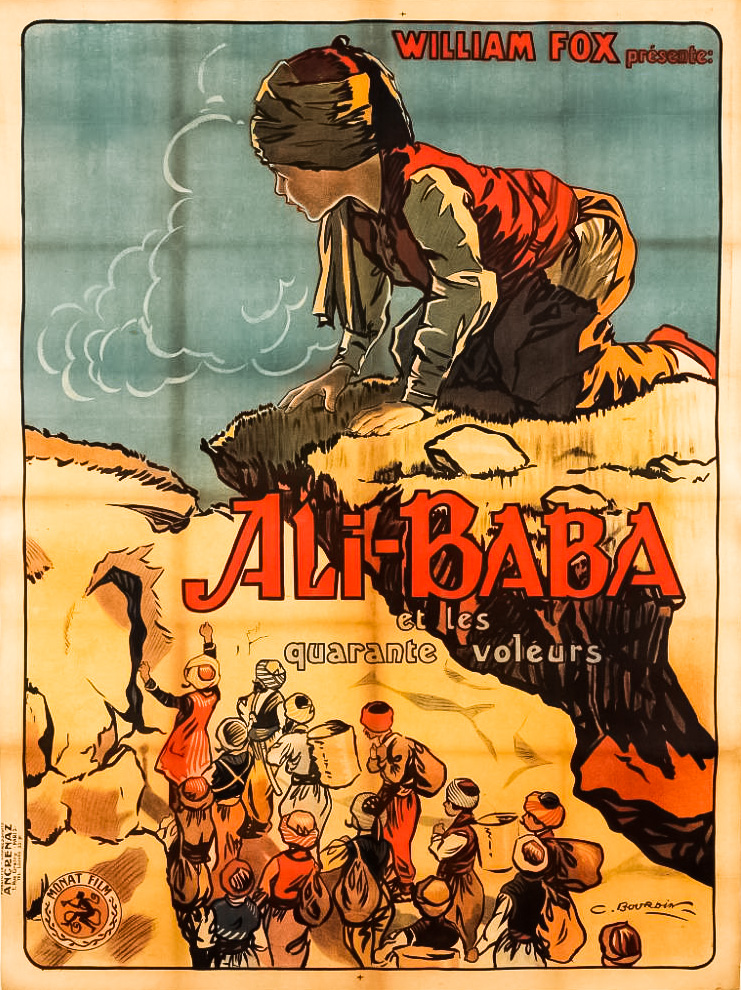
A definitive 2.4/10 rating for a film that redefined the boundaries of cult cinema. Ali Baba and the Forty Thieves remains a cornerstone of transgressive art.
The 1918 rendition of Ali Baba and the Forty Thieves, directed by the visionary Sidney Franklin, is not merely a cinematic relic; it is a fever dream of early Hollywood’s audacity. Part of the legendary 'Fox Kiddies' series, where children performed the roles of adults in lavishly produced features, this film operates on a frequency of surrealist charm that contemporary audiences might find both jarring and deeply enchanting. To witness Raymond Lee and Marie Messinger navigate the treacherous waters of 1001 Nights is to witness a form of stylized theatricality that has largely vanished from the modern screen.
While the silent era was rife with adaptations of folk tales, few possessed the peculiar visual DNA of this production. The set design, a labyrinthine construction of faux-stone and desert vistas, creates a claustrophobic yet grand stage for the unfolding drama. Unlike the more grounded realism found in The Three Godfathers, Franklin’s work here leans into the artificiality of the medium. The cave itself, triggered by the iconic incantation, is a masterclass in early practical effects and lighting. The contrast between the sun-drenched Turkish hills and the cool, shadow-laden interior of the thieves' den mirrors the moral dichotomy at the heart of the story.
The cinematography captures the essence of the 'Open Sesame' moment not just as a plot point, but as a metaphysical threshold. When the stone moves, we aren't just seeing a woodcutter find gold; we are seeing the proletarian imagination break through the barrier of feudal scarcity. The lexical diversity of the intertitles further elevates the experience, eschewing simple prose for a more florid, poetic cadence that matches the visual grandeur.
There is an inherent uncanny valley in watching Raymond Lee play a world-weary woodcutter. Yet, within minutes, the artifice melts away. Lee brings a grounded physicality to Ali Baba that belies his years. His performance is a fascinating counterpoint to the more traditional fairy-tale archetypes seen in Snow White (1916). Here, the stakes feel surprisingly high. The death of Ali’s brother is handled with a starkness that avoids the saccharine tendencies of later child-led productions.
"The film’s brilliance lies in its refusal to infantilize its source material. It treats the treachery of the forty thieves with the same gravitas one would expect from a grand opera."
Marie Messinger’s Morgianna is the true gravitational center of the film. In an era where female characters were often relegated to the background, as seen in the more passive roles of Her Silent Sacrifice, Messinger’s portrayal is one of sharp intellect and decisive action. Her dance at the inn is not merely decorative; it is a tactical maneuver, a display of grace that masks a lethal intent. When she discovers the thieves hidden in the oil jars, her reaction is not one of maidenly distress, but of cold, calculated survivalism.
The climax of Ali Baba and the Forty Thieves remains one of the most effectively staged sequences in silent cinema. The visual of forty jars, each concealing a murderous brigand, creates a rhythmic tension that is almost Hitchcockian. As Morgianna prepares the boiling oil, the editing accelerates—a technique that was still being refined in 1918. The juxtaposition of the domestic sphere (the kitchen and the oil) with the threat of external violence (the thieves) creates a uniquely domestic horror. This sequence elevates the film beyond a simple morality play, placing it in the same conversation as the high-stakes intrigue of Filibus.
The final confrontation between Ali Baba and the robber chief (G. Raymond Nye) provides the necessary catharsis, but it is the image of the jars that lingers. It is a metaphor for the hidden dangers of wealth—the idea that every treasure comes with a concealed price. This thematic depth is what separates this version from the more superficial 'kiddie' fare of the time, such as The Cricket or the lighter tone of The Education of Mr. Pipp.
To understand the impact of this film, one must look at the landscape of 1918. The world was in the throes of upheaval, and the escapism provided by the Arabian Nights was a vital cultural commodity. However, Franklin’s film doesn't just offer an escape; it offers a critique of greed. In this way, it shares a DNA with Odin nasladilsya, drugoy rasplatilsya, where the disparity between the haves and have-nots drives the narrative engine. The film’s focus on Ali Baba’s transition from a 'poor wood chopper' to a man of means is handled with a nuanced understanding of class that is often missing from contemporary blockbusters.
The use of a child cast also serves a broader allegorical purpose. By stripping away the literalism of adult actors, the film emphasizes the archetypal nature of the characters. They become icons of Virtue, Greed, and Loyalty. This stylistic choice makes the film feel more like a living tapestry than a traditional narrative. It shares this mythic quality with works like Mohini Bhasmasur, where the legendary elements are foregrounded through stylized performance.
Sidney Franklin’s direction is surprisingly sophisticated for the era. He utilizes depth of field to keep the audience aware of the looming threats, and his blocking of the forty thieves—often moving in a singular, predatory mass—is visually arresting. The film avoids the static, stagey feel of many of its contemporaries, such as Die Frau mit den Karfunkelsteinen. Instead, there is a fluidity to the movement that suggests the influence of European avant-garde styles, perhaps even echoing the kinetic energy found in Gatans barn.
The costuming deserves a special mention. The intricate robes, the oversized turbans, and the ornate jewelry all contribute to a sense of 'Otherness' that was a hallmark of early 20th-century Orientalism. While we view these depictions today through a more critical post-colonial lens, within the context of 1918, they represented the pinnacle of cinematic world-building. The attention to detail in the marketplace scenes provides a richness that rivals the production values of Kärleken segrar or The Secret of Eve.
In the final analysis, Ali Baba and the Forty Thieves is a triumph of imagination over the limitations of its time. It is a film that demands to be seen not as a curiosity of the 'Fox Kiddies' era, but as a legitimate piece of cinematic art. It balances the whimsical with the macabre, the romantic with the pragmatic, and the poverty of its protagonist with the richness of its visual language. It stands as a testament to the power of storytelling—a reminder that whether through a magical cave or a flickering projector, the phrase 'Open Sesame' still has the power to transport us to worlds of wonder and peril.
For those seeking a bridge between the folk traditions of the past and the cinematic innovations of the early 20th century, this film is an essential watch. It occupies a unique space alongside other early gems like Expeditricen fra Østergade and Happiness of Three Women, proving that even in the infancy of the medium, filmmakers were already mastering the art of the spectacle and the complexities of the human heart.
IMDb —
1921
Community
Log in to comment.