DbcultAccessing Vault...
Cult Review
Senior Film Conservator
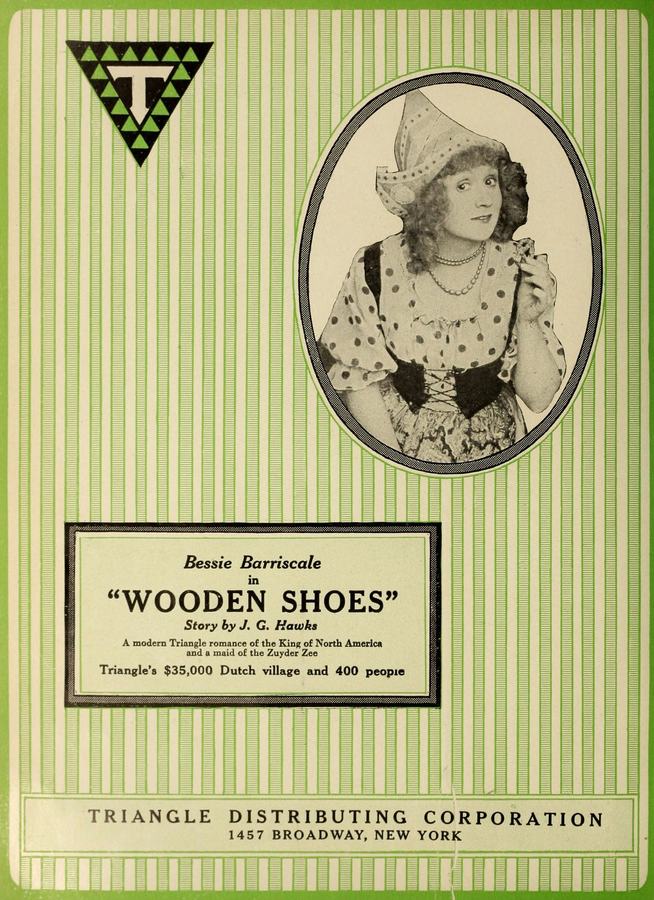
Stepping back into the flickering shadows of early cinema, one occasionally unearths a gem that, despite its age and the constraints of its medium, still resonates with a profound emotional truth. Such is the case with Wooden Shoes, a 1917 silent film that, through its earnest storytelling and captivating performances, crafts a narrative brimming with both hardship and heartwarming triumph. It’s a testament to the enduring power of simple virtues and the indomitable spirit of a young woman facing a world intent on her undoing. This isn't merely a quaint period piece; it's a vibrant tapestry woven with themes that remain strikingly relevant, exploring the vulnerability of innocence, the corrosion of greed, and the unwavering strength of genuine affection.
The film opens in a picturesque Dutch village, a setting rendered with an almost painterly quality, immediately immersing the viewer in a bygone era. Here, we meet Pampy, portrayed with luminous grace by Bessie Barriscale. Pampy is not merely a character; she is the living embodiment of pastoral purity and filial devotion. Her days are a delicate ballet of tending to her invalid father and selling vibrant flowers to the smattering of tourists who grace their tranquil corner of the world. Her beauty, however, is not merely superficial; it radiates from an inner goodness, a quiet resilience that hints at depths yet to be fully explored. This idyllic, albeit challenging, existence is portrayed with a gentle realism that allows the audience to immediately connect with her plight and admire her unwavering spirit. The early scenes establish a foundation of empathy, crucial for the dramatic turns that lie ahead, much like the careful world-building found in contemporary dramas that explore the lives of the working class.
Into this serene, yet struggling, existence steps Donald Luther, an American artist, played by Don Likes. His arrival is not merely a plot device but a catalyst, an external force that ignites the latent possibilities within Pampy's circumscribed world. Donald, captivated by Pampy's ethereal beauty and innate charm, finds in her his muse. The scenes where she poses for him are imbued with a tender, unspoken intimacy, suggesting a connection that transcends mere artistic admiration. It’s here that the film expertly navigates the nascent stages of romance, allowing their affection to blossom with a gentle, believable pace. There's a palpable sense of hope and future promise in their interactions, a stark contrast to the hardships Pampy has known. This budding romance, however, is destined to be tested, for the narrative, like life itself, rarely grants unadulterated happiness without first demanding a trial by fire. The quiet intensity of their connection reminds one of the subtle romantic tensions in a film like A Man and the Woman, where emotions are conveyed through glances and gestures rather than dialogue.
Just as their mutual affection begins to solidify into something more profound, Donald is called away for two weeks, an absence that proves tragically pivotal. During this brief interlude, fate delivers a cruel blow: Pampy's invalid father passes away. This moment of profound loss leaves Pampy utterly bereft, her world shrinking to a solitary point of grief. Her father's dying breath, however, carries a lifeline – directions to her wealthy grandfather’s home in New York. This revelation transforms her personal tragedy into a quest, a journey not just for inheritance, but for belonging and a renewed sense of purpose. It’s a powerful transition, shifting the film’s focus from a pastoral romance to an urban odyssey, a common trope in early cinema that often contrasted rural innocence with metropolitan complexities.
The film then introduces the antagonist, Captain von der Bloom, played with a suitably nefarious air by J.H. Gotch. This unscrupulous character intercepts a letter containing money for Pampy's voyage, demonstrating the insidious nature of human greed. His subsequent scheme to present an unsuspecting innkeeper's daughter as the rightful heiress to Pampy’s grandfather is a masterclass in villainy, highlighting the vulnerability of those without power or influence. This act of calculated deception elevates the stakes considerably, transforming Pampy's journey from a hopeful reunion into a race against time and an intricate battle for identity and justice. The sheer audacity of von der Bloom’s fraud bears a striking resemblance to the machinations seen in films like The Dollar and the Law, where financial chicanery drives much of the narrative tension, or even the impostor plots sometimes found in adventure serials like Der Lumpenbaron. The stakes here are not just monetary but deeply personal, threatening to erase Pampy's very identity and claim to family.
Pampy's perseverance in the face of such overwhelming adversity is truly the film's beating heart. Her passage to America is ultimately secured through the compassionate intervention of the village priest, a figure of moral rectitude who embodies the community's dwindling hope for her. This act of kindness underscores the film’s subtle commentary on the importance of human connection and altruism in a world often dominated by self-interest. The transatlantic journey itself, though not explicitly detailed, is implied to be arduous, a physical manifestation of Pampy's emotional pilgrimage. Her arrival in New York is timed with a dramatic precision that only cinema can truly orchestrate, placing her at her grandfather's opulent, yet emotionally barren, home just as von der Bloom is poised to finalize his elaborate fraud. This dramatic reveal, with Pampy bursting into the scene to prevent the old man from signing away a substantial fortune, is a moment of pure cinematic catharsis. It’s a testament to the strength of a protagonist who, despite her gentle demeanor, possesses an unyielding resolve, echoing the spirited heroines found in films like Pauline or Queen of the Forty Thieves, who defy expectations to secure their destiny.
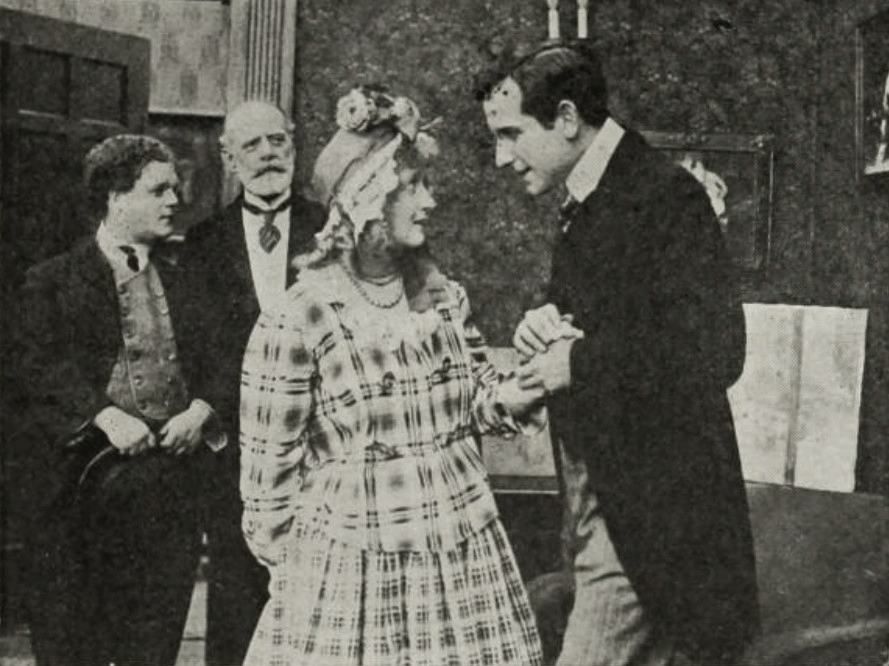
The subsequent transformation of the grandfather’s home, previously shrouded in a palpable gloom, is one of the film’s most poignant segments. Pampy’s charming presence, her innate warmth and vivacity, acts as a balm, awakening the old house to laughter and light. It’s a beautiful visual metaphor for the power of genuine human connection to dispel the shadows of loneliness and isolation. Gertrude Claire, as the grandfather, subtly conveys the character's initial sternness and gradual thawing, a nuanced performance that adds depth to the familial reconciliation. The film culminates in a joyous reunion with Donald Luther, affirming the triumph of true love and virtue over deceit and hardship. This resolution, while perhaps predictable by modern standards, is deeply satisfying, providing a sense of justice and emotional closure that audiences of the era, and indeed, today, crave.
Thematic depth in Wooden Shoes extends beyond its central romance and villainy. It subtly explores the immigrant experience, the challenges of navigating a new world, and the inherent class disparities between Pampy’s humble origins and her grandfather’s wealth. The film doesn't shy away from depicting the vulnerability of the poor and the ease with which they can be exploited, but it also champions the resilience of the human spirit. J.G. Hawks’ writing, though conveyed through intertitles, manages to imbue the narrative with a sense of moral clarity and emotional resonance. The portrayal of the Dutch village versus the bustling New York metropolis offers a stark visual and thematic contrast, highlighting Pampy’s journey from innocence to experience, from a tightly-knit community to an impersonal urban landscape. This journey of self-discovery and adaptation, grappling with new environments and societal structures, can be seen as a precursor to the social commentaries found in later films that tackled the complexities of modern life and urbanization, such as The Sowers, which often depicted the struggles of ordinary people against larger societal forces.
Bessie Barriscale’s performance as Pampy is undoubtedly the film’s anchor. She projects an aura of vulnerability and strength simultaneously, her expressive eyes conveying a myriad of emotions without the aid of spoken dialogue. This is the hallmark of a great silent film actor, and Barriscale delivers. Don Likes, as Donald Luther, provides a solid, empathetic foil, his character’s genuine affection for Pampy forming a crucial emotional core. J.H. Gotch, as Captain von der Bloom, is effectively menacing, embodying the film's darker elements. The supporting cast, including Gertrude Claire as the grandfather, Tom Guise, and Jack Livingston, all contribute to the film's rich tapestry of characters, each playing their part in Pampy's arduous journey towards happiness. The film’s success hinges on these performances, particularly Barriscale’s ability to communicate complex internal states through pantomime and facial expression, a demanding art form that few mastered with such finesse.
From a technical perspective, for a film of its era, Wooden Shoes demonstrates commendable craftsmanship. The cinematography effectively captures the contrasting aesthetics of the Dutch countryside and the American cityscape, utilizing natural light and carefully composed shots to enhance the narrative. The direction, while adhering to the conventions of silent cinema, maintains a steady pace, allowing the emotional beats to land with impact. The intertitles, crucial for conveying dialogue and narrative exposition, are well-integrated, never feeling intrusive but rather serving as vital conduits for the story’s progression. The film’s ability to evoke strong emotions purely through visual storytelling and musical accompaniment (which would have been live during its original screenings) is a testament to the artistry of early filmmakers. The dramatic tension built through visual cues, like the close-ups of von der Bloom’s conniving face or Pampy’s tear-filled eyes, is remarkably effective, proving that powerful narratives don't always require spoken words.
The legacy of
Ultimately, Wooden Shoes is more than just a silent film; it is a poignant fable, a journey from innocence to experience, from despair to joyous resolution. It captures the essence of a bygone era while delivering a narrative that remains emotionally resonant. It serves as a beautiful reminder of the enduring power of cinema to transport, to evoke, and to inspire, even a century after its creation. Its charm is undeniable, its message timeless, and its place in the pantheon of early melodramas well-earned. The film’s ability to weave together romance, drama, and a touch of social commentary into a coherent and engaging whole is a testament to its skillful construction. It’s a compelling argument for revisiting the silent era, not just as an academic exercise, but as an opportunity to discover emotionally rich storytelling that speaks volumes without uttering a single word. The film closes not just with a happy ending, but with a profound sense of completeness, a narrative circle beautifully drawn, leaving the viewer with a lingering warmth and appreciation for Pampy's extraordinary journey and the simple, yet powerful, truths it illuminates.
IMDb —
1919
Community
Log in to comment.