DbcultAccessing Vault...
Cult Review
Senior Film Conservator
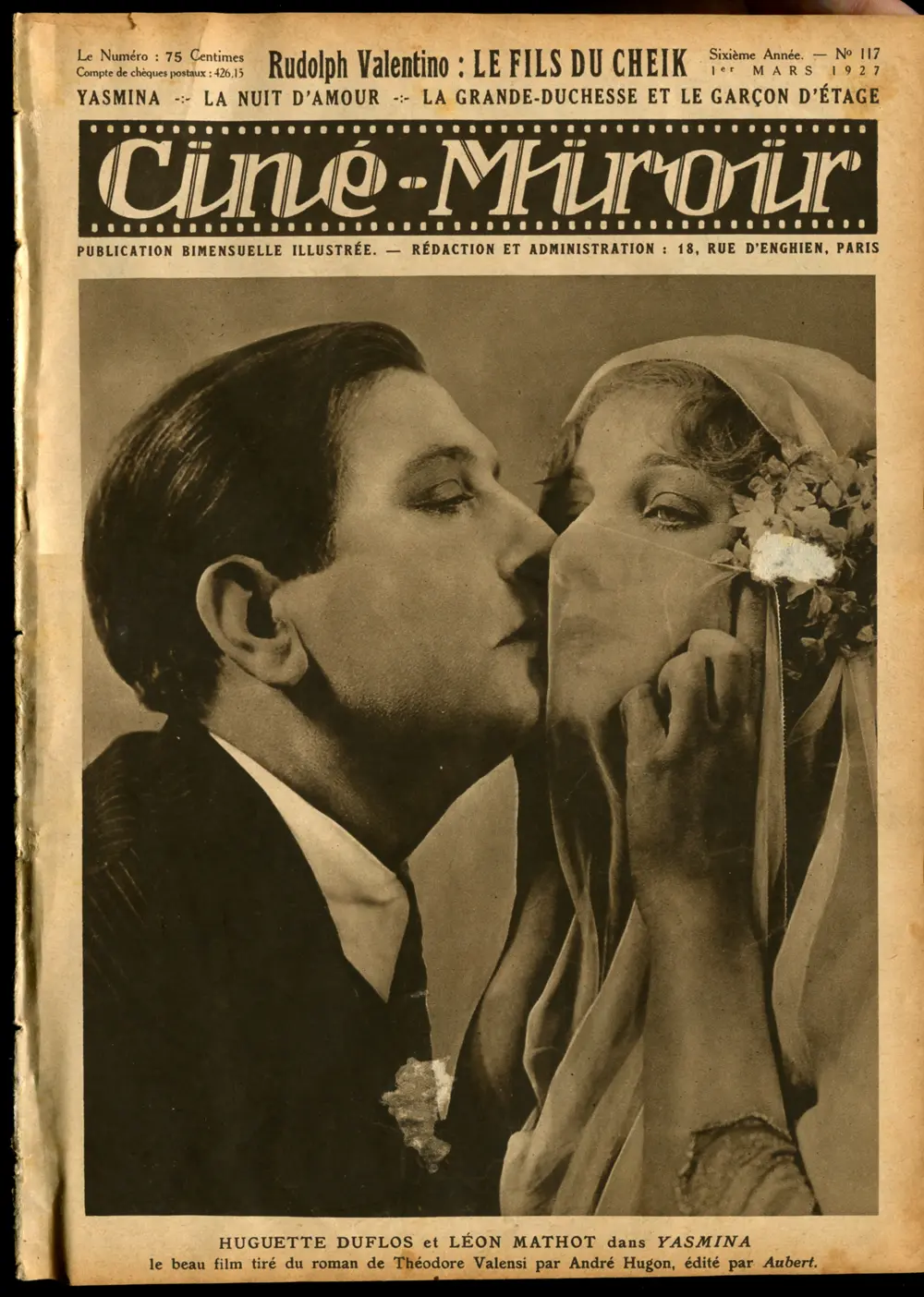
Is Yasmina a hidden gem of early Mediterranean cinema? Short answer: Yes, but only if you have the stomach for the high-octane melodrama and the complicated colonial politics of the 1920s.
This film is for enthusiasts of silent-era visual storytelling and those interested in how European directors portrayed North African 'exoticism.' It is absolutely not for viewers who demand historical nuance or a fast-paced, logical plot.
1) This film works because of André Hugon’s ability to use the Tunisian landscape not just as a backdrop, but as a physical manifestation of Yasmina’s internal suffocation.
2) This film fails because the third-act resolution feels like a convenient legal escape hatch that ignores the moral complexity of the characters' actions.
3) You should watch it if you want to see a rare example of a 1920s leading lady who uses self-harm as a weapon of political and romantic agency.
Yasmina is a film that breathes through its scenery. Unlike the urban grit found in The Eternal Grind, Hugon’s work here is obsessed with the textures of silk, stone, and sand. Huguette Duflos plays the titular Princess with a heavy-lidded exhaustion that feels surprisingly modern. She isn't just sad; she is profoundly disinterested in the world her father has built for her.
The casting of Habib Benglia and Léon Mathot creates a fascinating, if problematic, screen dynamic. While many films of this era, like Angel Child, focused on domestic innocence, Yasmina dives headfirst into the murky waters of interracial and intercultural tension. The princess is a product of two worlds, yet she belongs to neither. Her French mother represents a distant freedom, while her father represents the weight of local tradition.
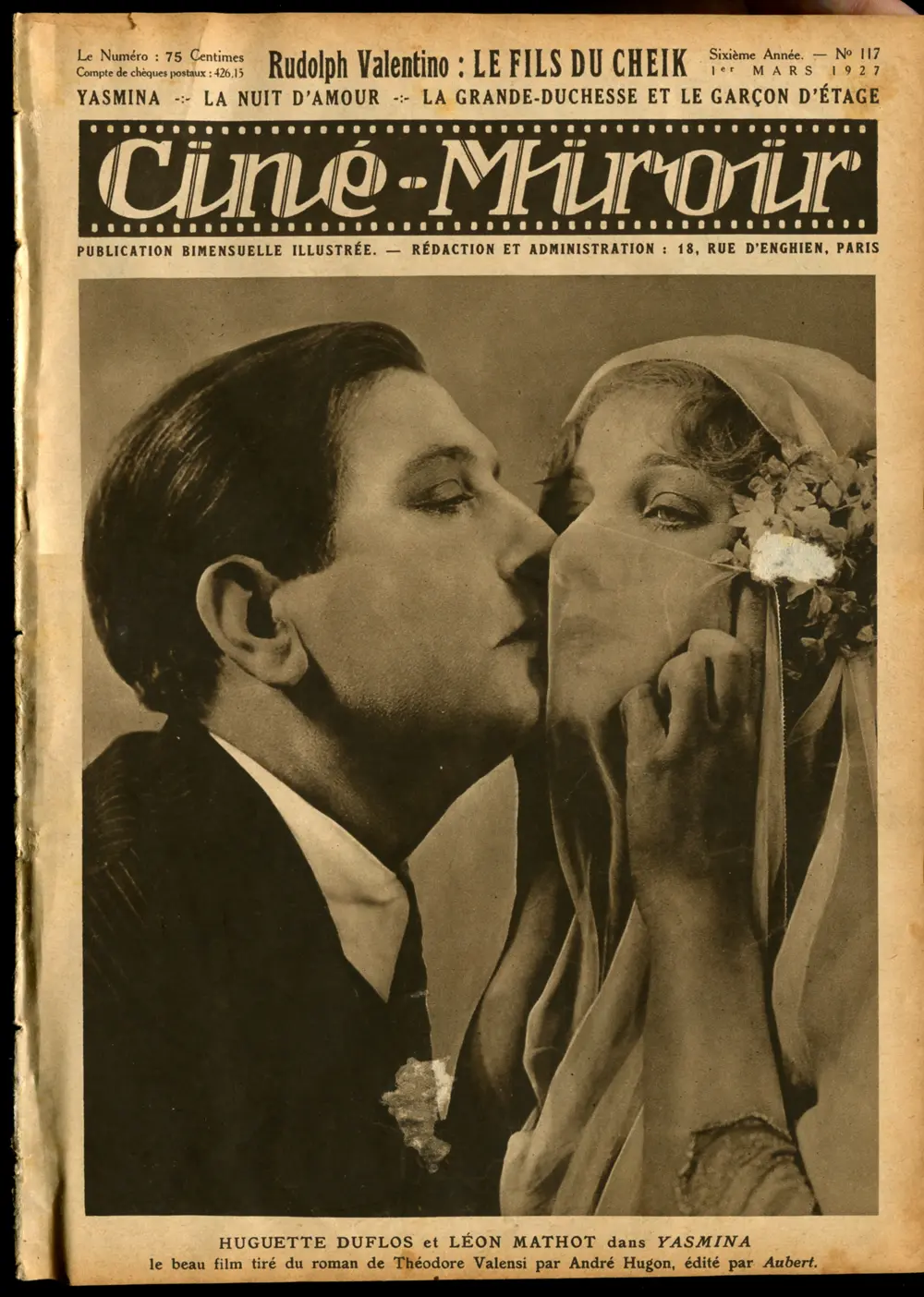
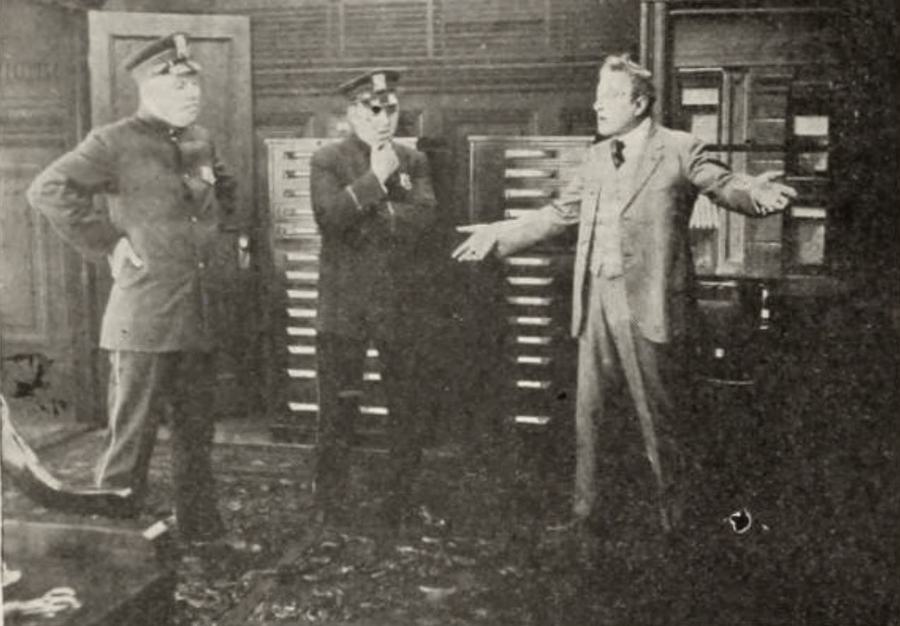
The pacing in the first half is deliberate. We see Yasmina wandering through her palace like a ghost. The cinematography captures the way shadows fall across her face, suggesting bars of a cell. It is a visual language of entrapment that rivals the emotional weight of The Sawdust Doll.
The entry of Hector Grandier (Léon Mathot) changes the film's temperature. Hector isn't just a doctor; he is a symbol of Western 'enlightenment' coming to rescue the 'ailing' East. This is where my first debatable opinion comes in: Hector is actually the least interesting character in the movie. He is a cardboard cutout of a hero, lacking the internal conflict that makes Yasmina so compelling.
Their reunion is framed through the lens of childhood nostalgia. It’s a trope we see often, even in lighter fare like Scratch My Back, but here it carries a heavier burden. Their love is presented as inevitable, which robs the film of some of its tension. We know they will end up together; the only question is how many lives will be ruined in the process.
The medical scenes are handled with a strange, almost spiritual reverence. Hector doesn't just check her pulse; he awakens her spirit. It’s a bit heavy-handed. The 'illness' of boredom is a classic Victorian and Edwardian trope, seen in works like The Shuttle, but Hugon gives it a colonial twist that makes it feel more predatory than romantic.
The turning point of the film is the confrontation between Yasmina and her husband, Afsen. This is where the film abandons its slow-burn atmosphere for pure, unadulterated pulp. The fight is choreographed with a chaotic energy that feels visceral even today. When Yasmina plunges the knife into her own bosom, it is a shocking moment of self-reclamation.
The blood is fake. The pain is real.
This act of violence is the only way she can break the contract of her marriage. It is a brutal observation: in this world, a woman’s only power over her body is her ability to destroy it. The maid Athima’s subsequent lie—accusing Afsen of the deed—is a masterclass in opportunistic survival. It’s a narrative pivot that reminds me of the legal gymnastics in A Self-Made Widow.
However, the film takes a strange turn when Hector decides to save Afsen from execution. This is my second debatable opinion: the film would have been far more powerful if Afsen had been executed. By having the 'enlightened' French doctor save the 'barbaric' husband, the film reinforces a hierarchy that feels unearned. It’s a 'white savior' moment that sours the emotional payoff of the lovers' reunion.
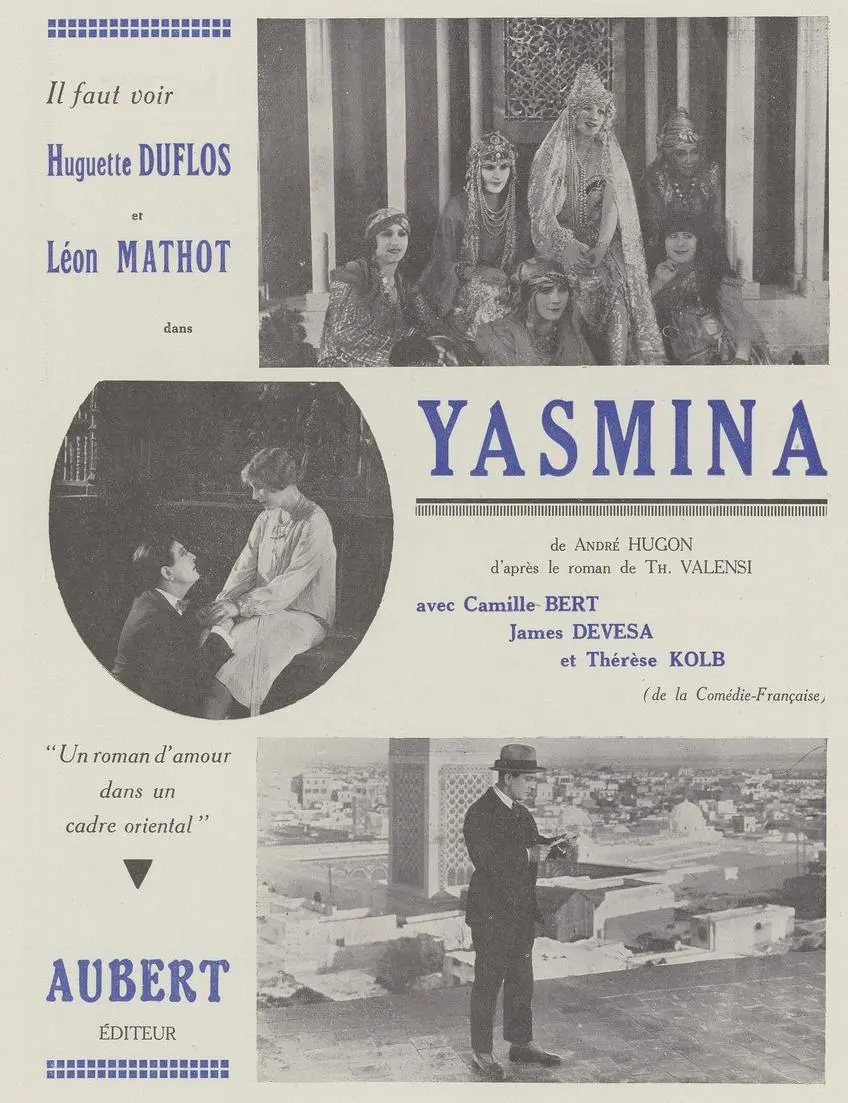
Yes, Yasmina is worth watching for its historical significance and its bold visual style. It offers a window into the 1927 French perspective on North African culture. While the story is melodramatic, the performances—particularly by Huguette Duflos—carry a weight that transcends the silent medium.
Pros:
Cons:
André Hugon was a director who understood the power of the frame. In Yasmina, he avoids the flat, stagey compositions common in many films of the era, such as The Square Deal. Instead, he uses depth of field to show the distance between his characters. When Yasmina and Hector are in the same room, there is always a physical barrier—a curtain, a table, a servant—until the very end.
The pacing, however, is uneven. The beginning drags as it establishes Yasmina’s boredom, perhaps too effectively—the audience might find themselves as bored as the Princess. But once the medical plot kicks in, the film accelerates toward its violent climax. It lacks the consistent rhythm of a film like Orchids and Ermine, but the highs are much higher.
The editing during the fight scene is particularly noteworthy. It uses quick cuts and close-ups of hands and faces to create a sense of panic. This was sophisticated for 1927. It’s a far cry from the documentary-style approach of Allies' Official War Review, No. 3. Hugon is interested in the psychology of the moment, not just the facts.
Yasmina is a fascinating artifact. It is a film that wants to be a grand romance but ends up being a study in cultural friction. The knife scene remains one of the most provocative moments in 1920s cinema, a literal 'cut' through the social fabric of the time. It works. But it’s flawed. The ending is too clean for a story that starts so messily.
If you can look past the colonial gaze, you will find a story about a woman trying to find a third way in a world that only offers two choices. It’s a struggle that feels as relevant now as it did nearly a century ago. It’s not as polished as Her Lord and Master, but it has a raw, sun-baked energy that is hard to forget.
Ultimately, Yasmina is a film about the cost of freedom. Whether that freedom is worth the blood spilled is a question the film doesn't quite have the courage to answer. It settles for a happy ending, but the shadows in the palace suggest something much darker. For any serious student of the silent era, this is essential viewing, if only to see how the 'secret formula' of melodrama was applied to the sands of North Africa, much like the intrigue in The Secret Formula.
IMDb 5.9
1937
Community
Log in to comment.