DbcultAccessing Vault...
Cult Review
Senior Film Conservator
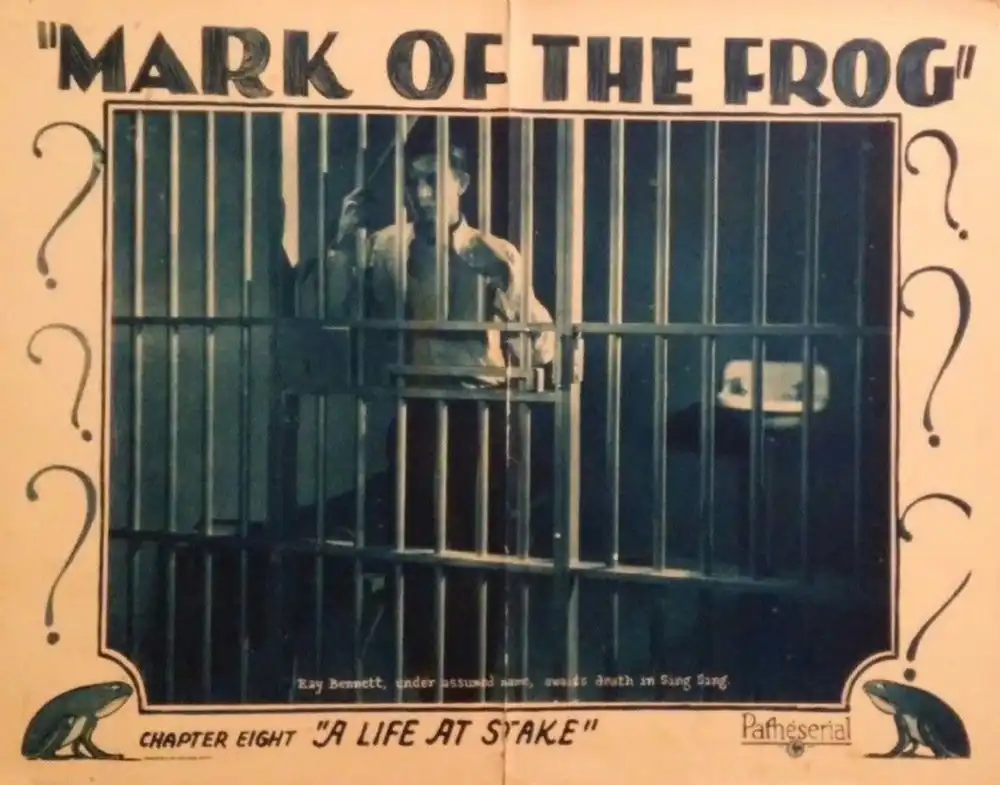
If you are the kind of person who gets a genuine kick out of seeing how 1920s filmmakers tried to visualize 'menace' before they really had the tropes or the technology figured out, Mark of the Frog is a decent way to spend an afternoon. It is definitely for the person who finds old crime serials charming precisely because they are a bit of a mess. However, if you are looking for the technical polish or the haunting atmosphere of something like The Devil's Garden, you are going to be disappointed. This is much more of a 'guys in hats pointing intensely at things' kind of experience.
The Frog himself is the first thing that hits you. It is supposed to be a terrifying disguise, I think. But in the grainier shots, the mask looks like a lumpy papier-mâché project that didn't quite dry before they started filming. There is a moment early on where he is standing in a doorway, and instead of looking like a criminal mastermind, he looks like he’s waiting for someone to tell him where the nearest bathroom is. The eye holes are cut at a weird angle, giving him this expression of perpetual, mild surprise.
The acting is... let’s call it 'enthusiastic.' Morgan Jones spends a significant portion of his screen time looking intensely at pieces of paper. There is a specific shot around the twenty-minute mark where he picks up a letter, reads it, looks directly at the camera, looks back at the letter, and then looks at the camera again. It goes on for about five seconds too long. It is that classic silent film thing where they really want to make sure you know that information has been received. It stops being informative and starts being funny after the third beat.
Margaret Morris is fine, though she is mostly tasked with clutching her throat and looking toward the ceiling. There is a scene in a library—or what passes for a library, since it is basically just three shelves and a very large, empty desk—where she has to look shocked for a full thirty seconds. You can almost see her eyes darting around, looking for the director to finally yell 'cut.' Her chemistry with William Willis is non-existent; they stand near each other with the stiff energy of two strangers waiting at a bus stop in the rain.
The pacing is where the movie really starts to show its age. There is a middle stretch that feels like it was meant to be an entirely different film. There is a lot of walking into rooms, sitting down, standing up, and walking out. It lacks the grit or the forward momentum of Riddle Gawne. In that film, the silence feels heavy; here, the silence just feels like a lack of things to do. I found myself focusing on the background details instead—like the fact that one of the 'secret' doors in the hideout clearly doesn't close all the way, leaving a sliver of studio light visible in what is supposed to be a dark, subterranean lair.
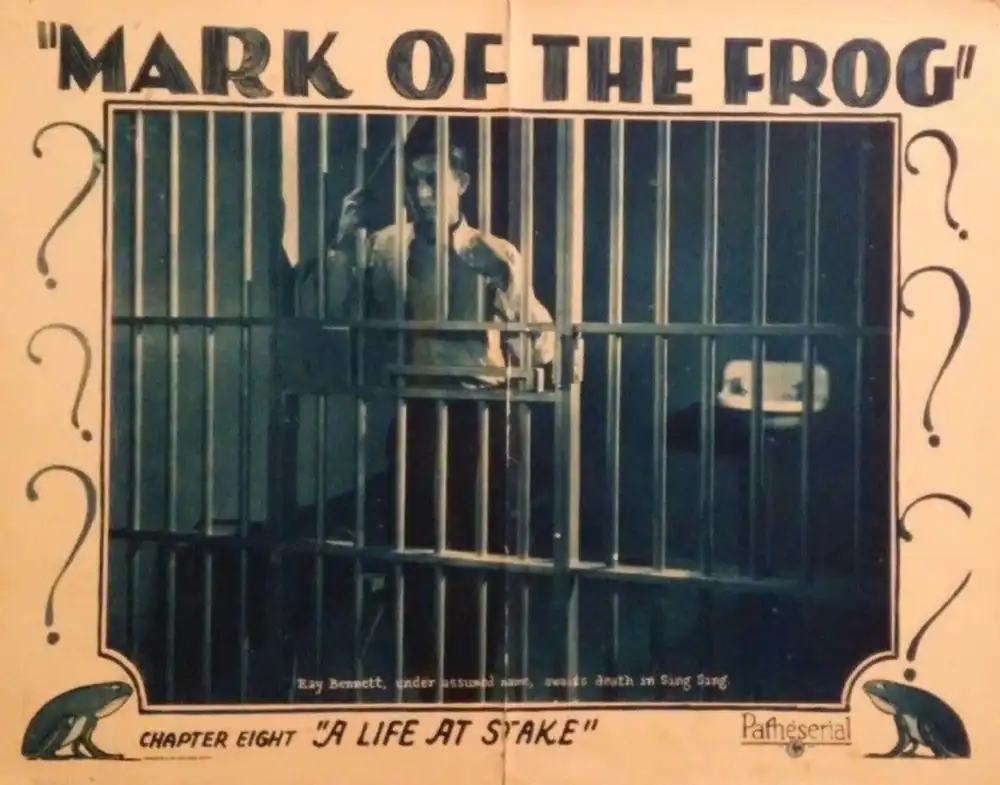
I noticed the extras in the street scenes, too. They all look like they are trying very hard not to look at the camera, which of course makes you notice them more. In one shot, there is a man in the far back who just stops walking and stares for a second before his friend nudges him forward. It is those little cracks in the 'movie magic' that make these old silents more interesting than the polished, digital stuff we get now. It feels human, even if the story is about a guy in a frog suit.
The intertitles are doing a lot of heavy lifting here. Sometimes they explain things that are already incredibly obvious. I don't need a text card to tell me a character is 'seized with a sudden dread' when the actor is currently vibrating with manufactured fear. But then again, the physical acting is the most life the movie shows in the first forty minutes. There is a scene involving a trap door that is so poorly timed that the character is halfway across the room before the floor actually opens up.
Frank Lackteen shows up, and he has that face that just screams 'villain.' He doesn't even have to do anything; he just exists in the frame and you know he’s up to no good. He is lurking in shadows that aren't even that dark. It is the kind of movie where the 'secret' hideout might as well have a neon sign over it. The fellowship meetings, with all the hooded figures sitting around a long table, are pure camp. The way they all nod in unison is unintentionally hilarious—it looks like a synchronized swimming team practicing on dry land.
The editing in the third act gets frantic. Not 'exciting' frantic, but more like 'we realized we only have ten minutes of film left' frantic. Cuts happen mid-motion, so characters seem to teleport across rooms. It is jarring if you are used to modern continuity, but if you have seen Square Shooter, you know this kind of rough-around-the-edges assembly was just how these B-pictures were put together. They weren't making art; they were making a product for the Saturday afternoon crowd.
The ending is incredibly abrupt. The mystery is 'solved,' the bad guy is revealed in a way that doesn't quite make sense given his earlier height, and then it just... stops. There is no real falling action. It leaves you feeling like you might have missed a reel, even if the runtime says otherwise. It reminded me of the pacing in Nothing Like It, where the conclusion feels more like an escape for the actors than a resolution for the audience.
Is it worth watching? Only if you like the genre's bones. It is a skeleton of a thriller, held together by some nice shadow work in the final ten minutes and a lot of earnest, if awkward, performances. It is a 'found curiosity' rather than a lost gem. Watch it if you like hats, mystery masks, and actors who over-enunciate. Skip it if you need a plot that doesn't have holes big enough to drive a 1928 Buick through.
IMDb 6.9
1927
Community
Log in to comment.