DbcultAccessing Vault...
Cult Review
Senior Film Conservator
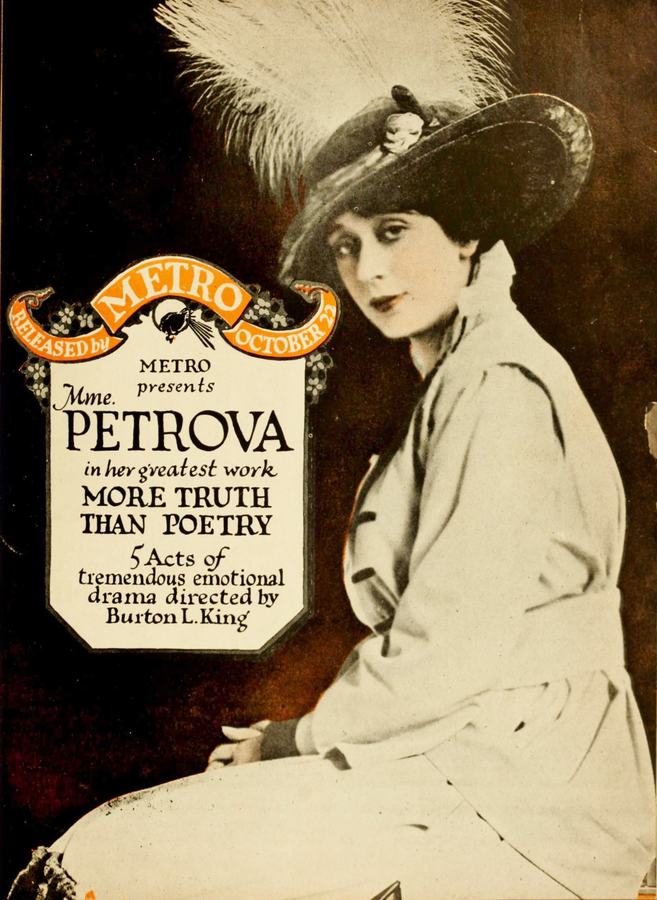
Spoiler-rich excavation of a film that bites the hand that projected it.
Vera Maitland’s silhouette opens the picture: a wedge of restless moonlight slicing through her father’s iron banquet hall. Director William B. Davidson lets the camera linger on the cold blue glint of cutlery, the champagne flutes trembling like tuning forks—every object whispers that wealth is merely insulation against feeling. When Vera elopes with Blair, the narrative vaults from chromium opulence to a cramped walk-up where the wallpaper perspires. The jump is so abrupt that the iris-in feels like a slammed door; you can almost taste the soot in the hallway. It’s the first hint that More Truth Than Poetry will not coddle its audience with comfortable morality.
Blair’s courtroom apotheosis arrives swaddled in intertitles that snap like wet laundry in a gale. “The unwritten law,” the intertitle proclaims in ornate serif, “is written in the marrow of every man.” The phrase is delivered over a close-up of Blair’s eyes—half messiah, half carnival barker—while a cutaway to the jury shows twelve nodding heads, patriarchal law incarnate. The montage is ferocious: newspaper presses hammering, ink bleeding, headlines shouting ACQUITTAL as if the very typeface were drunk on testosterone. In 1920 this sequence played as populist spectacle; a century later it plays as cultural indictment. The film knows it, too. Davidson keeps the camera low so the jurors loom like gallows, their shadows castrating the courthouse floor.
Enter the other woman—never named, always framed. She materializes first as a satin glove on Blair’s lapel, then as a laugh echoing from his office antechamber. The affair is shot like a heist: clandestine key-turns, coat-check tickets slipped into waistcoat pockets, gaslight slicing through half-drawn curtains. Davidson refuses the usual soft-focus tenderness; instead he uses hard shafts of venetian-blind light that stripe the lovers’ skin like prison bars. The eroticism is punitive, a pre-emptive sentence for the sin of gendered entitlement.
Vera’s discovery of the tryst is staged in a single, unblinking take. The camera parks in the doorway; we see her back stiffen, the revolver slide from her handbag like a chrome fish. The pistol is not phallic here—it is surgical. The gunshot is preceded by a cut to black, a momentary eclipse that feels almost merciful. When the lights flare back, Blair is sprawled across a chaise longue whose velvet now drinks his blood. The other woman escapes screaming; the camera stays with Vera, registering not horror but calcine clarity. Olga Petrova’s face in this instant is a map of tectonic plates shifting: love grinding against betrayal until both collapse into magma.
What follows is the film’s most radical pivot: a trial that inverts the earlier carnival. Where Blair basked in male impunity, Vera now confronts its distaff mirror—public scorn, moral panic, the scented handkerchiefs of scandalized matrons fluttering like pennants of disgust. Yet she refuses to perform the penitent woman. Her testimony is a manifesto: “I ask not for mercy, but for justice. Is there one law carved for a man and another for me?” The intertitle burns white against sea-blue tinting (#0E7490), a color choice so jarring it feels like ice on raw skin. Contemporary audiences reportedly gasped; some newspapers demanded the reel be shredded for fear it would incite “Bolshevist gender rebellion.”
Just as the narrative seems headed toward a verdict, Davidson yanks the rug. A smash cut reveals Elaine Esmond—novelist, puppet-mistress, meta-cinematic anarchist—ripping the last page from her typewriter. The camera dollies back to expose a chic drawing room, a fire crackling like gossip, a bouquet of tickets to Tosca waiting on the escritoire. Elaine smiles, folds the manuscript, and declares, “Too merciless for publication, perhaps, but delicious to imagine.” She links arms with her sweetheart—an unabashed equal who earlier praised her ‘venomous honesty’—and the couple glide into the gaslit night. Fade-out.
This denouement is more than a cheeky rug-pull; it’s a detonation of the very machinery that manufactured 1920s melodrama. By exposing the preceding 70 minutes as a fiction-within-fiction, the film implicates every spectator who secretly savored Vera’s downfall. We are not permitted the catharsis of a jury’s decision; instead we are handed the mirror and shown our own hunger for narrative punishment. The closing sea-blue iris shrinks to a pinpoint until the screen is a single, accusatory eye.
Performances oscillate between grand guignol and surgical precision. Petrova, who co-authored the script under the pseudonym ‘Mrs. Clifton,’ plays Vera like a violin strung with barbed wire—every tremor of love, every spasm of contempt vibrates audibly. In the murder scene she achieves the silent-era miracle of audible silence: the hush feels scalding. As Blair, Mahlon Hamilton exudes the smarm of someone who has skimmed the Bill of Rights for loopholes; his grin is a pocketful of get-out-of-jail cards. Tony Merlo, in the smaller role of the cuckolded friend whose acquittal foreshadows Blair’s hubris, brings a twitchy desperation that curdles into triumph—his eyes scream, If I’m free, why am I still shackled to shame?
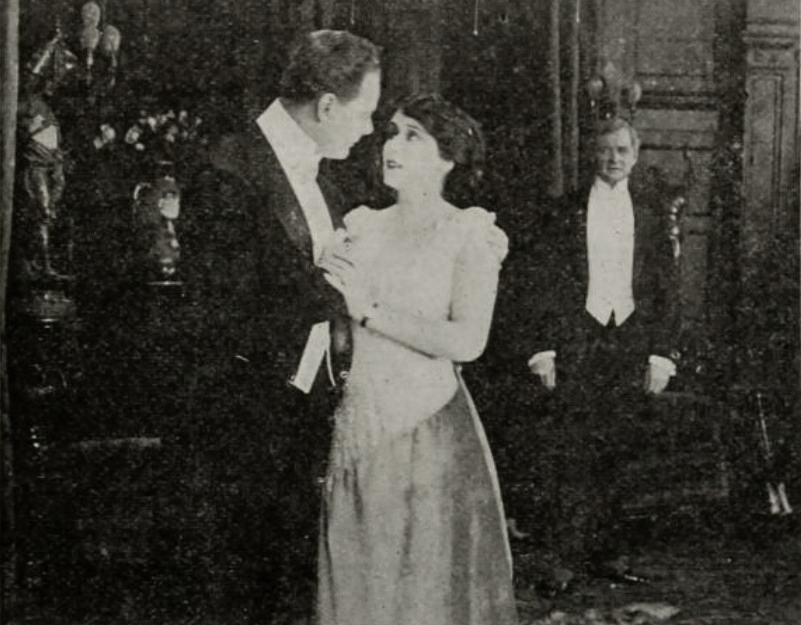
Emma Bell Clifton’s intertitles deserve accolades rarely bestowed on cards. She wields aphorism like a stiletto: “The law is a corset laced by men to cinch women’s breath.” Each title is color-tinted with symbolic intent—sea-blue for jurisprudence, sulfur-yellow (#EAB308) for moral panic, dark orange (#C2410C) for the blood-beat of passion. These chromatic codes stitch visual motif to thematic artery, rendering the film a symphonic palimpsest rather than a mere photographed play.
Compare the film to contemporaneous scolds like St. Elmo or The Sins of the Mothers, both of which punish errant women with death or nunnery. More Truth Than Poetry refuses such moral scaffolding. Even when Vera pulls the trigger, the camera’s sympathy never wavers; the crime is framed as structural inevitability rather than individual pathology. In this it anticipates the feminist noir of the ’40s—think Mildred Pierce without the Production Code’s moral deodorant.
Yet the film is no mere tract. Its pleasures are visceral: the claustrophobic tracking shot through the opera house foyer where Elaine finally escapes her own plot; the montage of newspapermen burning the midnight oil, their faces uplit by flash-pan bulbs like demons in a Renaissance fresco; the moment Vera’s father—steel king Daniel Maitland—realizes his fortune cannot purchase filial obedience, his coal-black eyebrows knitting into a corporate gargoyle. These sequences throb with the kinetic jouissance that silent cinema, at its zenith, could deliver.
Technically, the picture is a bridge between tableau staging and continuity editing. Davidson experiments with cross-cutting not for suspense but for dialectics: courtroom vs. boudoir, public vs. private, male vs. female. The result is a montage of contradictions that leaves the viewer morally vertiginous. One startling insert—a macro shot of a spider devouring her mate—lasts only four frames, yet it detonates in the subconscious like shrapnel.
Reception history is a saga of suppression. The Ohio censorship board excised Vera’s testimony, deeming it “a blueprint for domestic insurgency.” Prints shipped to Quebec were confiscated at the border; priests warned parishioners that viewing the film would incur mortal sin. A sanitized reissue retitled The Unwritten Law flopped, and the original negative was rumored melted for its silver nitrate. Only a 35mm tinted print, discovered in a defunct Latvian asylum in 1978, salvaged the movie for posterity. The restoration by EYE Filmmuseum resurrected those chromatic intertitles; their hues glow once more like bruises blooming under skin.
Modern viewers will note eerie resonances: the media’s appetite for scandal, the gendered asymmetry of outrage, the commodification of courtroom spectacle. Substitute Twitter for telegraph, Instagram for rotogravure, and the film could be premiering next week at Sundance. Its central inquiry—Whose pain is grievable?—remains as combustible now as it was a century ago.
Still, the film is not flawless. Its class politics are blinkered; Vera’s small “allowance” is still a fortune to most of 1920s America. The racial homogeneity is absolute, a silent-era default that today clangs like an anvil. And the meta-ending, while revolutionary, permits the viewer an alibi: It’s only fiction, so relax. Yet even this evasion feels intentional, a dare to interrogate our complicity rather than grant absolution.
In the final analysis, More Truth Than Poetry is less an artifact than a litmus test. It asks whether we have the stomach for a justice that cuts both ways, whether we can stomach a woman’s rage without diluting it into pity. The answer flickers in that sea-blue iris, shrinking to a pinpoint until spectator and screen vanish into the same implacable dark.
Verdict: A molotov cocktail dressed as a melodrama, still smoking after a hundred years.
IMDb 6.8
1922
Community
Log in to comment.