DbcultAccessing Vault...
6/10
Senior Film Conservator
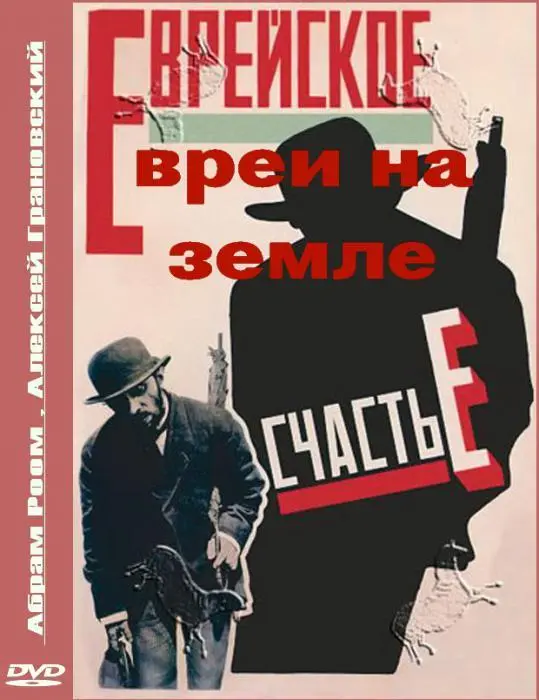
A definitive 6/10 rating for a film that redefined the boundaries of cult cinema. Yevrei na zemle remains a cornerstone of transgressive art.
Is Yevrei na zemle worth watching today? Short answer: yes, but with significant caveats. This rarely seen Soviet documentary is a historical artifact, invaluable for scholars and serious cinephiles, but likely impenetrable for casual viewers seeking traditional narrative entertainment.
It demands patience and a keen interest in its specific historical and ideological context. This film is unequivocally for those fascinated by early Soviet propaganda, the history of Jewish communities in the USSR, or the evolution of documentary filmmaking as a tool for social engineering. It is decidedly not for audiences expecting character development, dramatic arcs, or brisk pacing.
This film works because it offers an unvarnished, if ideologically framed, glimpse into a specific historical moment and a bold social experiment. Its raw, almost ethnographic style captures a sense of genuine human endeavor, providing a unique window into a pivotal era.
This film fails because its didacticism often overshadows its human element, presenting a narrative so heavily curated by its creators that it sometimes feels more like a staged tableau than an objective record. The pacing can be punishingly slow for modern audiences, making its ideological message feel relentless rather than revelatory.
You should watch it if you possess a keen interest in early Soviet cinema, the history of Jewish communities in the USSR, or the potent influence of figures like Vladimir Mayakovsky and Viktor Shklovskiy on Soviet cultural output. It's a challenging watch, but one that rewards intellectual curiosity.
Yevrei na zemle, or Jews on the Land, is more than a simple documentary; it is a cinematic argument for a specific ideological agenda. Conceived with the intellectual firepower of Vladimir Mayakovsky and Viktor Shklovskiy, two titans of the Soviet avant-garde, the film’s very premise is steeped in the revolutionary fervour of its time. It seeks to visually articulate the Soviet project of transforming a traditionally urban, often marginalized, Jewish population into a productive, agrarian collective.
Abram Room, credited as a writer and likely the director, orchestrates a narrative that emphasizes labor, community, and the triumph of the collective will over natural obstacles. The film opens not with individual stories, but with the sweeping vista of an untamed landscape, ready for the hands of the new settlers. This immediate focus on the environment sets the stage for the immense physical challenge ahead, framing the Jewish settlers as pioneers in a literal and ideological sense, much like the aspirational spirit found in films such as The Pioneers, albeit with a vastly different political underpinning.
The visual language employed is direct and unadorned. We see the painstaking process of construction: logs being hewn, foundations laid, simple dwellings taking shape. The camera often lingers on the faces of the workers, capturing their stoicism and determination, but rarely their individual personalities or emotional complexities. This deliberate choice underscores the collectivist ethos, where the individual is subsumed by the greater good of the community and the state.
One of the film’s most striking aspects is its portrayal of the sheer physicality required. The digging of a well, for instance, is not a quick montage but an extended sequence, emphasizing the back-breaking effort and the communal necessity of this task. It’s a testament to human resilience, even when framed within a propaganda narrative. The land itself becomes a character, resisting and then yielding to human will, much like the untamed wilderness often depicted in early American Westerns like Wild Beauty, but here, the struggle is entirely focused on agricultural conquest.
“The film’s greatest strength lies in its unblinking gaze at the sheer physical effort of building a new life, a new society, brick by arduous brick.”
Room’s direction, heavily influenced by the prevailing aesthetics of Soviet cinema, leans heavily on a form of early documentary realism intertwined with purposeful ideological messaging. There is a distinct lack of overt artistry in the sense of lavish set pieces or complex camera movements. Instead, the cinematography is functional, designed to inform and persuade.
The editing, while not always employing the rapid-fire montage of Eisenstein, still builds a rhythm of labor and progress. Shots of individual actions – a hammer striking a nail, a spade turning earth – are often juxtaposed with wider shots of the burgeoning settlement, creating a sense of cumulative achievement. This isn't just showing work; it's demonstrating the power of collective work.
The pacing, by modern standards, is undeniably slow. Sequences unfold in real-time, allowing the viewer to absorb the gravity of each task. This deliberate slowness is a double-edged sword: it lends an authenticity to the depiction of labor, but it also tests the patience of contemporary audiences accustomed to faster narratives. There’s no dramatic tension, no character arc to follow, just the relentless march of progress.
The film’s tone is consistently optimistic, almost triumphal. There are no signs of dissent, no moments of despair, only unwavering determination. This homogeneity of emotion is a clear indicator of its propagandistic intent. It paints a picture of a unified front, cheerfully embracing the new collective life, which makes it less an objective record and more a curated vision of what the Soviet state wished to achieve.
In a documentary of this nature, the idea of “performance” takes on a different meaning. The individuals captured by Room’s camera are not actors in a fictional drama, yet they are undeniably performing for the lens. Their stoicism, their focused expressions, their synchronized movements in group tasks – all contribute to a collective portrayal of the 'New Soviet Man,' or in this case, the 'New Soviet Jew.'
The film implicitly asks its subjects to embody the ideals of the revolution: diligence, self-sacrifice, and unwavering belief in the collective. There are no close-ups revealing inner turmoil or doubt, only faces etched with the resolve of pioneers. This isn't necessarily a criticism of the individuals themselves, but an observation of how the directorial gaze shapes their representation, transforming them from unique individuals into symbolic representations of a broader ideological victory.
It’s a fascinating study in how a documentary can, through its framing and selection, elicit a specific kind of 'performance' from its subjects, turning real people into living embodiments of a political ideal. This contrasts sharply with later documentaries that sought to explore individual psychology or social complexities, making Yevrei na zemle a product very much of its specific time and political climate.
Yes, for specific audiences. It is a vital historical document. It shows early Soviet ideology in action. It captures a unique social experiment. It’s not for entertainment seekers. It demands patience. It offers immense educational value. It’s a window into a bygone era.
This is where the film invites its most significant debate. Is Yevrei na zemle merely a piece of state-sponsored propaganda, or does it, despite its ideological framework, offer genuine insights into a historical event? My stance is that it is both, inextricably linked. It is undeniably a propaganda film, designed to showcase the success of Soviet policies and the integration of Jewish communities into the collective agrarian project.
The involvement of figures like Mayakovsky and Shklovskiy, known for their revolutionary zeal and artistic experimentation, strongly suggests a deliberate shaping of the narrative to align with party directives. The absence of any dissenting voices, any struggles beyond the physical conquest of nature, or any acknowledgment of the complex history of Jewish life in Russia, points to a heavily curated reality.
However, to dismiss it solely as propaganda would be to overlook its value as a primary historical source. It visually records the sheer scale of the undertaking, the methods of construction, and the daily lives of these settlers. It shows, in stark detail, the physical manifestation of an ideological dream. This makes it an invaluable resource for understanding how the Soviet state wished to be perceived, and how it attempted to reshape society, much like a meticulously crafted promotional film for an ambitious project like The Call of the Game might promote a sporting event, but with far greater societal implications.
The film’s silence on the complex tapestry of Jewish identity and its forced assimilation is perhaps its most telling omission. It presents a sanitized, heroic version of settlement, ignoring the deep-seated cultural and religious traditions that were often suppressed in the drive for collectivization. This selective storytelling is a hallmark of propaganda, yet the images themselves, the faces and hands at work, carry a weight that transcends simple political messaging.
Yevrei na zemle is not a film one watches for entertainment. It is a document, an artifact, a window into a very specific, ideologically charged moment in history. It works. But it’s flawed. Its value lies not in its ability to captivate with narrative brilliance, but in its stark, uncompromising portrayal of a grand social experiment and the cinematic methods used to champion it.
For those with the intellectual curiosity and patience, it offers a profound, if sometimes unsettling, look at the mechanisms of state-building through collective labor and the power of film to shape public perception. It’s a film that demands to be studied, debated, and understood within its historical context, rather than simply consumed. Approach it as an anthropological text, a piece of living history, and you will find its rewards.
IMDb —
1929
Community
Log in to comment.