DbcultAccessing Vault...
Cult Review
Senior Film Conservator
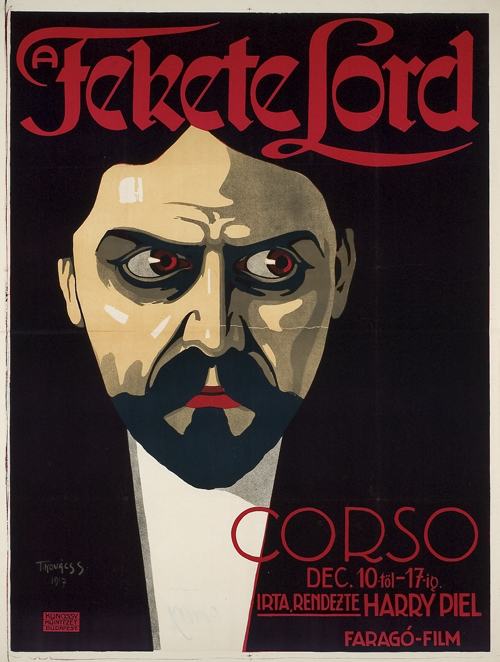
To engage with Das lebende Rätsel is to step back into a pivotal moment in European cinematic history. In 1916, while the world was embroiled in the cacophony of the Great War, Harry Piel was busy inventing the visual language of the modern action thriller. This film stands as a testament to an era where the camera was learning to move, to breathe, and to participate in the spectacle rather than merely observing it from a distance. Unlike the domestic constraints of The Commuters, Piel’s work pushes against the physical boundaries of the frame, seeking a visceral connection with the viewer through daring physical feats and intricate plotting.
The narrative architecture of this film is remarkably sophisticated for its period. While many silent films of the mid-teens relied on broad histrionics, Piel—acting as both writer and director—infused the story with a rhythmic pacing that feels surprisingly contemporary. The 'Living Riddle' is a metaphor for the burgeoning complexity of urban life, where identities are fluid and danger lurks behind the polished facades of the bourgeoisie. It shares a thematic DNA with The Wolf, yet it pivots away from rural primalism toward a more calculated, industrial brand of suspense.
Ludwig Trautmann, a titan of the early German screen, delivers a performance that anchors the film’s more fantastical elements. His physicality is not just about the stunts—though those are impressive—but about the way he occupies space. There is a gravity to his presence that balances the more flamboyant turns by Victor Janson and Hermann Vallentin. Vallentin, in particular, brings a nuanced menace that avoids the mustache-twirling villainy common in the era's lesser productions, such as The Scales of Justice.
Leontine Kühnberg provides the emotional core of the film. In many contemporary works like Sonho de Valsa, female roles were often relegated to the periphery of the action. However, in Piel’s universe, the stakes are shared. Kühnberg’s character is not merely a damsel in distress but a pivotal cog in the machine of the plot. Her interactions with Trautmann suggest a psychological depth that mirrors the complexity found in The Dead Secret, where the past is a haunting presence that dictates the actions of the present.
Technically, Das lebende Rätsel is a marvel of early 20th-century ingenuity. The use of lighting to create depth and shadow—a precursor to the Expressionist movement that would soon dominate German cinema—is evident here. The way Piel frames the urban landscape makes the city itself a character. It is a labyrinth of stone and steel, much like the thematic structures found in Through the Wall. The camera captures the grit and the grandeur with equal fervor, refusing to look away from the dangerous reality of the stunts.
Piel’s direction is characterized by a relentless forward momentum. He understood that the audience’s engagement was tied to the visual rhythm. While a film like The King's Game might focus on the psychological tension of the elite, Piel democratizes the thrill, bringing it to the streets, the rooftops, and the speeding vehicles. The 'sensations' are not just empty calories; they are the punctuation marks in a long, complex sentence about the fragility of the human condition in the face of modernity.
When we look at Das lebende Rätsel alongside its peers, its superiority in terms of pacing and visual storytelling becomes clear. For instance, The Conspiracy; or, A $4,000,000 Dowry offers a similar glimpse into the world of high-stakes intrigue, but it lacks the visceral, almost tactile quality of Piel’s work. Piel doesn't just want you to watch the mystery; he wants you to feel the wind as the protagonist leaps across a gap, to sense the cold dampness of the secret passages.
The film also avoids the sentimental pitfalls found in Tom Brown's Schooldays. There is a certain cynicism, or perhaps a pragmatic realism, at play here. The characters are driven by necessity and survival rather than lofty moral ideals. This aligns it more closely with the tonal shifts seen in Odin nasladilsya, drugoy rasplatilsya, where the consequences of one's actions are heavy and unavoidable. Even when compared to the whimsical nature of The Ringtailed Rhinoceros, Piel’s work remains grounded in a recognizable, if heightened, reality.
What remains most striking about this 1916 production is its refusal to provide easy answers. The 'riddle' is never fully solved because the human heart is, in itself, an unsolvable puzzle. This philosophical undercurrent elevates the film from a mere adventure serial to a work of art. It explores the same divide between the civil and the savage that The Great Divide attempted, but it does so through the lens of early 20th-century pulp sensibilities. It is a film that understands the power of the secret, the allure of the hidden drawer—much like the central conceit in The Secret of the Old Cabinet.
As the credits roll—or would have rolled in a modern context—the viewer is left with a sense of exhilaration. Harry Piel wasn't just making a movie; he was constructing an experience. He was the Captain Alvarez of the director’s chair, leading a charge into uncharted territory. Das lebende Rätsel is not just a relic of the past; it is a blueprint for the future of cinema. It teaches us that while technology may change, the fundamental human desire for a well-told mystery, punctuated by the thrill of the chase, is eternal.
In the pantheon of silent cinema, few directors understood the intersection of physical prowess and narrative tension like Harry Piel. This film remains his most enigmatic and perhaps his most accomplished work of the mid-teens, a glowing ember of creativity from a world on fire.
Critical Rating: 8.7/10
A masterclass in early action-mystery that transcends its age through sheer directorial audacity and compelling lead performances. If you enjoyed the stylistic flair of The Perfect '36', this is an essential addition to your watch list.
IMDb —
1914
Community
Log in to comment.