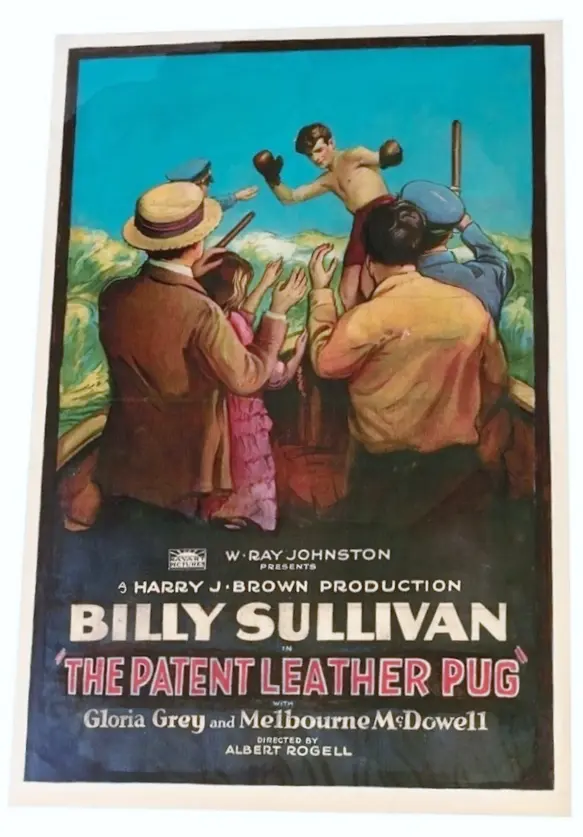
The year 1926 represented a peculiar juncture in American cinema—a moment where the silent medium had reached its zenith of expressive capability just as the cultural zeitgeist was shifting toward the hard-boiled realism of the coming decade. In this fertile ground, The Patent Leather Pug emerges not merely as a sports melodrama, but as a sophisticated interrogation of class, paternal legacy, and the performative nature of 1920s masculinity. Directed with a surprisingly gritty hand by J.P. McGowan, the film navigates the treacherous waters between the gilded salons of the New York elite and the salt-sprayed brutality of the boxing ring.
The Architecture of Amnesia
The film opens with a sequence that feels startlingly modern: the disorienting 'morning after.' Billy Sullivan, portraying the eponymous Billy Hepburn, delivers a performance of nuanced vulnerability. His awakening is not played for broad slapstick, but for a sense of existential dread. As he surveys his battered visage in the mirror, he is looking at a stranger. This amnesia serves as a potent metaphor for the 'Lost Generation'—a cohort of young men wandering through a post-war landscape, disconnected from their own histories and the expectations of their Victorian-era fathers.
The revelation provided by his valet—that he was bested by Battling Burke—acts as the film’s inciting incident. Unlike the comedic misunderstandings found in Pick Out Your Husband, the stakes here are rooted in a desperate need for social and personal redemption. Billy’s decision to train is not a whim; it is a necessity for survival in a world that has begun to value physical prowess and 'grit' over the inherited pedigree exemplified in films like Dorothy Vernon of Haddon Hall.
The Valet and the Virtues of the Underclass
One of the most compelling aspects of The Patent Leather Pug is the subversion of the master-servant dynamic. Billy’s valet is not a mere comic foil but the architect of his transformation. In an era where class distinctions were often portrayed as immutable, McGowan suggests that the aristocrat must learn from the laborer to achieve true strength. This thematic thread echoes the social consciousness seen in The Italian, though framed here within the confines of a commercial narrative. The training sequences are filmed with a kinetic energy that eschews the static stage-like setups common in earlier silents. We see the sweat, the strain, and the gradual hardening of Sullivan’s physique—a physical manifestation of his growing resolve.
A Raft on the Edge of the World
The film’s climax is a stroke of cinematic genius. Because Billy’s father—played with a stern, imposing presence by Melbourne MacDowell—objects to the 'vulgarity' of boxing, the fight is relegated to a raft off the coast of Coney Island. This setting is visually arresting and thematically rich. The raft becomes a liminal space, a floating stage where the laws of the mainland do not apply. It is a primitive arena, surrounded by the vast, indifferent ocean, which heightens the isolation of the combatants.
The choreography of the fight between Billy and Battling Burke is remarkably visceral. McGowan utilizes low-angle shots and tight framing to place the audience on the raft with the fighters. The spray of the water and the swaying of the platform add a layer of unpredictability that transcends the choreographed feel of many contemporary boxing films. It lacks the stylized expressionism of The Wildcat, opting instead for a rugged realism that anticipates the noir aesthetics of the next decade.
Performative Prowess and the Female Gaze
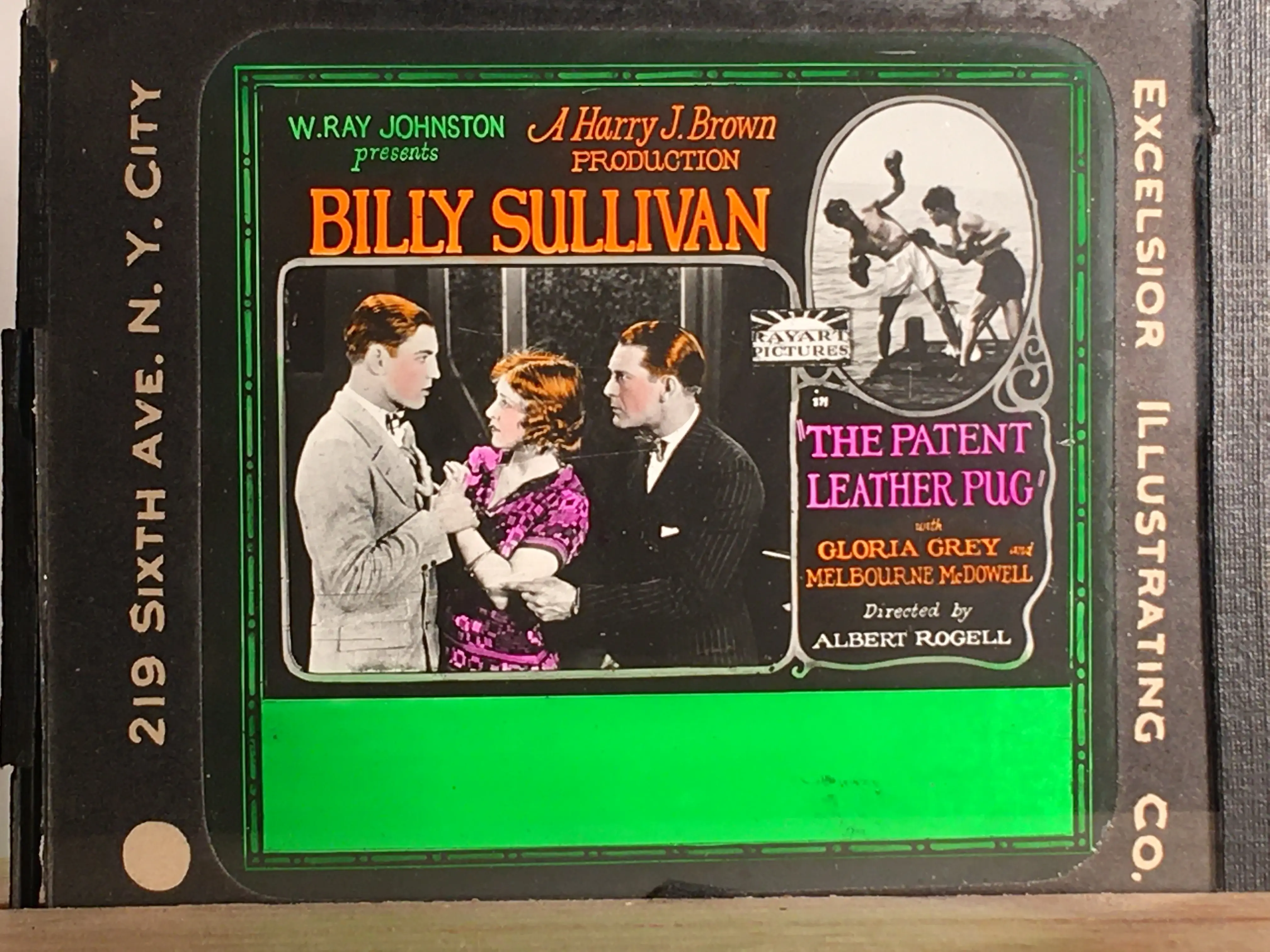
While the film is undeniably centered on the male experience, the presence of Ruth Dwyer and a young Vivian Vance adds a necessary emotional weight. Dwyer, as the fiancée, is not merely a trophy to be won; her reactions to Billy’s transformation provide the moral compass of the story. Her presence at the fight—clandestine and anxious—mirrors the audience’s own investment in Billy’s redemption. The film avoids the melodramatic excesses of Always in the Way, grounding its romance in the shared experience of struggle and growth.
The writing by Grover Jones deserves significant praise. Jones, who would go on to be one of Hollywood’s most prolific screenwriters, imbues the intertitles with a wit and economy that keeps the narrative moving at a breakneck pace. The dialogue between Billy and his father is particularly sharp, capturing the generational friction that defined the era. This isn't the psychological horror of The Unholy Three, but it possesses a similar interest in the masks people wear to navigate society.
Technical Artistry and Directorial Vision
J.P. McGowan’s direction is characterized by an insistence on movement. Having cut his teeth on action serials and railroad dramas, McGowan brings a sense of momentum to The Patent Leather Pug that is often missing from more 'prestige' dramas of the time. The use of natural light in the outdoor sequences near the water provides a stark contrast to the moody, shadow-heavy interiors of the Hepburn estate. This visual dichotomy reinforces the film’s central theme: the conflict between the artificial world of the elite and the raw reality of the physical self.
When compared to the thematic density of Black Oxen or the intricate plotting of Time Lock No. 776, The Patent Leather Pug might seem straightforward. However, its power lies in its execution. It is a film that understands the primal appeal of the underdog story while layering it with subtle critiques of class-based expectations. The 'pug' of the title is a double entendre—referring both to the dog-like tenacity Billy must develop and the 'pugilist' he becomes.
Legacy and Cultural Impact
As the final bell rings and Billy stands victorious on the salt-stained raft, the film achieves a catharsis that is both personal and social. He has won the respect of his father, but more importantly, he has discarded the 'patent leather' skin that once defined him. He is no longer a playboy playing at life; he is a man who has earned his place in the world through sweat and blood. This trajectory from weakness to strength is a perennial cinematic favorite, yet rarely has it been captured with such unadorned sincerity as it is here.
In the broader context of 1920s cinema, The Patent Leather Pug stands as a testament to the versatility of the silent film. It can be as light as a romantic comedy and as heavy as a social drama, often within the same reel. It lacks the cynicism found in Caught in the Act, offering instead a hopeful vision of self-improvement. Even when viewed through a modern lens, the film’s core message remains resonant: that our true character is not determined by the wealth we inherit or the parties we attend, but by our willingness to stand up after we have been knocked down.