DbcultAccessing Vault...
Cult Review
Senior Film Conservator
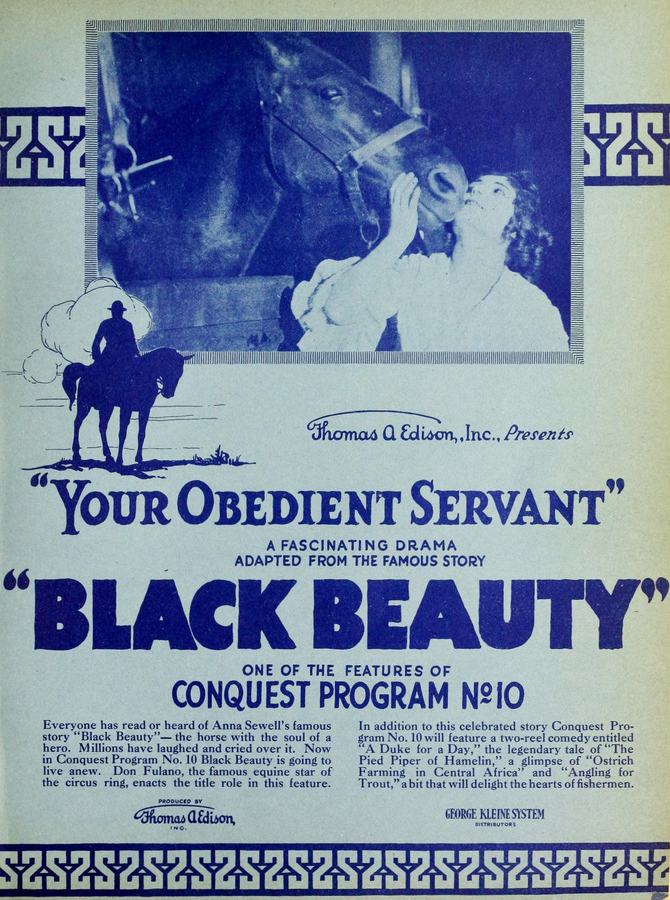
Anna Sewell’s Victorian plea for equine mercy—once a London bestseller—mutates in 1920 into a visceral frontier poem: celluloid embers drifting through post-war amnesia. Director Paul Scardon, fresh from the melodrama mines of The Devil at His Elbow, strips the tale of anthropomorphic whimsy. Instead he renders the war not as background fresco but as open wound, the horse not as sentimental cipher but as tactile archive of lacerations.
Cinematographer William McCoy shoots on orthochromatic stock that turns blood into tar and moonlight into shrapnel. In the sequence where Union teamsters chain Beauty to a coal sled, the animal’s flank occupies half the frame, a topography of ribs; the other half is filled with silhouetted pickaxes, a metallic forest. The absence of sepia nostalgia—so common in The Good Bad-Man or A Message to Garcia—forces the viewer to confront a monochrome abyss where morality is neither Union blue nor Confederate grey but the color of exposed bone.
Intertitles—sparse, haiku-like—refuse the florid sermonizing that curses Den sorte drøm. One card reads merely: "Beauty learned that men speak with whips." The economy lands harder than pages of moralizing text. When the horse, limping through sleet, encounters a contraband camp of freedmen, the camera simply lingers on two sets of eyes—equine and human—both reflecting the same existential eviction.
As the Confederate lieutenant who vanishes at the first reel only to resurface near the finale, Moore delivers a masterclass in minimalist ruin. His cheekbones jut like split rails; his pupils carry the glaze of one who has seen Atlanta burn. In the reunion shot, he does not embrace Beauty—he merely raises a trembling palm, a gesture equal parts benediction and apology. The restraint feels epochal alongside the histrionic swoons of As Ye Sow.
Pillsbury, best remembered for florid ingénues, here pares down to a whisper. Her schoolmistress teaches letters to colliery orphans while secretly mending Beauty’s harness with Bible pages—scripture transformed into padding. In a film culture that often positions women as sacrificial laurels (His Brother's Wife), her quiet insurgency—smuggling grain in her apron pockets—feels like a muted revolution.
Adams plays a Union major’s daughter who sketches the horse’s profile in a ledger intended for quartermaster tallies. The scene lasts seconds, yet her gaze—part curiosity, part complicity—encapsulates the entire civilian conundrum: spectatorship as participation. The sketch later falls into the hands of a bounty hunter who brands Beauty with the very outline she drew, turning art into scar. The film thus indicts even well-meaning witness, a nuance seldom rivaled except perhaps in Sangre y arena.
O’Malley’s itinerant showman—handlebar moustache waxed to arrow points—recruits Beauty for a travelling spectacle titled "The Demon Steed of Manassas." He bedecks the horse with papier-mâché flames, forces him to rear on command while a calliope wheezes "Dixie." The sequence plays like a demented minstrel pageant, exposing the commodification of trauma for Northern voyeurs. O’Malley’s grin is all carnivore, yet Scardon allows a fleeting shot where the performer, alone in his tent, counts coins with shaking hands—addiction, guilt, or both—humanity’s slime coat visible beneath greasepaint.
Credited simply as "Don Fulano—Beauty," the chestnut stallion out-acts his two-legged co-stars. Watch the moment he recognizes his former master: ears swivel like weathercocks, nostrils flare, a ripple passes from withers to tail—an animist telegram of memory. No trick photography, no composite shots; pure musculature emoting. Compare this to the CGI dressage of modern reboots and you confront cinema’s lost corporeality.
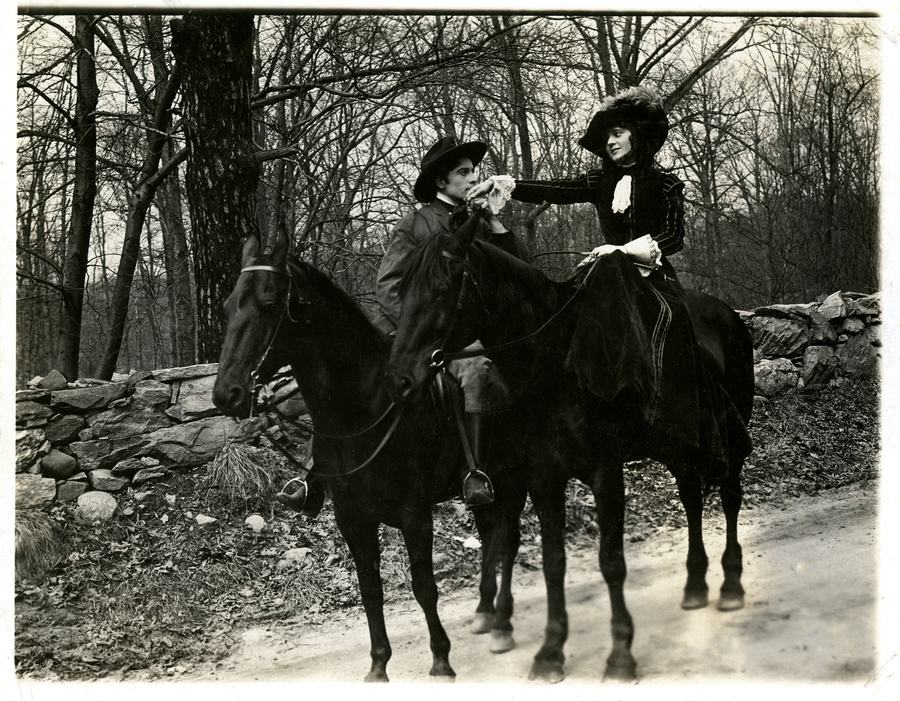
The source novel’s 1877 London cabstands transmute into Appalachian coal seams; Sewell’s moral tract becomes a fever dream of national convalescence. Screenwriter Dorothy Yost jettisons the epistolary animal-voice, opting instead for imagistic shorthand. The gamble pays off: by censoring the horse’s “thoughts,” the film attains a documentary frisson, a proto-neorealism that anticipates The Unbroken Road by a full decade.
The montage of Beauty’s northern odyssey—jumping from coal-town to carnival to canal dredge—lasts four minutes yet covers three years. Editor Irene Morra uses whip-pan transitions that feel like slaps, each cut a brand. The tempo mimics the equine heartbeat: 32 beats per minute at rest, 240 at gallop. You leave the sequence winded, as though you’ve been clenching reins.
Majestic Pictures grafted a synchronized score of military marches and neighing stock effects onto the silent negative. The result—critically panned—turns subtlety into hokum. Seek the 1920 silent cut; it surfaces occasionally on 16 mm at MoMA or in illicit 35 mm scans circulating among cine-clubs. The flicker of projector light through silver halide is the only score this story needs.
Parisian critics grouped the film alongside L’empreinte de la patrie as part of a post-war bestial triptych, while London censors excised the coal-mine sequence for alleged "Bolshevik sympathies." In Atlanta, the Daughters of the Confederacy picketed screenings, branding it "Yankee slander." Such polarized responses testify to the movie’s raw-nerve potency.
The 1971 Australian adaptation borrows Scardon’s winter palette; Disney’s 1990 VHS musical lifts the carnival humiliation beat-for-beat. Even Kelly Reichardt’s Meek’s Cutoff quotes the taciturn recognition scene between man and animal. Yet few successors match the 1920 version’s ascetic ferocity—perhaps because talkie sentiment had already begun to varnish cruelty with moral triumph.
Turn off motion-smoothing; let the frame judder. Silence your phone; the film’s intertitles are haikus that detonate in quiet. Watch alone, preferably at 2 a.m., when radiator clanks could pass for distant artillery. Keep oats—or crackers—nearby; you’ll crave something to chew once the horse’s ribs silhouette across your retinas.
Does the lieutenant’s reappearance feel providential? Yes—but providence, in 1865, was the only insurance policy left. The closing tableau—Beauty descending a muddy lane toward a burned manor—offers no redemptive sunrise, only fog and the scent of wet earth. The camera holds until hooves vanish; end title. No moral, no swelling strings. Just the aftertaste of history chewed raw. That austerity is why Your Obedient Servant endures: it refuses to console, choosing instead to scar.
If you seek comfort, watch The Loyal Rebel. If you seek the unvarnished clatter of hooves on the skull of a nation, return to this orphaned print and let its silence speak welts across your conscience.
IMDb 6.5
1922
Community
Log in to comment.