DbcultAccessing Vault...
Cult Review
Senior Film Conservator
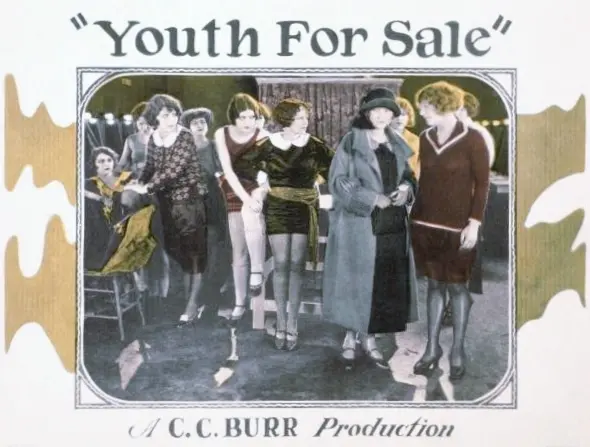
Set against the backdrop of early 20th century America, 'Youth for Sale' is a captivating exploration of friendship, loyalty, and the often dark side of youthful indiscretions. Alice Chapin delivers a nuanced performance as Connie, a character whose actions ripple through the lives of those closest to her. The film opens with a series of seemingly benign events: Connie invites her friend Molly and Molly's boyfriend Tom to a party. Molly, having never partaken in alcohol before, experiences a sudden and temporary blindness from her first drink. This minor incident serves as a catalyst for the ensuing turmoil.
Connie, feeling responsible for Molly's condition, devises a plan to marry a wealthy man in order to secure the funds needed to restore Molly's sight. As the narrative unfolds, the film masterfully intertwines multiple storylines, each adding layers of complexity to the central dilemma. The relationship between Connie and Molly, once rooted in deep friendship, now strains under the weight of Connie's actions. Meanwhile, Tom, torn between his loyalty to Molly and his growing unease with Connie's decision, finds himself caught in a moral dilemma.
The film's direction and cinematography add to its immersive quality. Scenes of parties and the bustling city life contrast sharply with the more intimate, albeit strained, moments between characters. The use of natural light and shadow effectively captures the emotional tension, making the viewer acutely aware of the characters' inner turmoil. Gerald C. Duffy, Ray Harris, and Izola Forrester's screenplay is particularly noteworthy for its ability to convey complex emotions through subtle dialogue and character interactions.
Supporting actors such as May Allison, Charles Byer, and Richard Bennett contribute to the film's authenticity, bringing depth to their respective roles. Their performances, while not as central as Chapin's, are crucial in building the narrative's emotional landscape. The supporting cast includes characters like Tom Blake, whose character's evolution adds another layer of complexity to the story. His struggle to reconcile his feelings for Molly with his growing unease about Connie's decision highlights the film's broader themes of morality and the potential for good intentions to have unforeseen consequences.
The film's exploration of friendship is particularly poignant. Connie's actions, while driven by a sense of responsibility and care, ultimately strain the bonds of trust and loyalty. This tension is palpable in scenes where Connie and Molly confront each other, their past friendship now overshadowed by a sense of resentment and betrayal. The film raises important questions about the nature of friendship and the extent to which individuals are willing to sacrifice their own happiness for the perceived benefit of others. This dynamic is further complicated by the presence of Tom, whose evolving perspective adds another dimension to the moral ambiguity of the story.
The film's treatment of the theme of morality is equally compelling. Connie's decision to marry a wealthy man to gain the necessary funds for Molly's sight raises ethical questions about the nature of consent and the potential for exploitation. The film does not shy away from these complexities, instead presenting a nuanced exploration of the characters' motivations and the societal pressures that shape their choices. The moral ambiguity is further heightened by the film's use of intercut scenes, which show both the immediate consequences of Connie's actions and the long-term effects on the characters' lives.
The casting choices, particularly Alice Chapin and May Allison, are particularly noteworthy. Chapin's performance is a standout, capturing the complexity of Connie's character—her initial good intentions, her growing desperation, and the ultimate realization of the futility of her actions. This range is not lost on the audience, who are drawn into her emotional journey. May Allison, as Molly, provides a counterpoint to Chapin's performance, highlighting the contrast between their characters' perspectives and the evolving nature of their friendship.
'Youth for Sale' is a film that demands close attention and reflection. It challenges the viewer to consider the ethical implications of actions driven by a desire to help others, even at great personal cost. The film's exploration of these themes is both nuanced and thought-provoking, making it a compelling addition to the canon of early 20th century American cinema. Its ability to balance emotional intensity with thematic depth makes it a standout among films dealing with similar subject matter. While it may not be as overtly sensational as some contemporaneous films, 'Youth for Sale' offers a more subtle and impactful exploration of its central themes.
For those interested in early 20th century American cinema, 'Youth for Sale' is a must-watch. Its exploration of friendship, morality, and the complexities of human relationships makes it a thought-provoking and engaging film. If you enjoyed films like 'Reported Missing', 'Prima Vera', or 'The Virtuous Thief', you will likely find 'Youth for Sale' to be a rewarding viewing experience. Its depth and emotional resonance make it a film that stands the test of time, offering a rich tapestry of characters and themes that continue to resonate with audiences today.

IMDb 5.6
1918
Community
Log in to comment.