DbcultAccessing Vault...
8.2/10
Senior Film Conservator
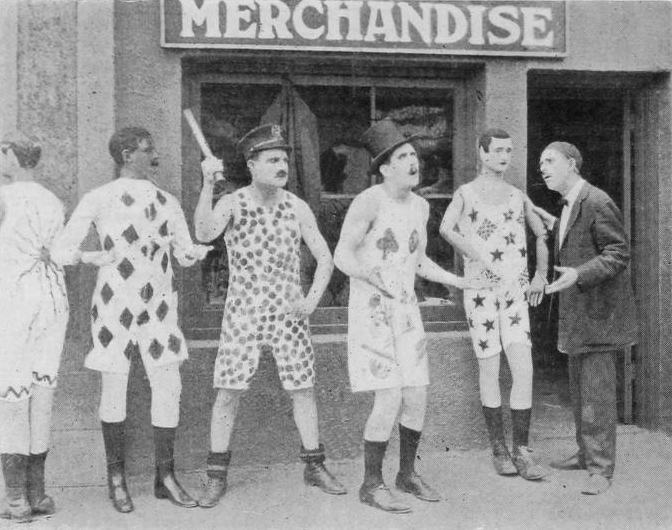
A definitive 8.2/10 rating for a film that redefined the boundaries of cult cinema. Rough on Romeo remains a cornerstone of transgressive art.
Arson never looked so romantic.
Hal Roach’s 1922 pocket-rocket Rough on Romeo—clocking in at a brisk two reels—feels like someone stuffed a Shakespearean comedy, a Keystone inferno, and a marriage license into the same centrifuge and pressed purée. The resulting cocktail is a caffeinated silhouette chase that ends, quite literally, in flames.
Paul (James Parrott, all elbows and elastic terror) yearns to bolt with his sweetheart (Jobyna Ralston, equal parts ingenue and demolition expert). Dad (Wally Howe, moustache bristling like a startled broom) thunders “Not while I’m vertical!” A towering rival (Eddie Baker, built like a bank vault) looms. Cue pratfalls, door-slam symphonies, and a ladder ballet that would make Buster Keaton blink. When persuasion collapses, the heroine torches the family manse, and the lovers sprint through smoke and ember toward elopement. Curtains.
Shot mostly in daylight with orthochromatic stock that turns skies porcelain and faces lunar, the film revel in high-contrast chaos. Shadows gouge the frame like switchblades; kitchen cupboards vomit flour in geysers that hang mid-air like nebulae. When the fire sequence arrives, Roach double-exposes orange-tinted flames over black-and-white bedrooms, so heat seems to melt the very celluloid. The effect is primitive yet hallucinatory—an ancestor to the chemical psychedelia of Unknown 274’s lab explosions.
Unlike the languid Southern reveries of A Daughter of the Old South, this one-reeler hits at silent-comedy breakbeat speed. Every five seconds a gag detonates: Paul disguises himself as a grandfather clock; the rival uses a suit of armor like a lunchbox; Dad interrogates a scarecrow wearing Paul’s cap. Yet Roach refuses pure anarchy. Each gag is a domino, toppling into the next with Euclidean precision, until the narrative implodes into literal combustion—a punchline you can feel on your face.
James Parrott was the kid brother of Charley Chase, and you feel the familial knack for urbane frenzy. His Paul is a walking panic attack who still remembers to remove his hat before re-entering a burning room—etiquette under duress. Jobyna Ralston, later Harold Lloyd’s immortal leading lady, gifts her character a glint of strategic madness: watch her calculate the exact moment to strike the match. She’s no passive flapper; she’s a conspiratorial mastermind wrapped in Clara Bow curls.
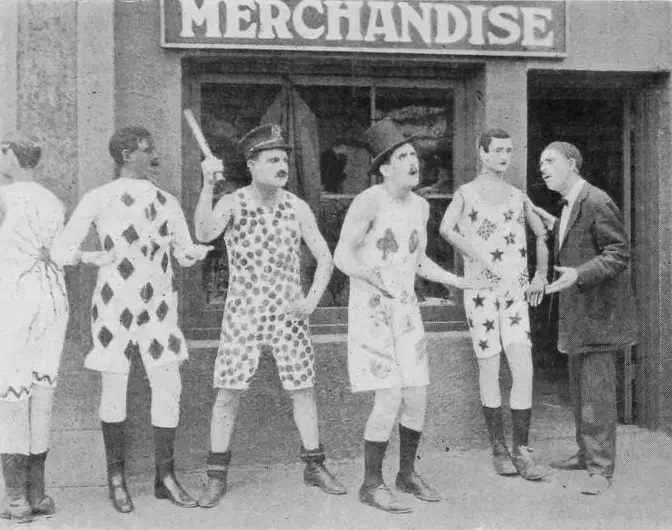
In an era when many comedies (She Loves and Lies among them) treated women as bargaining chips, Rough on Romeo flips the script. The woman authors the climactic crime. She doesn’t wait for a savior; she is the savior, the saboteur, the real estate agent of destruction. The fire is both a gag and a jailbreak, a gendered coup d’état against patriarchal real estate. One hundred years later, the image of a young woman igniting her own prison still crackles with subversive voltage.
The final reel stages a full-scale house fire using kerosene, balsa-wood sets, and what looks suspiciously like real timbers crashing inches from the ensemble. Parrott scrambles across a rain-slick rooftop while genuine embers swirl. The camera doesn’t cheat with long lenses or miniature doubles; you sense wind speed, smell scorched lumber. Compared to contemporary safety protocols, it’s borderline suicidal—yet the authenticity catapults the comedy into the realm of ritual stunt cinema, a tradition carried later by To Hell with the Kaiser!’s trench explosions.
Surviving prints circulate without original cue sheets, so each curator scores it differently—rags, atonal strings, even turntable scratching. I recently caught a 16 mm print at a rooftop micro-cinema where the accompanist used detuned ukulele and looped fire-truck sirens. The dissonance made Parrott’s pratfalls feel like electroconvulsive therapy. Seek such experiences; the film mutates under every musical skin.
Rough on Romeo is a missing-link fossil between Harold Lloyd’s Haunted Spooks and the anarchic Our Gang shorts. You spot embryonic DNA: the combustible domestic spaces, the big-little juxtaposition of bodies, the gag-inflation that escalates from paper-cut to Armageddon. Even the title card font—chunky, mischievous—reappears in The Walk-Offs. Roach was prototyping his comedic grammar one celluloid sliver at a time.
Whereas Suspicious Wives weaponizes paranoia and The Salamander weaponizes seduction, Rough on Romeo weaponizes property damage. It’s the lighter fluid cousin to those marital melodramas, a reminder that in silent cinema courtship often ends with either a kiss or a claims adjuster.
No print is complete. The Library of Congress holds a 19-minute variant with Dutch intertitles; European archives list a 22-minute cut. Rumor persists of a longer version that includes a second-reel chariot gag involving a Ford Model T and a Shetland pony. Until a 35 mm negative surfaces in a French barn, we cobble together our narrative like paleontologists reconstructing a T-rex from tailbones.
Rough on Romeo doesn’t merely survive; it burns—a flash-paper vignette that reminds us romantic yearning and demolition are conjoined twins in the slapstick cosmos. Seek it out in any form: DCP, scratchy VHS, or shimmering 16 mm with the projector’s clack echoing like distant thunder. Let its orange ghosts crawl across your retinas. And remember: if love stalls, there’s always a matchbook.
IMDb 5.2
1930
Community
Log in to comment.