DbcultAccessing Vault...
Cult Review
Senior Film Conservator
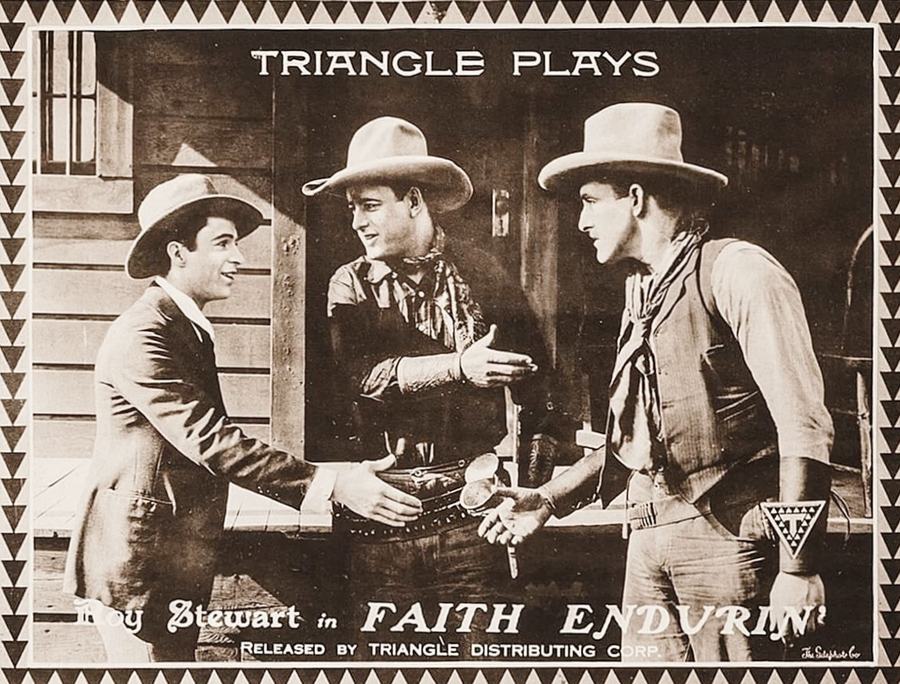
Stepping back into the early twentieth century, particularly into the silent era of American cinema, often feels like unearthing a forgotten treasure. Among these cinematic artifacts, Faith Endurin' emerges as a compelling example of the Western genre's nascent power, a narrative tapestry woven with threads of unwavering loyalty, desperate flight, and the relentless pursuit of justice. This film, a product of its time, speaks to universal themes that transcend the limitations of spoken dialogue, relying instead on the expressive power of its performers and the evocative sweep of its visual storytelling.
The picture opens on an idyllic scene of camaraderie and industrious ambition. Jeff Flagg, portrayed with earnest conviction by Will Jeffries, and his bosom friend Jim Lee, brought to life by Graham Pettie, are the quintessential frontier entrepreneurs, pooling their resources and dreams into a cattle-raising venture. Their aspirations, however, are soon overshadowed by the looming specter of industrial progress, or rather, the avarice of one man: Ed Crane. Walter Perkins embodies Crane with a sneering menace that perfectly captures the archetype of the ruthless capitalist, whose copper mining operations threaten to swallow the friends' pastoral dreams whole. This initial conflict sets a poignant stage, highlighting the clash between traditional agrarian life and the relentless march of industry, a theme often explored in early Westerns, much like the environmental anxieties subtly present in something like The Jaguar's Claws, albeit with different primary antagonists.
The tension escalates, forcing Jim to relocate, leaving Jeff to face Crane's oppressive presence alone. It's a testament to the script's ability to build stakes that this separation, born of economic necessity, feels like an emotional severing. The narrative pivot, however, is abrupt and shocking, plunging the audience into a maelstrom of personal drama. Crane, not content with economic intimidation, attempts a reprehensible assault on Helen Dryer, Jeff's sweetheart, played with a delicate strength by Fritzi Ridgeway. This moment, a common trope in early cinema to establish villainy and motivate heroism, is handled with a certain raw urgency. It is Helen’s brother, Vic, whose portrayal by Joseph Bennett lends him a conflicted intensity, who intervenes, and in a moment of desperate defense of his sister's honor, fatally shoots Crane.
The immediate aftermath of Crane's death casts a long, dark shadow over Jeff. Accused of a murder he did not commit, he is forced into a desperate flight, pursued by Sheriff Sol Durkee, a character whose stoic determination is skillfully conveyed by Walter Perry. Durkee's relentless focus on a distinctive scar on Jeff's left arm as the sole means of identification becomes a potent symbol of fate's cruel hand. This pursuit sequence is where the film truly begins to hum with kinetic energy, a hallmark of many silent-era thrillers. The visual storytelling, relying on rapid cuts and dynamic compositions, conveys the breathless urgency of Jeff's escape, echoing the relentless chases seen in other adventure serials of the period.
The narrative's ingenuity truly shines in Jeff's serendipitous reunion with Jim in a faraway town. This moment is not merely a convenient plot device but a reaffirmation of their profound bond. The ensuing poker game brawl is a masterclass in silent film action choreography, a chaotic ballet of flailing limbs and overturned tables. It is within this maelstrom that Jim, in an act of almost miraculous, albeit accidental, loyalty, shoots away the very scar that imperils his friend. This audacious plot point, while requiring a suspension of disbelief, underscores the film's thematic core: the extraordinary lengths to which true friendship will go. It’s a narrative twist that could easily veer into the absurd, yet within the heightened reality of the Western genre, and particularly the silent film idiom, it acquires a mythic quality, much like the dramatic, almost fantastical resolutions found in stories like The Golden Idiot, where extraordinary circumstances often dictate character fates.
The return journey home, with Jeff now free from the identifying mark, is fraught with a different kind of tension. The audience awaits the inevitable confrontation with truth. When Vic finally confesses his act, driven by guilt and a desire to clear Jeff’s name, it provides a cathartic release. Bennett’s portrayal of Vic’s confession is imbued with a quiet agony, making his act of honesty all the more impactful. This moment of revelation not only exonerates Jeff but also restores a sense of moral order to the disrupted frontier community. It speaks to a societal value prevalent at the time: that honor, once stained, can be redeemed through truth, a sentiment that resonates through the fabric of many early dramas like The Bridge of Sighs.
The film then delivers a final, triumphant flourish. Jeff and Jim, whose initial dreams were threatened by copper, discover rich deposits of the very same mineral on their own ranch. This twist of fortune, transforming adversity into unparalleled prosperity, is a classic cinematic resolution, ensuring a happily ever after for the protagonists. Jeff, now a wealthy man, is finally in a position to propose to Helen, solidifying their love story amidst the newfound abundance. It’s a conclusion that marries poetic justice with the promise of the American dream, a potent combination that undoubtedly resonated with audiences of the era.
The ensemble cast of Faith Endurin' delivers performances that are both robust and nuanced, a remarkable feat given the absence of spoken dialogue. Will Jeffries, as Jeff Flagg, carries the emotional weight of the film with a compelling blend of vulnerability and resilience. His facial expressions, particularly during moments of despair and eventual triumph, are incredibly articulate. Graham Pettie, as Jim Lee, is the embodiment of steadfast loyalty, his physical presence and gestures conveying a deep, unspoken bond with Jeff. Their chemistry is palpable, forming the beating heart of the narrative.
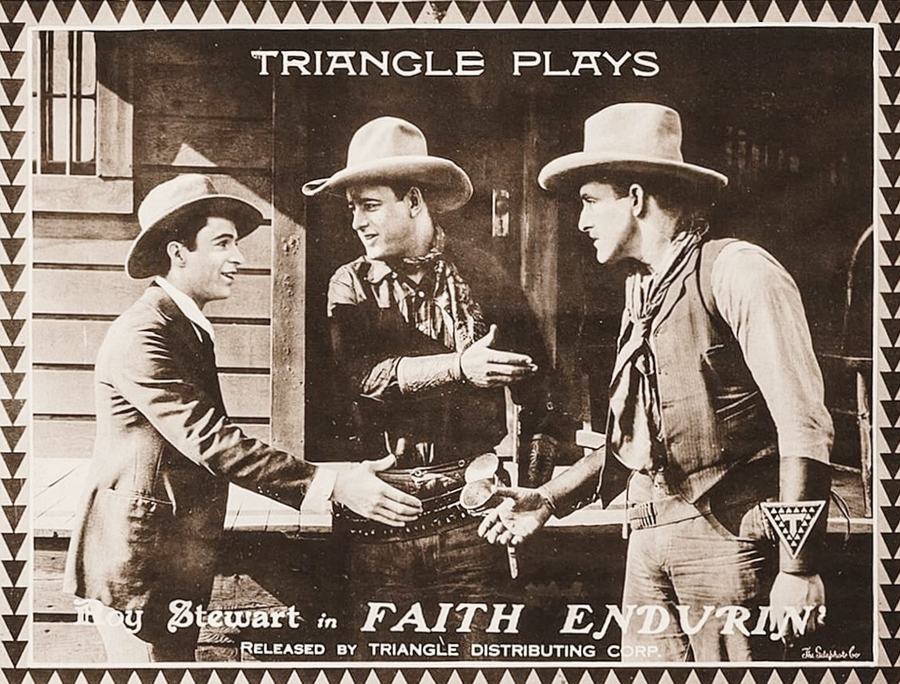
Fritzi Ridgeway’s Helen Dryer is more than just a damsel in distress; she projects a quiet strength and dignity, making her a sympathetic figure whose honor is worth fighting for. Her reactions to Crane's villainy and Jeff's plight are conveyed with a clear emotional arc. Walter Perkins, as the villainous Ed Crane, is delightfully despicable, his sneers and aggressive posturing leaving no doubt about his character's nefarious intentions. Joseph Bennett’s Vic, though a secondary character, undergoes a significant emotional journey, from protective brother to guilt-ridden confessor, a transformation he handles with commendable depth.
Even in smaller roles, actors like Walter Perry as Sheriff Durkee and Ed Brady contribute significantly to the film's atmosphere. Perry’s portrayal of the determined lawman is particularly effective, embodying the relentless force of justice, while Roy Stewart’s presence adds further texture to the supporting cast. The art of silent acting, with its reliance on exaggerated gestures, expressive eyes, and pantomime, is truly on display here, and the cast navigates these demands with considerable skill, ensuring that the audience remains deeply invested in the characters' fates.
While specific directorial and writing credits for many films of this era are often unrecorded or have been lost to time, the efficacy of Faith Endurin' speaks volumes about the creative forces behind it. The direction maintains a brisk pace, ensuring that the elaborate plot unfolds with clarity and momentum. The use of intertitles is judicious, providing necessary exposition without interrupting the visual flow, a balance that was crucial for successful silent filmmaking. The film's visual language is rich, utilizing the vast Western landscapes to great effect, transforming them from mere backdrops into active participants in the drama.
The cinematography, though perhaps rudimentary by modern standards, effectively captures the drama and scale of the story. Shots of the cattle ranch convey a sense of bucolic aspiration, while the mining operations are depicted with an ominous industrial grit. The chase sequences are particularly well-executed, employing dynamic camera angles and intelligent editing to heighten the suspense. The poker game brawl, for instance, is a masterclass in visual chaos, each frame contributing to the sense of disarray and sudden violence. This kind of visual dynamism was paramount in silent cinema, where every frame had to tell a story, much like the intricate visual narratives of films such as Madcap Madge, where physical comedy and expression drove the plot.
At its core, Faith Endurin' is a celebration of unbreakable friendship. The bond between Jeff and Jim is the narrative's anchoring force, a relationship that withstands economic hardship, false accusations, and the desperate acts required to save one another. This theme of loyalty, tested and proven, remains eternally compelling. Coupled with this is the exploration of justice – not just the formal, legal kind, but the rough-hewn justice of the frontier, where personal honor and self-defense often dictated outcomes. Vic's act, though a crime in the eyes of the law, is framed as a righteous defense of family honor, a morally complex decision that adds depth to the story.
The film also subtly touches upon the changing face of the American West. The conflict between cattle ranching and copper mining symbolizes a broader tension between traditional ways of life and the burgeoning industrial age. It's a reminder that even in the vastness of the frontier, resources were finite, and their control could lead to conflict. The ultimate discovery of copper on Jeff and Jim's land offers a resolution that is both ironic and satisfying, suggesting that prosperity can be found in unexpected places, even those initially perceived as threats.
The romantic subplot between Jeff and Helen, while secondary to the male friendship, provides the emotional impetus for much of the drama. Helen is not merely a prize to be won but a catalyst for heroism and a symbol of the domestic bliss Jeff ultimately seeks. Their eventual union, sealed by newfound wealth, is the classic happy ending, reinforcing the idea that perseverance and virtue are ultimately rewarded. This romantic idealism is a common thread in many films of the era, from the more overtly romantic The Kiss to dramas like Purity, where moral rectitude often leads to romantic fulfillment.
While perhaps not as widely known as some of its contemporaries, Faith Endurin' holds its own as a robust example of early Western filmmaking. It demonstrates the genre's capacity for complex narrative, compelling character arcs, and thrilling action, all conveyed without a single spoken word. For modern audiences, it offers a fascinating glimpse into the storytelling conventions and societal values of a bygone era. The film's ability to elicit strong emotions and maintain suspense purely through visual means is a testament to the artistry of silent cinema. Its unique plot points, particularly the scar removal, ensure its place as a memorable, if somewhat fantastical, entry in the canon of early Westerns. It stands as a testament to the enduring power of classic narratives, where themes of justice, loyalty, and the pursuit of happiness remain as relevant today as they were a century ago, much like the timeless tales of moral quandary found in international silent films such as Il processo Clémenceau or O Crime de Paula Matos, proving that universal human experiences transcend language and time.
The film's title itself, Faith Endurin', perfectly encapsulates its spirit. It is a story about enduring faith: faith in friendship, faith in justice, and ultimately, faith in the possibility of a better future, even in the face of overwhelming adversity. This enduring spirit, coupled with its dramatic twists and turns, makes it a rewarding watch for anyone interested in the foundational works of American cinema, a vibrant piece of storytelling that continues to captivate through its sheer narrative force and the raw power of its visual expression.
IMDb —
1918
Community
Log in to comment.